Pergolas and bioclimatic louvred pergolas
A pergola brings shade and comfort to your garden or terrace. On a bioclimatic pergola the aluminium roof louvres rotate: open them for light and air, close them when it rains.
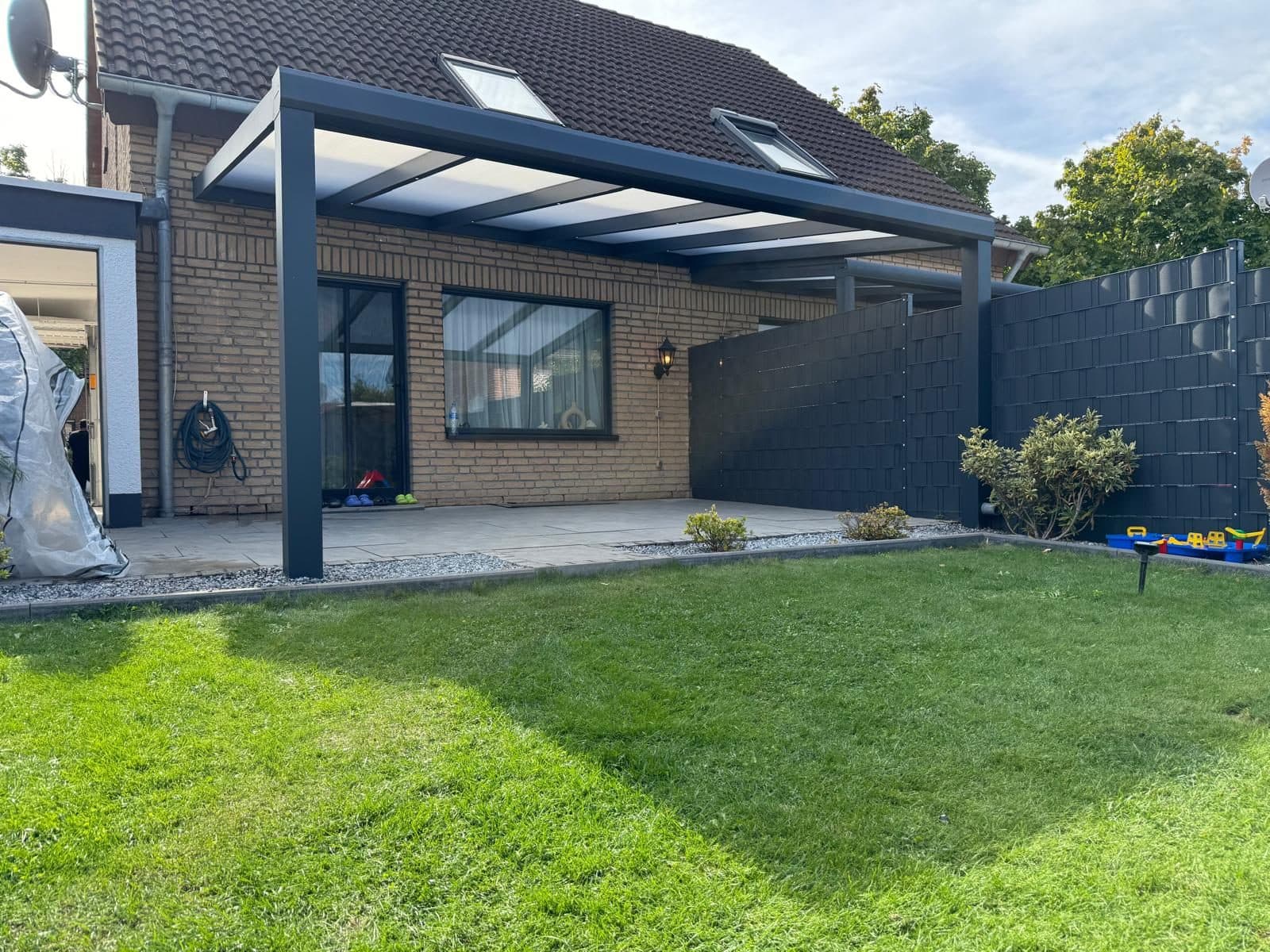
Shade when you want it, light when you need it
We make free-standing pergolas and pergolas attached to the building, sized to your space. They are ideal for gardens, terraces, pool areas, restaurants and cafés.
A bioclimatic pergola has a roof of rotating aluminium louvres. Closed, they keep the rain out and channel the water down through the posts. Open, they let in air and light. The pergola can be fitted with ZIP screens and sliding glass along the sides.
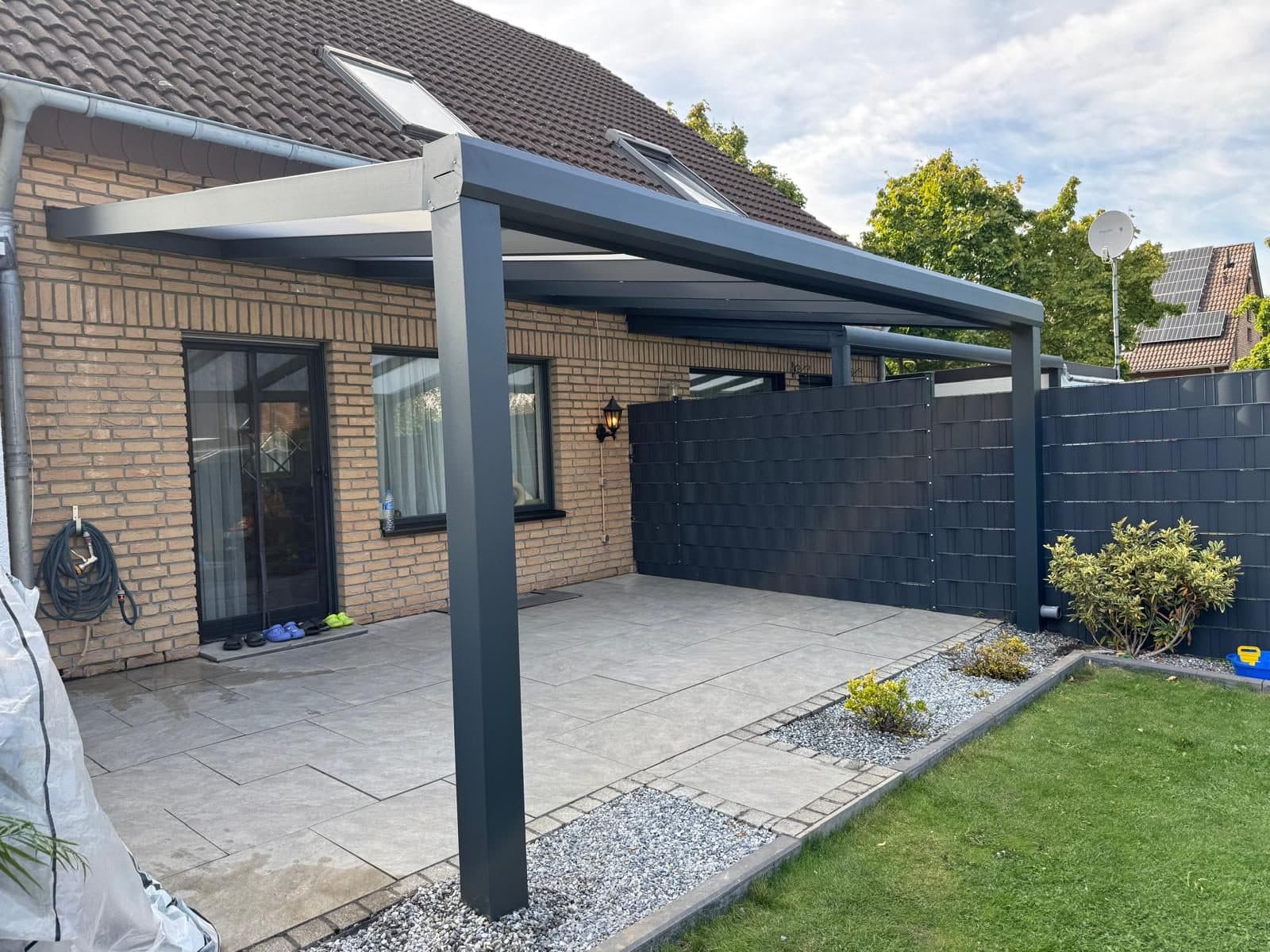
At a glance
- Rotating aluminium louvres
- Rainwater drained through the posts
- Free-standing or wall-mounted
- Option to add ZIP screens and glass
Types of pergola
Bioclimatic pergola
A roof of louvres that rotate to control light and air. Closed, they keep the rain out.
Classic pergola
An aluminium structure with a fixed roof of polycarbonate, panels or fabric.
Pergola with enclosed sides
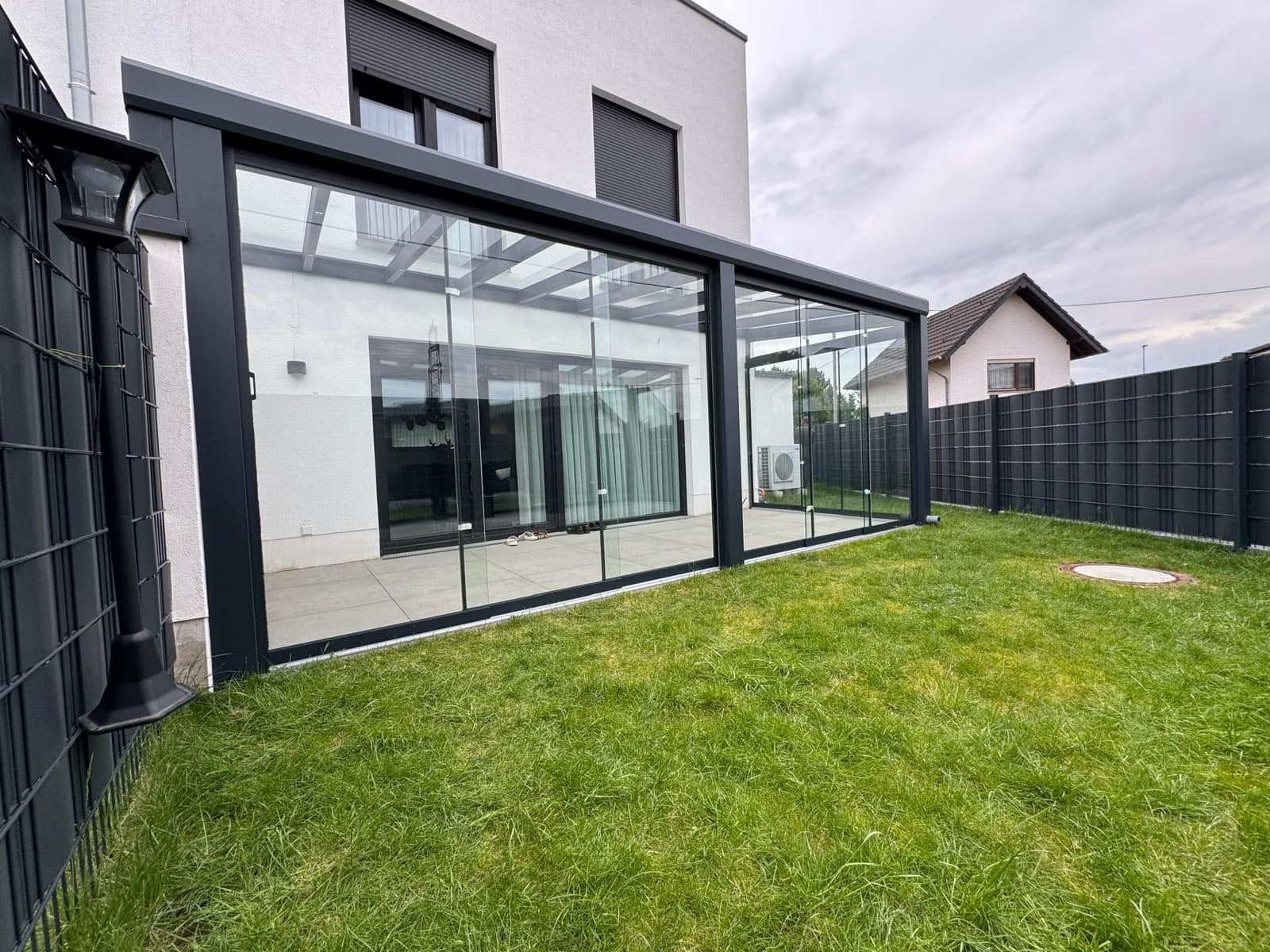
With ZIP screens or sliding glass, the pergola also keeps out the wind, so you can use the space for more of the year.
Pergolas: real projects
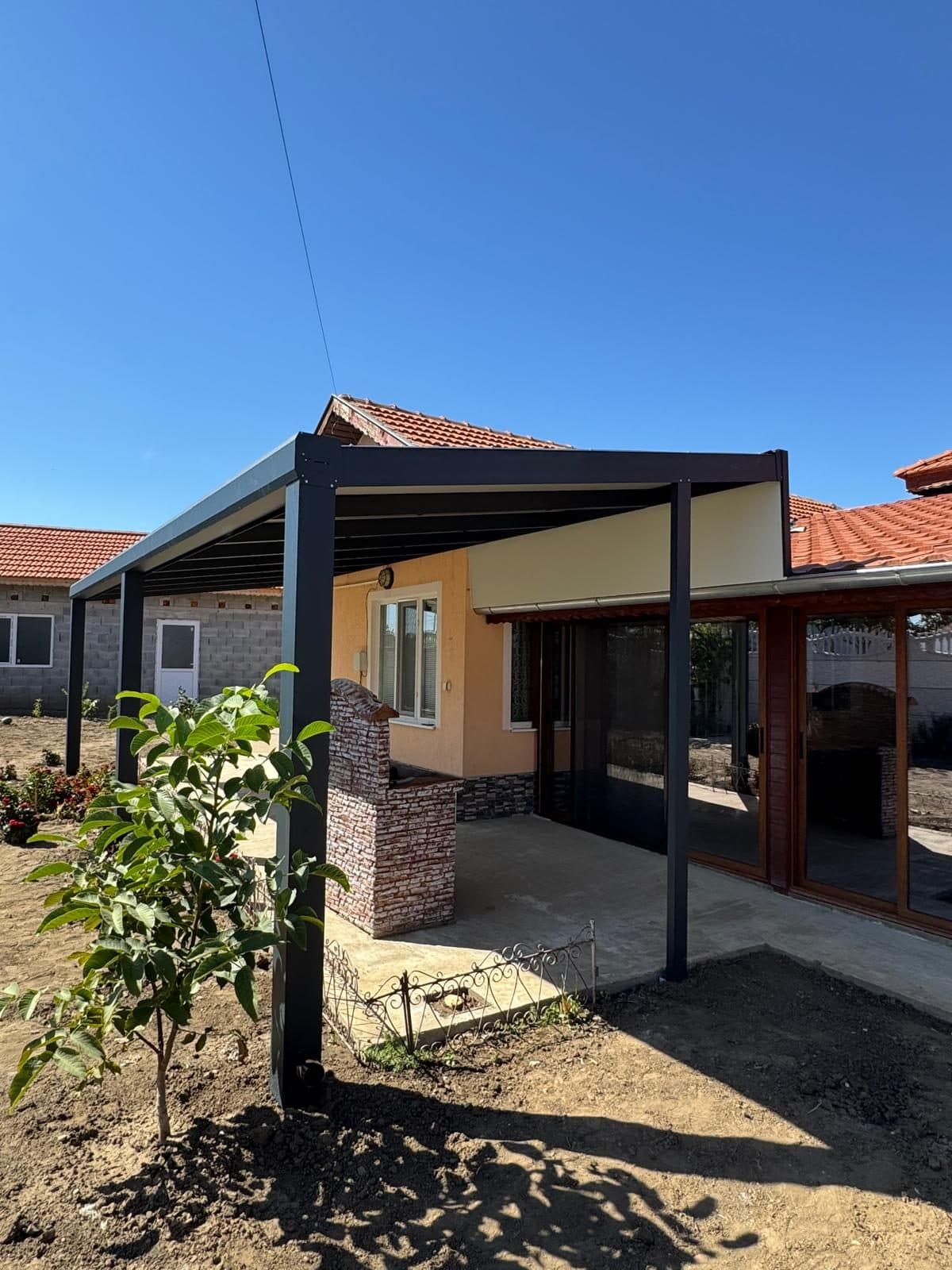
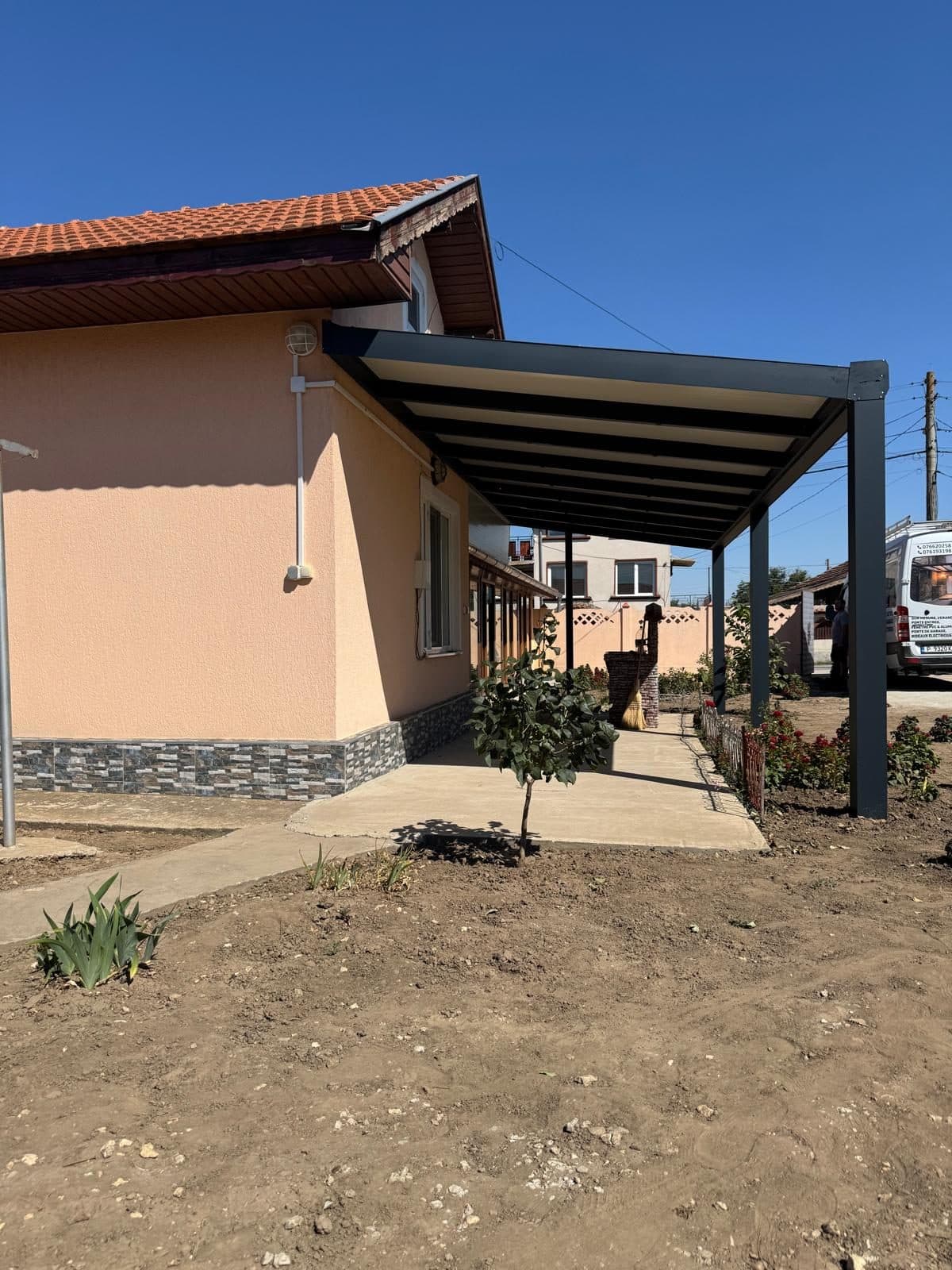
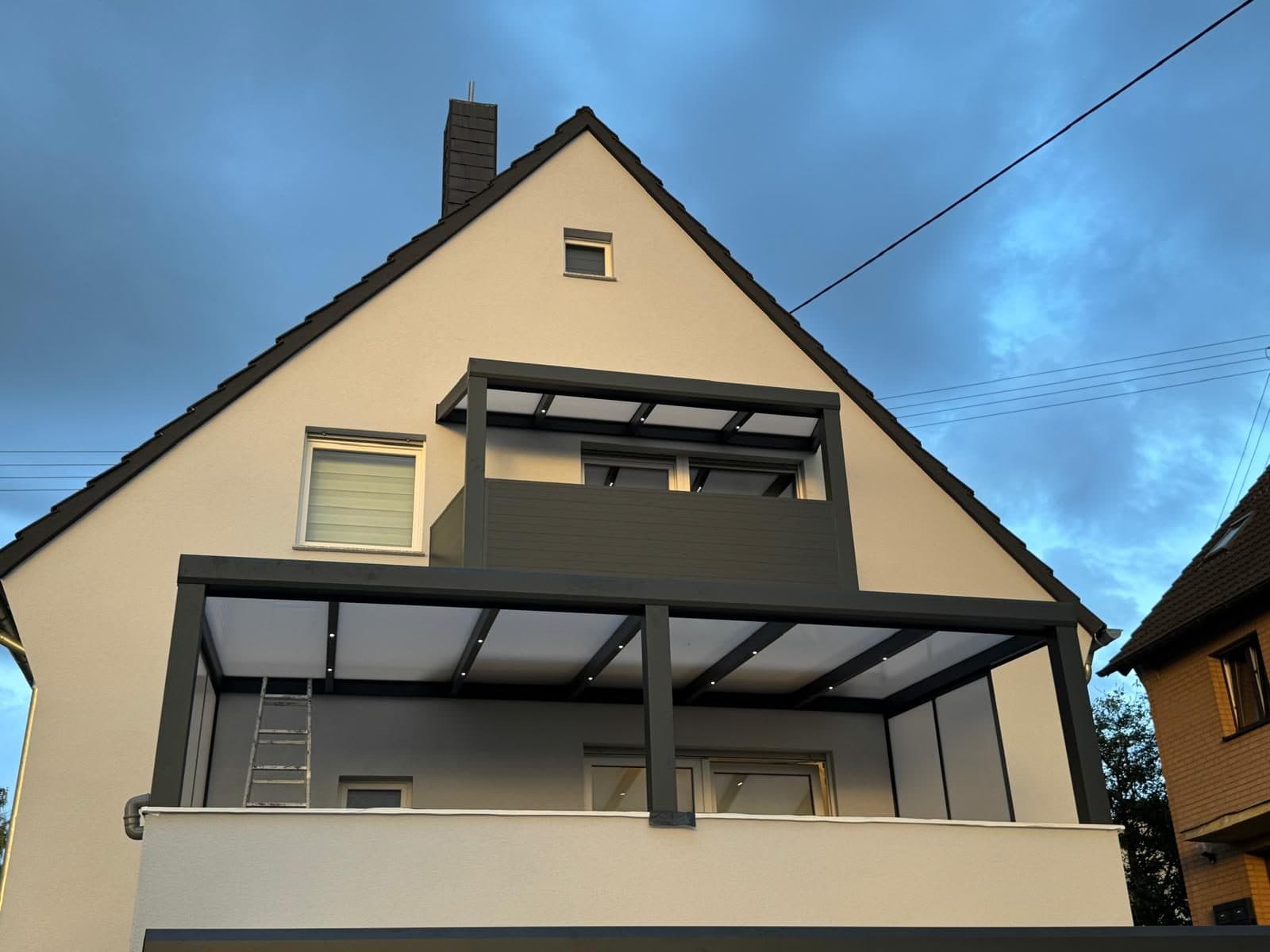
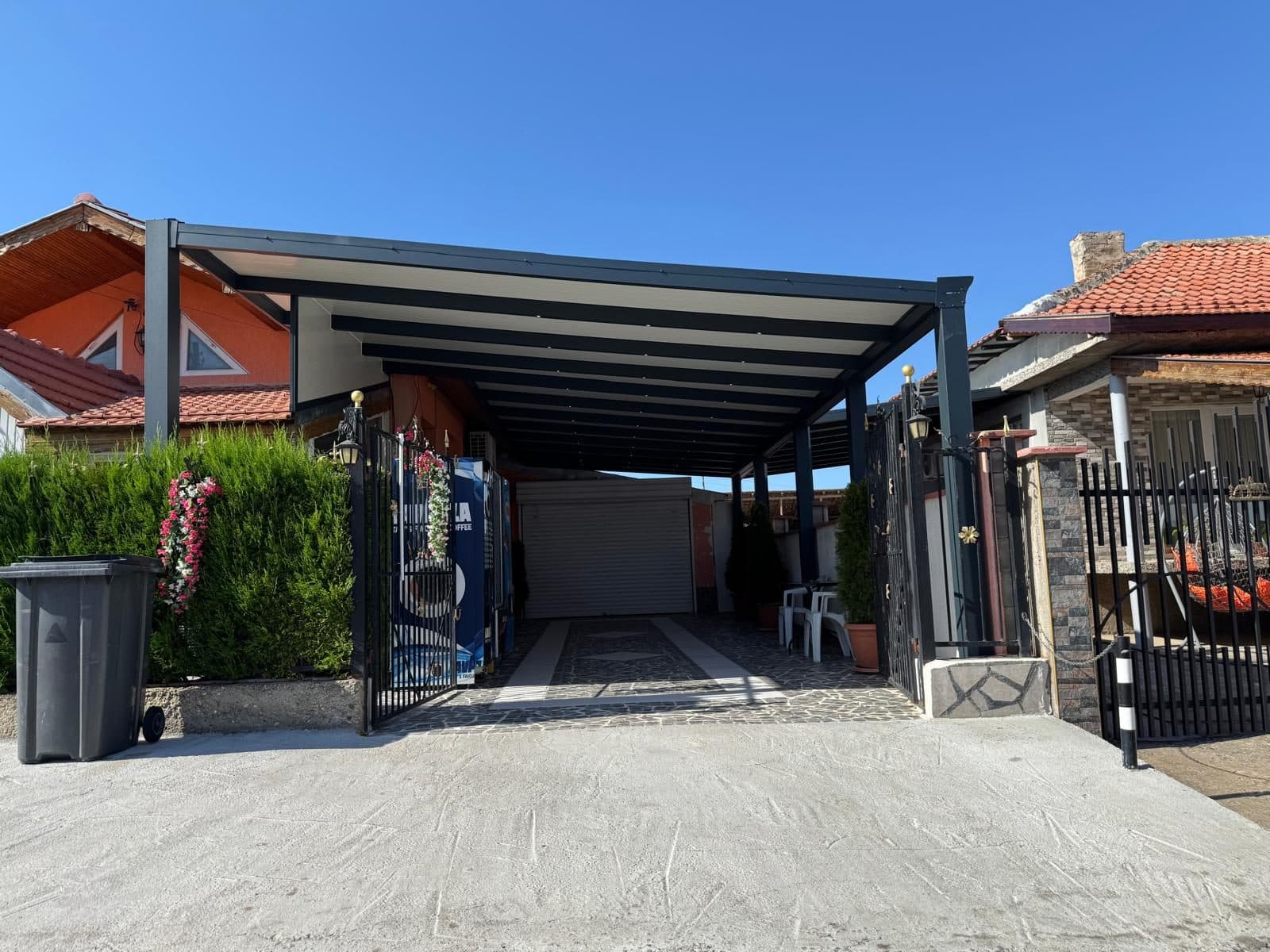
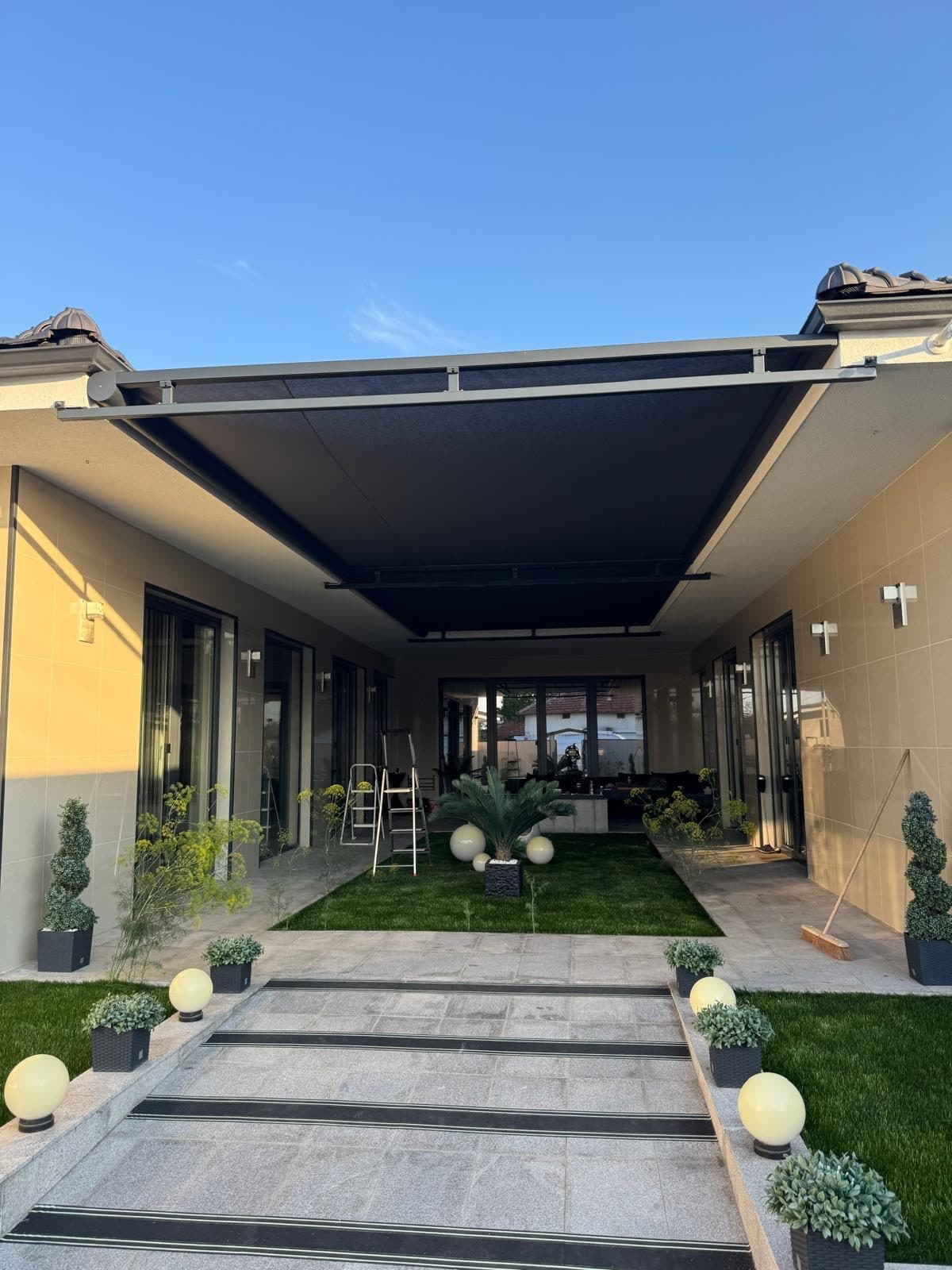
Photos of projects made and installed by our team.
Showing 6 of 16 photos
Pergolas: how to choose an aluminium pergola for your garden and terrace
An aluminium pergola turns a garden, terrace or poolside into a place you enjoy sitting in, whether it's hot or drizzling. Here we explain the types of pergola, how an off-the-shelf pergola differs from a made-to-measure one, what to ask about wind and snow, what drives the price and how an order with us works.
Types of pergola
Pergolas differ mainly in the roof. It decides whether you get only shade or rain protection too, and whether you can adjust the light during the day.
- Bioclimatic pergola – a roof of rotating aluminium louvres. Open, they let in air and light; closed, they keep out the rain and the water drains through the posts. More on the differences in bioclimatic or standard pergola.
- Classic aluminium pergola – a fixed roof of polycarbonate, panels or fabric. A simpler structure for permanent shade.
- Wall-mounted or freestanding – fixed to the facade, the pergola covers the terrace in front of the house; freestanding on four posts, it can go anywhere in the garden: over a table, by the pool, over a summer kitchen.
- Pergola with enclosed sides – with ZIP screens or sliding glass on the sides, a terrace pergola also keeps out the wind and the outdoor season gets longer.
Off-the-shelf or made-to-measure pergola
DIY stores sell ready-made pergolas in a few standard sizes. They're handy for a small garden and quick to put up, but the size rarely matches your space exactly and the profiles are usually lighter. A made-to-measure pergola is built to the exact size of your terrace or garden, with posts where they don't get in the way and a structure sized for the site.
The difference shows over the years: in how it behaves in wind, in the drainage and in whether the louvres and joints stay tight. There's a detailed comparison in ready-made or made-to-measure pergola.
Wind, snow and drainage: what to ask
A pergola stands outside all year, so it shouldn't be chosen from a photo alone. The structure is sized according to span, height and site – an open garden on a hillside is different from a sheltered terrace between two walls. More on this in can a pergola withstand wind and snow.
When you compare quotes, ask these questions:
- How is the structure sized for my span and the place I live?
- Where does the water from the roof go, and down which posts?
- What happens to snow on the louvres or roof in winter?
- How are the posts fixed – to a slab or to footings?
- If I want screens or glass on the sides later, is that allowed for in the structure?
What the price of a pergola depends on
For bioclimatic pergolas, the factors are covered in detail in how much does a bioclimatic pergola cost.
Whether you search for ‘pergola price per square metre’ or ‘bioclimatic pergola cost’, the answer depends on the same factors. Most are settled at the site visit:
- Size and span – a wider span without an intermediate post needs stronger beams.
- Roof type – rotating louvres, polycarbonate, panels or fabric.
- Wall-mounted or freestanding – freestanding means more posts and footings.
- Louvre operation – there are systems with manual and with motorised operation; what suits you is settled at the site visit.
- Extras – lighting, side screens, sliding glass.
- The base – an existing slab or footings for the posts.
- Access and installation – a terrace on an upper floor, a narrow garden or a spot with no access for machinery.
Do you need a permit for a pergola?
It depends on the size, on whether the pergola is fixed to the building, on the distance to neighbouring plots and on the municipality's rules. A light pergola in the middle of the garden and a pergola fixed to the facade of a block of flats are very different cases. There's more on permits for structures like these in do you need a permit for a carport.
Before you order, ask the municipality what applies to your property. At the visit we'll tell you what we have seen in practice, but the final answer comes from the municipality.
How an order works and how to look after it
We start with a free site visit: we look at the space, measure and talk through the roof, the posts and any side enclosure. You get a quote with the chosen solutions and time frame, then the pergola is made to measure and installed on site. If you'd like to try sizes and positions beforehand, use the 3D configurator.
Care is simple: aluminium doesn't rust or need painting. Wash the louvres and profiles with water and a mild cleaner, clear leaves from the gutters and post openings at least once a year, and don't leave heavy snow on the roof for long.
Pergolas in Ruse and North-East Bulgaria
Our showroom is in Ruse, at bul. Lipnik 135 – you can see profiles and materials in person there. Before starting out in Bulgaria, we spent more than 15 years working in Germany and the Netherlands.
We come for site visits all over Bulgaria. From Ruse we easily reach Varna, Veliko Tarnovo, Shumen, Razgrad, Silistra and Dobrich, as well as places further away. If you're considering an aluminium or bioclimatic pergola, ask for a free site visit and quote.
Four steps to a finished project
Free site visit
We come to you, take measurements and talk through your idea, the profiles and the glass.
Clear quote
You receive a quote setting out the system, the materials and the price. No hidden costs.
Manufacture
We build the structure to the exact measurements of your property.
Installation
Our team installs it, cleans up afterwards and checks everything together with you.
Guides on Pergolas
Questions about pergolas
Call or message us. We also answer specific questions about your project before we come for the visit.
What is a bioclimatic pergola?
A pergola with a roof of rotating aluminium louvres. You control how much sun and air comes in, and when it rains you close them and the water drains away through the posts.
Can the pergola be free-standing, in the middle of the garden?
Yes. A pergola can stand on its own posts anywhere in the garden or be fixed to the building.
Is it suitable for a restaurant or café?
Yes. Pergolas are a popular choice for restaurant and café terraces, especially with ZIP screens along the sides.
Do closed louvres keep the rain out?
Yes. When closed, the louvres form a roof and the water collects in the gutters and drains down through the posts. If you want protection from the sides as well, we add ZIP screens or sliding glass.
Are the louvres motorised, and can lighting be added?
On a bioclimatic pergola the louvres rotate by motor and remote control. LED lighting can also be built into the structure. Tell us at the site visit so we can plan the power supply.
Do I need a permit for a pergola?
It depends on the size, on whether it is fixed to the building, and on the municipality. We recommend checking beforehand, and at the site visit we'll tell you what we know from experience.
Pergola or awning – which is better?
An awning is lighter and retracts, but it isn't made for heavy rain and wind and is usually rolled in when the weather turns. A pergola is a permanent structure on posts, and a bioclimatic one also keeps out the rain. If you want to sit outside when it rains too, a pergola is the better fit.
Can a pergola go by a pool?
Yes, a pergola is a popular choice by the pool because it gives shade where people relax. It's important that roof water drains away from the pool and that the posts stand on a solid base. We settle the position at the site visit.
What is the difference between a DIY-store pergola and a made-to-measure one?
A ready-made pergola comes in standard sizes, usually with lighter profiles. A made-to-measure pergola is built to the exact size of the space, with posts where they don't get in the way and a structure sized for that specific site.
Can I use a pergola in winter?
With glass or ZIP screens on the sides, the outdoor season gets much longer. A pergola isn't a heated room, though. If you want a room you can use in the cold too, a winter garden is the better choice.
What size pergola do I need?
Start with the furniture: table, chairs or loungers, and leave room to walk around them. Think about where the afternoon sun comes from too, so the shade falls where you sit. At the visit we measure and suggest the size and post positions.
Other services
Thinking about pergolas?
We'll come for a free site visit, take exact measurements and send you a clear quote, with no obligation.