How much does a bioclimatic pergola cost? The factors that set the price
Two pergolas of the same size can cost very different amounts. These are the decisions that drive the price of a louvred pergola and how to rank them by budget.
Published: November 4, 20267 min read
“How much does a bioclimatic pergola cost?” is almost always the first question. The honest answer is that a price “per square metre” says little on its own. A bioclimatic pergola is not an off-the-shelf product but a structure calculated and made for one specific place. So you won't find figures here, but something more useful: the factors the price depends on, and how to judge which of them you really need.
If you are still unsure whether you need rotating louvres at all, first read bioclimatic or classic pergola. Here we assume that decision is made and you want to understand what sits behind a quote.
Why “pergola price per square metre” is misleading
Price per square metre is handy for comparison but hides important differences. The louvred roof is only part of the system. There are also beams, posts, drainage, a motor or hand crank, fixings and a foundation. Some of these grow with the area, others don't. A motor and controls cost almost the same on a small and a large pergola, so the small one is dearer per square metre. On the other hand, a very large span may need stronger profiles or an extra post, and the square metre gets more expensive again.
So when you compare quotes, look at exactly what they include, not just the total divided by the area.
1. Size and span
The biggest factor is how large the pergola is and, above all, how far the louvres and beams must reach without an intermediate support. Every system has a maximum louvre length and a maximum span between posts. Within those limits the price grows roughly with the area. Beyond them you need a different solution: deeper beams, an extra post, or splitting the pergola into two modules.
- Louvre length: a longer louvre must be stiffer and sometimes means a heavier profile.
- Span between posts: the wider the clear opening, the stronger the beam must be.
- Modules: large areas are often built from two or more modules with shared posts and separate controls.
2. Wall-mounted or freestanding
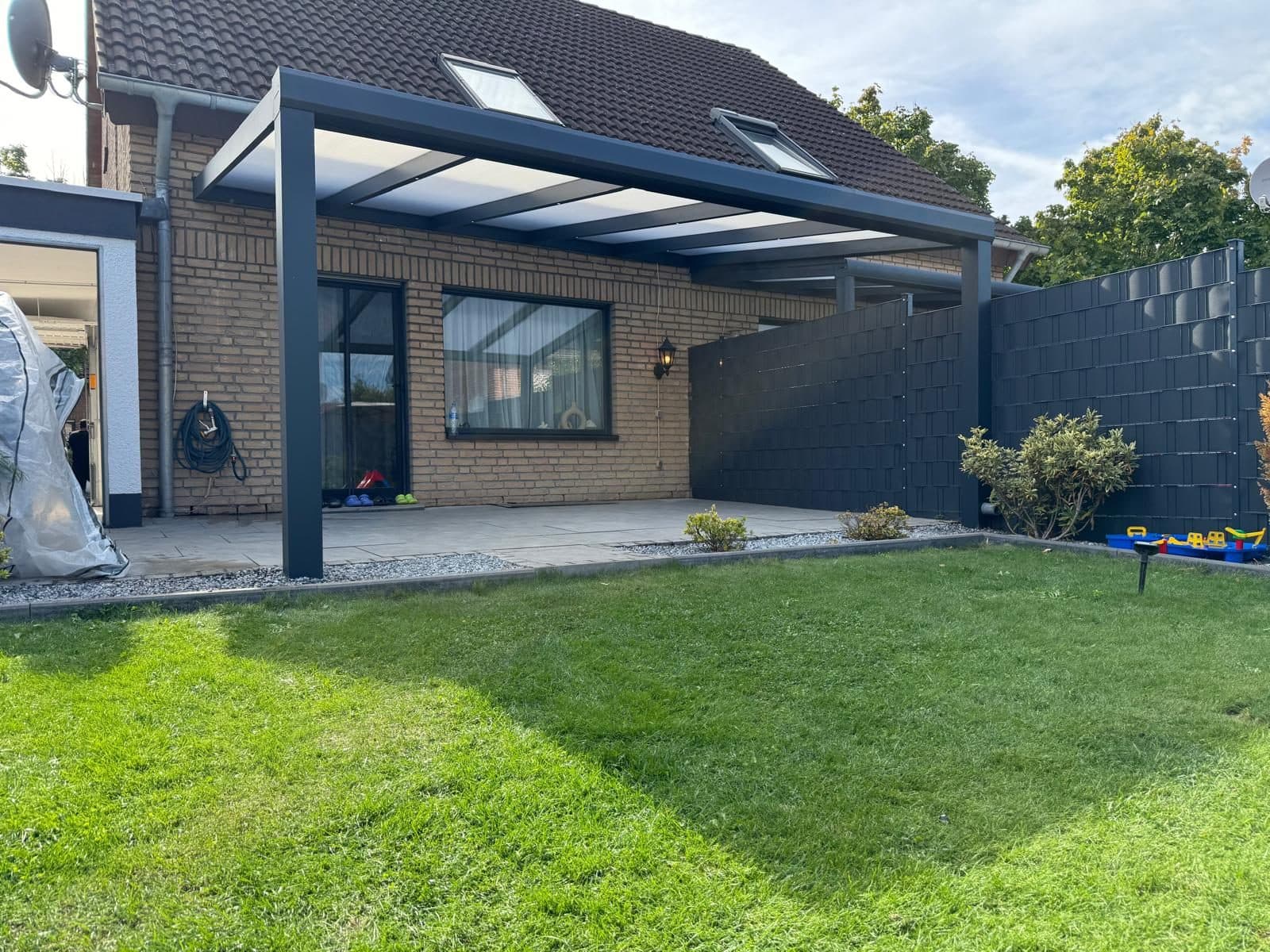
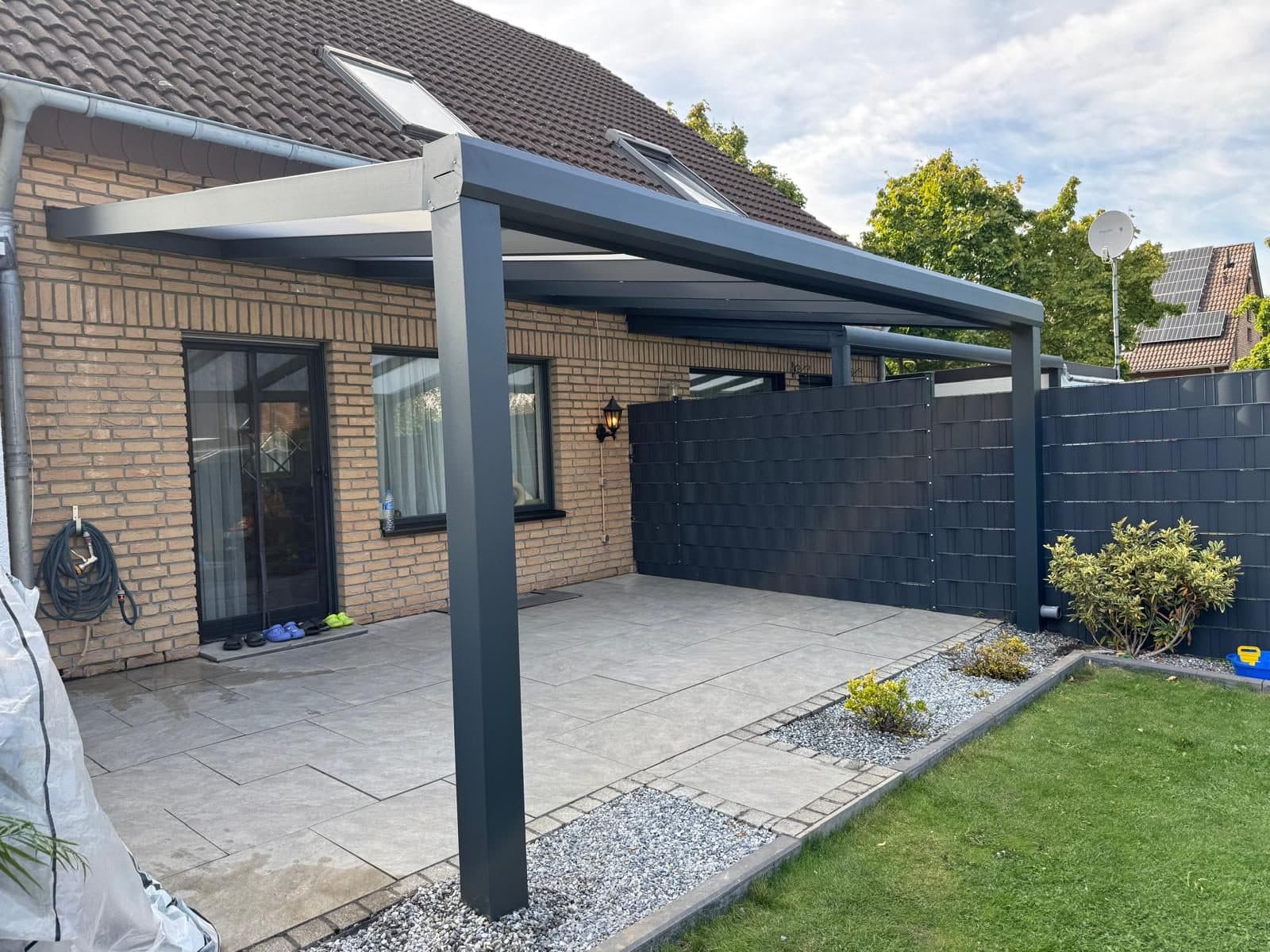
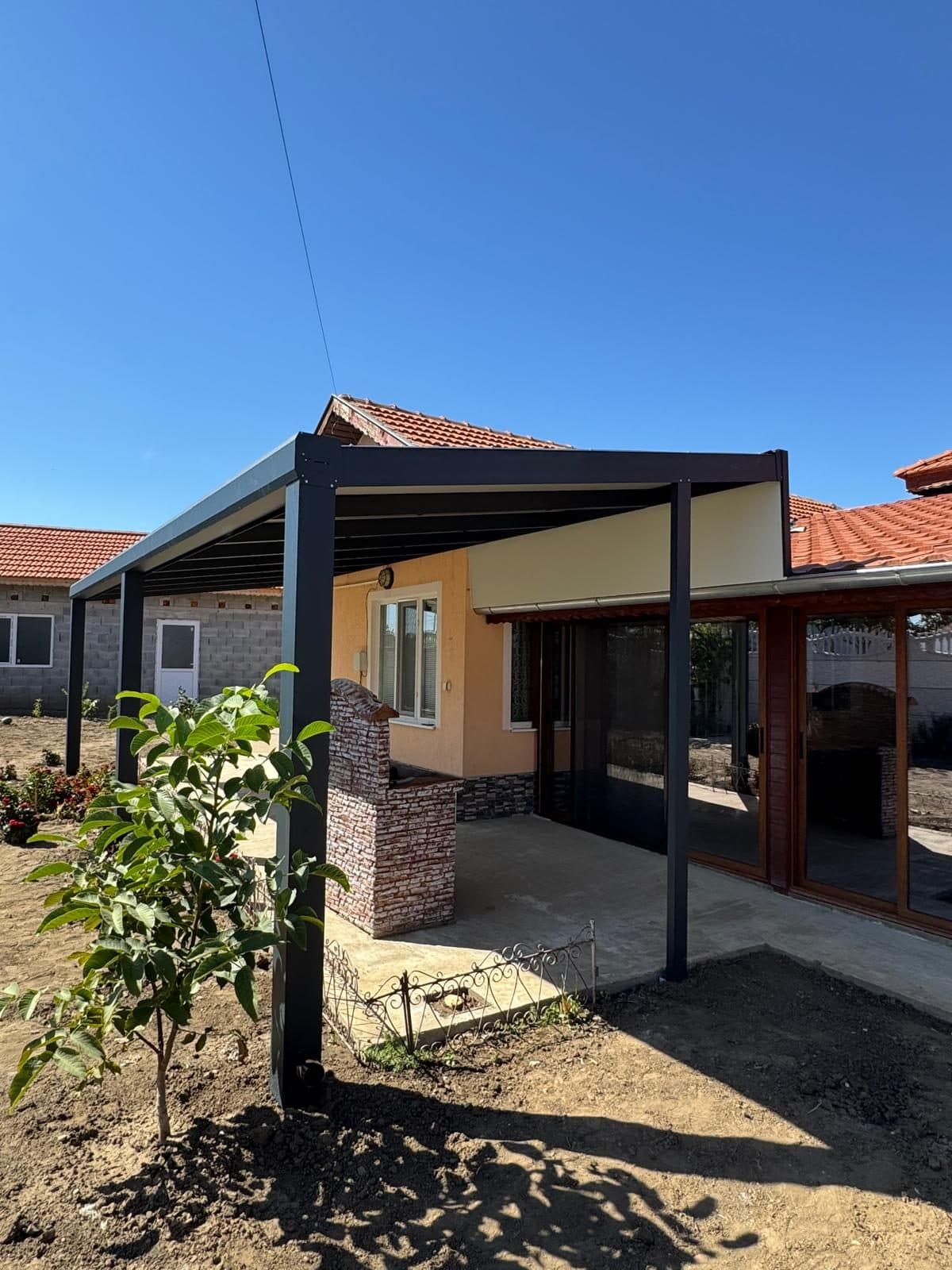
A pergola fixed to the façade usually has two posts, with the other side carried by the wall through a wall beam. A freestanding pergola has at least four posts and its own frame on all sides. More posts and beams mean more material and more anchoring. On the other hand, not every wall can take the load: an insulated façade, hollow brick or old render may need special fixings, or the freestanding option may turn out to be safer.
3. Manual or motorised
The louvres can be turned with a hand crank or by an electric motor with a remote. The crank is simpler and cheaper but mostly comfortable on smaller pergolas. A motor adds the cost of the drive, the controls and a power supply to the pergola. If the pergola is split into modules, each module usually has its own motor.
4. Sensors and automation
There are systems with rain, wind, temperature or snow sensors. A rain sensor closes the louvres on its own when it starts raining; a wind sensor moves them into a safe position. Some clients also add app control or smart-home integration. Each of these comforts adds to the price. What is possible with the chosen system is clarified during the site visit.
5. Lighting
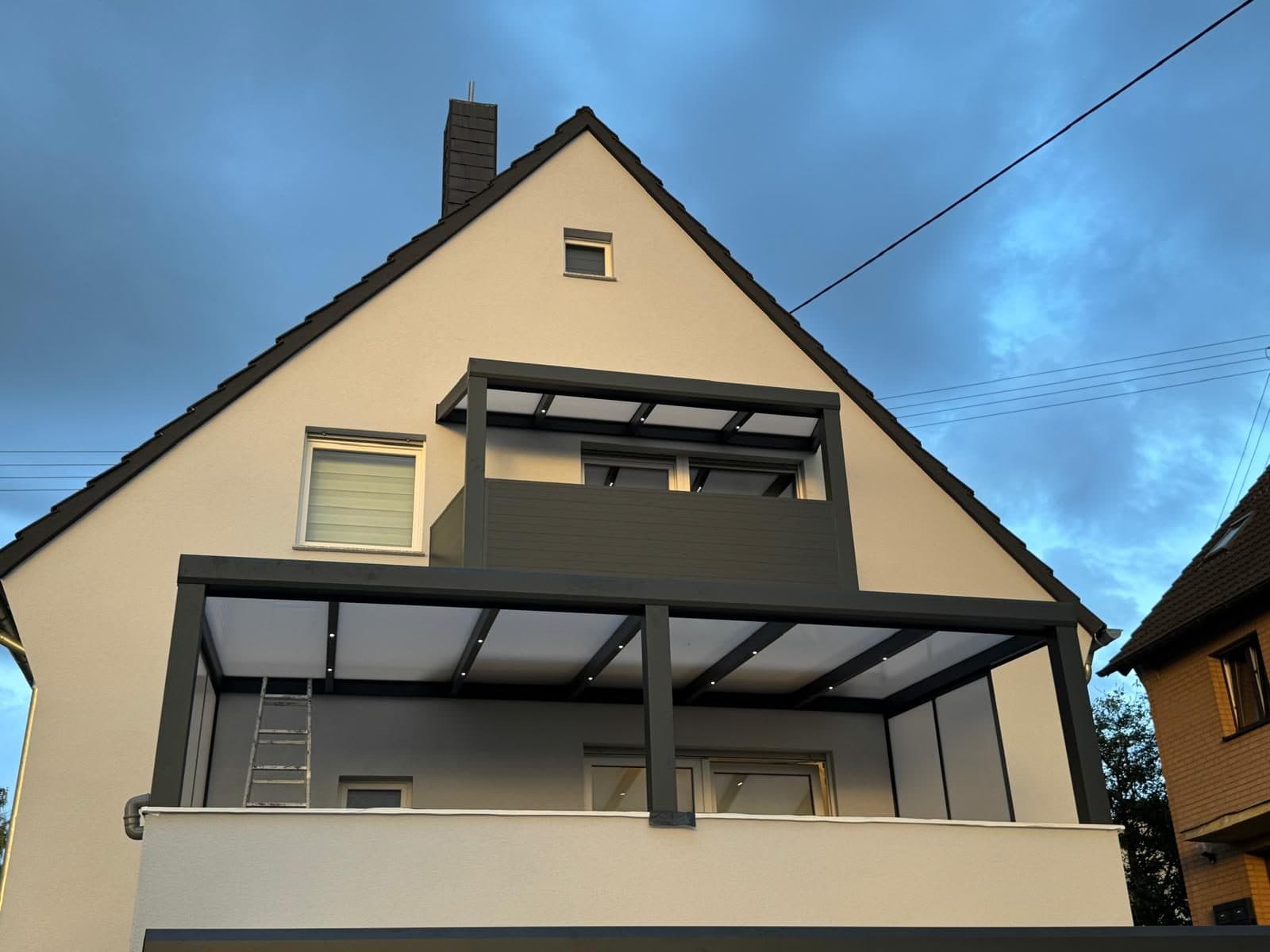
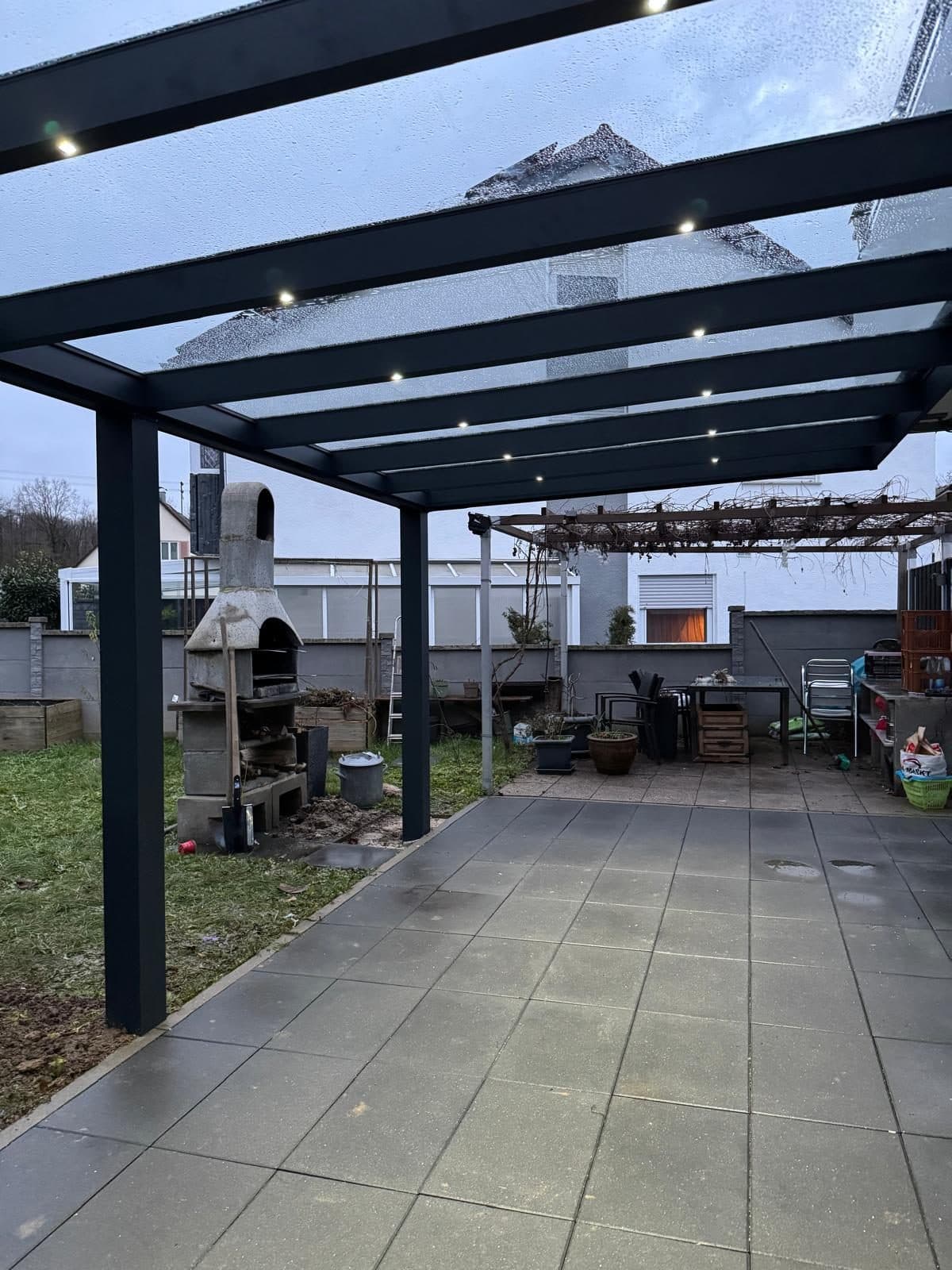
A pergola is used a lot in the evening, so lighting is a common extra. Options vary: LED strips in the beams, spotlights, light between the louvres or dimmable light. The price depends on the type, the length and whether it is controlled separately. It is cheapest to plan lighting from the start, when cables are routed through the profiles, rather than adding it later.
6. Side enclosure: screens and glass
The roof protects from above, but wind and low sun come from the side. That is why many people add side ZIP screens or sliding glass to the pergola. This is where the price often goes well beyond expectations, because the side enclosure can cost as much as the roof itself. So decide early:
- which side gets the most wind and sun, and whether only that side needs closing;
- whether you need shade and insect protection (screens) or an enclosed space for more months (glass);
- whether the side enclosure comes now or later, so the profiles can be prepared.
If you are planning a fully glazed room, compare it with a winter garden as well, as sometimes that is the more logical choice. More in our post pergola or winter garden.
7. Posts, colour and details
The number and size of posts follow from the structural design, but there are choices: a standard colour or a special RAL, visible or hidden downpipes, extra decorative elements. A non-standard colour usually costs more because the profiles are coated separately. Water from the closed louvres runs through gutters into the posts and down, so you also need to think about where it drains in the garden.
8. Foundation and site preparation
The posts need a solid base. With a stable concrete slab of sufficient thickness, anchoring is easy. If the pergola stands on lawn, pavers on sand or old cracked concrete, it will need pad footings or a new slab. This cost is often underestimated, yet it is decisive for safety in wind and snow. More on loads in can a pergola withstand wind and snow.
9. Access and installation
The price also depends on how easy the site is to reach. A pergola on a third-floor roof terrace, in a narrow courtyard or somewhere without vehicle access needs more people, lifting equipment or carrying long profiles by hand. Distance matters too, although we work all over Bulgaria, from Ruse and North-East Bulgaria to the other end of the country.
How to get an accurate quote
- Roughly measure the space: length along the wall, depth and height to the eaves or windows.
- Take photos of the wall, the ground and the access route.
- Decide what is a must (size, crank or motor) and what is optional (sensors, lighting, screens).
- Try the size and style in our 3D configurator to see how it will look.
- Book a free site visit so we can measure precisely and check the wall and the base.
On site we see things photos don't show: whether the wall can carry the load, how the terrace slopes, where the power comes from and where the water will drain. Only then is the quote real rather than approximate.
Common mistakes when comparing quotes
- Comparing pergolas with different spans and numbers of posts without looking at the drawing.
- Forgetting the foundation and power supply, which then turn out to be extra costs.
- Adding side screens after installation and finding the profiles were not prepared.
- Choosing the lower price without asking about profile thickness and anchoring.
If you want to know what your pergola will actually cost, a site visit is the quickest way. We come for free, measure, discuss the options and give you a no-obligation quote. Take a look at our pergolas, then request a free visit and quote.
Frequently asked questions about bioclimatic pergola cost
Why don't you give a price per square metre for a bioclimatic pergola?
Because the price depends on the span, the number of posts, the controls, the extras and the foundation, not only on the area. Two pergolas of the same size can be built very differently. We give an exact price after a free site visit.
What makes a bioclimatic pergola most expensive?
Usually the size and clear span, motorisation and side enclosure with glass or screens. The foundation can also be a big cost if there is no solid concrete slab.
Is a wall-mounted pergola cheaper?
Often yes, because fewer posts and beams are needed. But the wall must be able to carry the load, which we check on site. Sometimes a freestanding pergola is the safer choice.
Can I add a motor, lighting or screens later?
Some things can be added later, but it is easier and cheaper to plan them from the start. At least the power supply and the fixing points for screens should be planned when you order.
Does a manual bioclimatic pergola make sense?
For a smaller pergola that is not opened and closed often, a hand crank is a sensible choice. For a large area, or if you want the louvres to react to rain on their own, a motor is more convenient.