Sliding glass systems
Sliding glass panels enclose your terrace, veranda or pergola when it's cold or raining, and stack to the side when you want it open. The view stays.
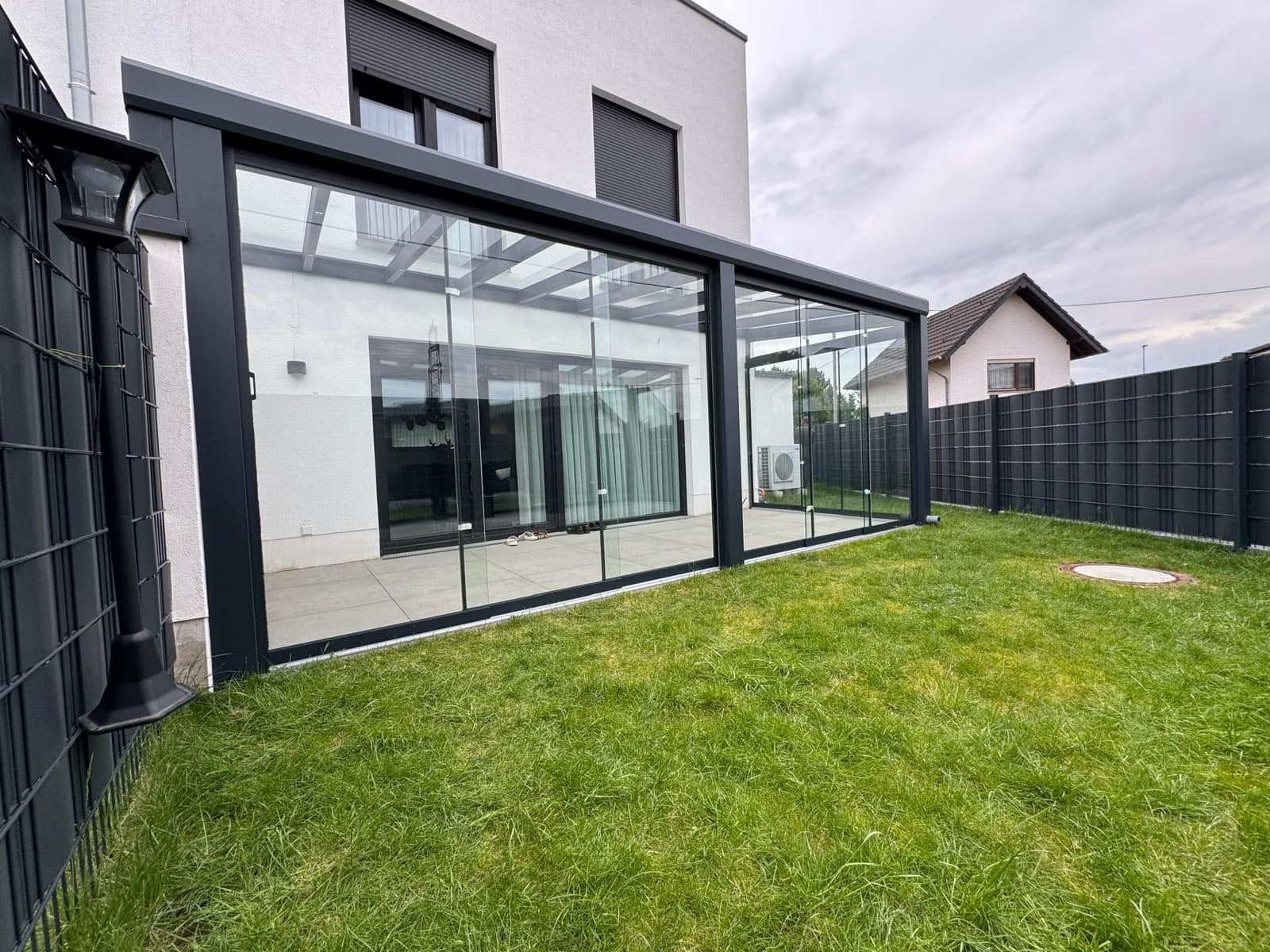
Closed when you need it. Open when you want it
Sliding glass systems are toughened glass panels that run on aluminium tracks. They can be fitted to terraces, verandas, under pergolas, on balconies and in restaurants and cafés.
The system keeps out wind, rain and dust, and in summer the panels slide to the side so the space is open again.
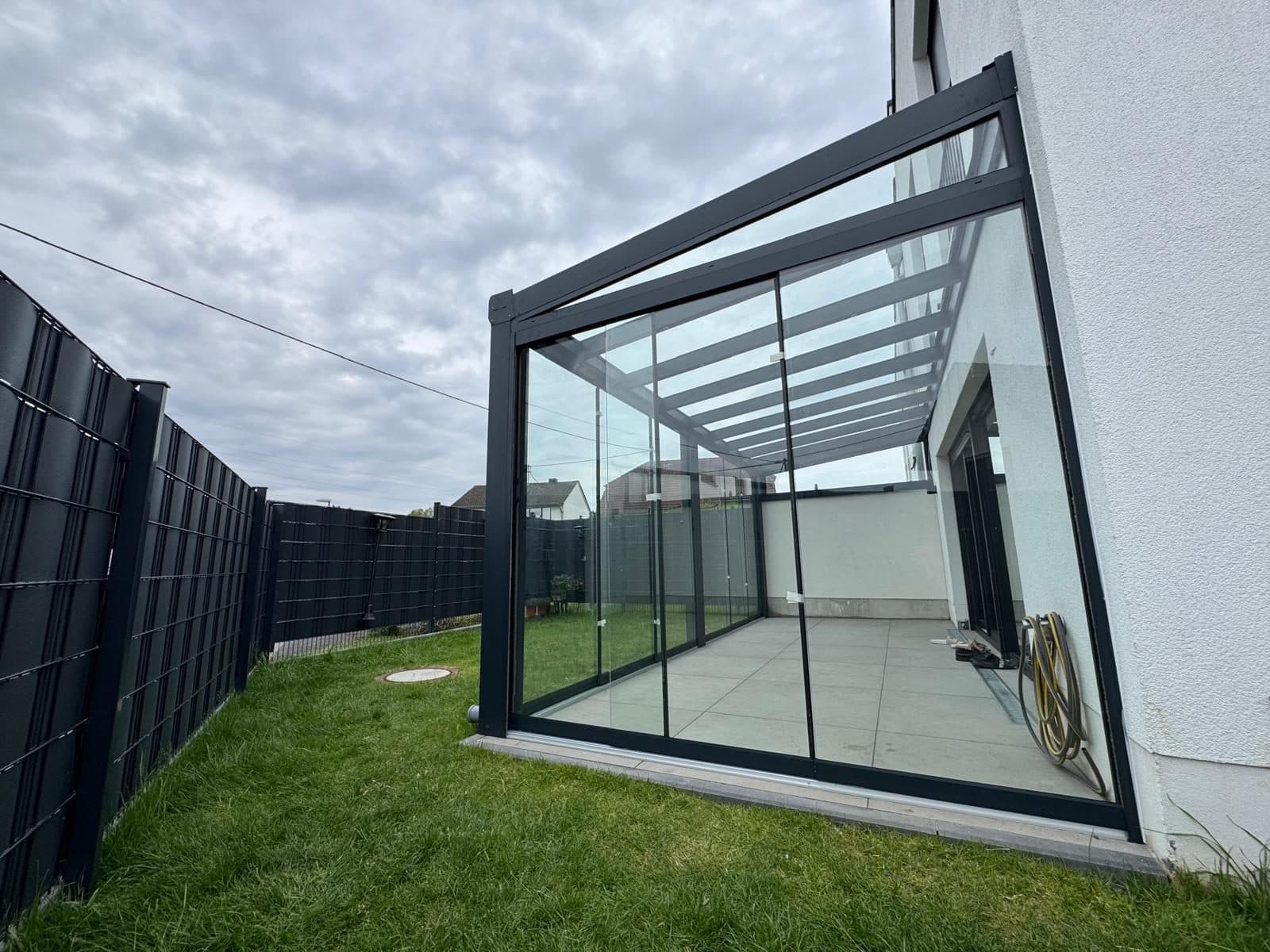
At a glance
- Toughened glass
- Smooth sliding on aluminium tracks
- For terraces, verandas, pergolas, restaurants and cafés
- Profiles in the colour of your choice
Where we install them
Terraces and verandas
Enclose the open area and make it usable for more of the year.
Under a pergola
Close in the sides of a pergola and turn it into a summer garden.
Restaurants and cafés
Outdoor seating areas keep working even in wind and rain.
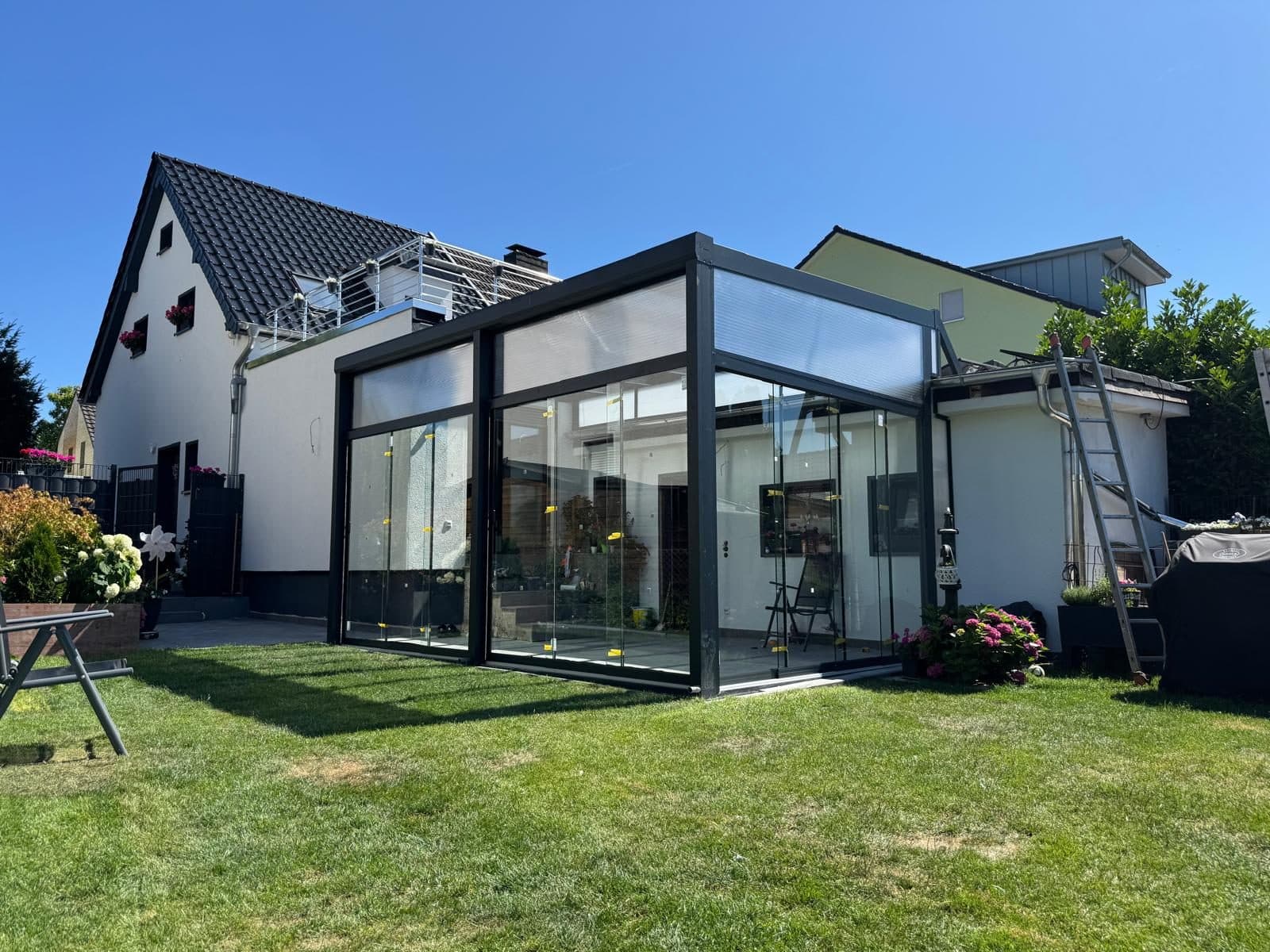
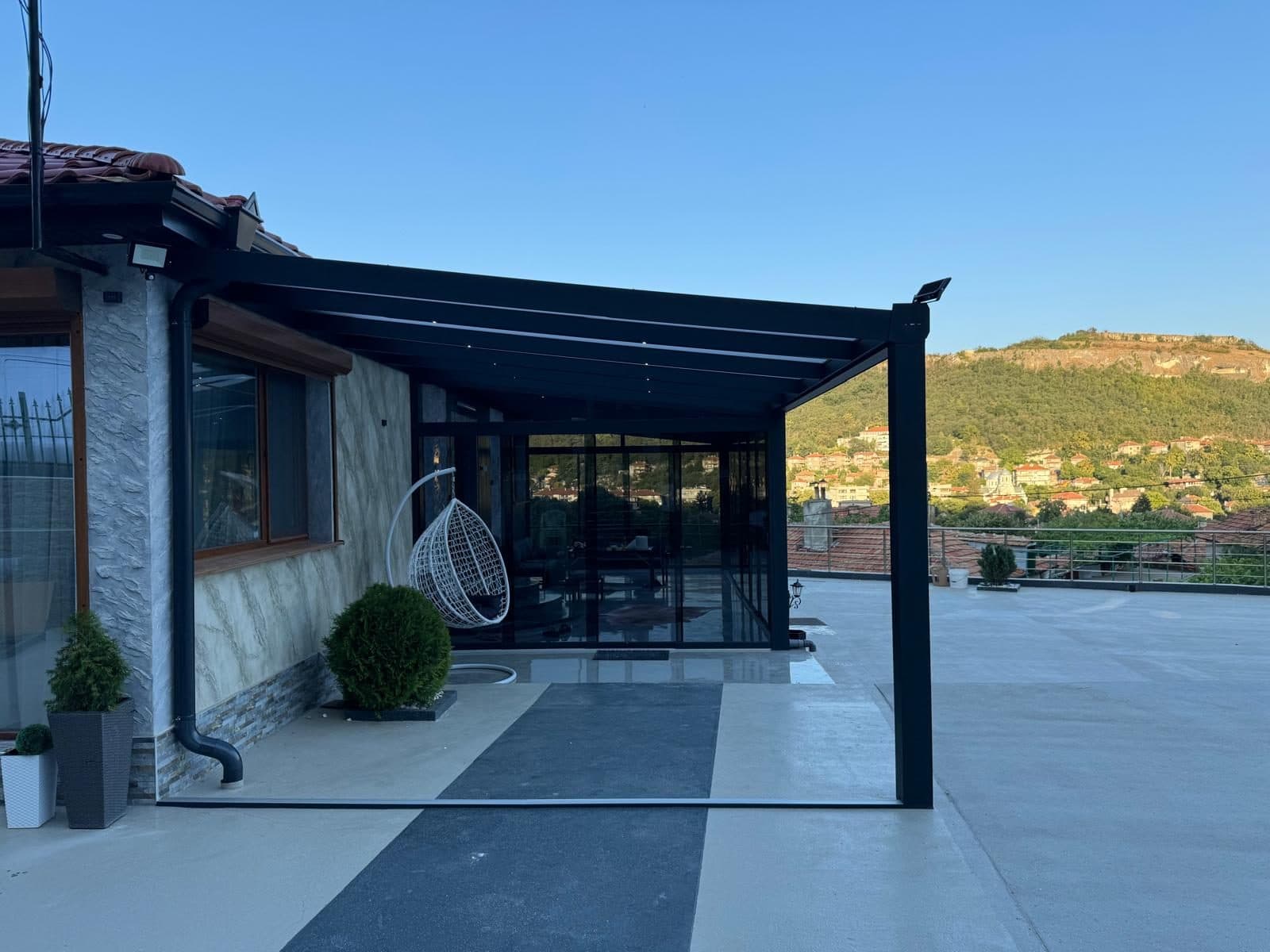
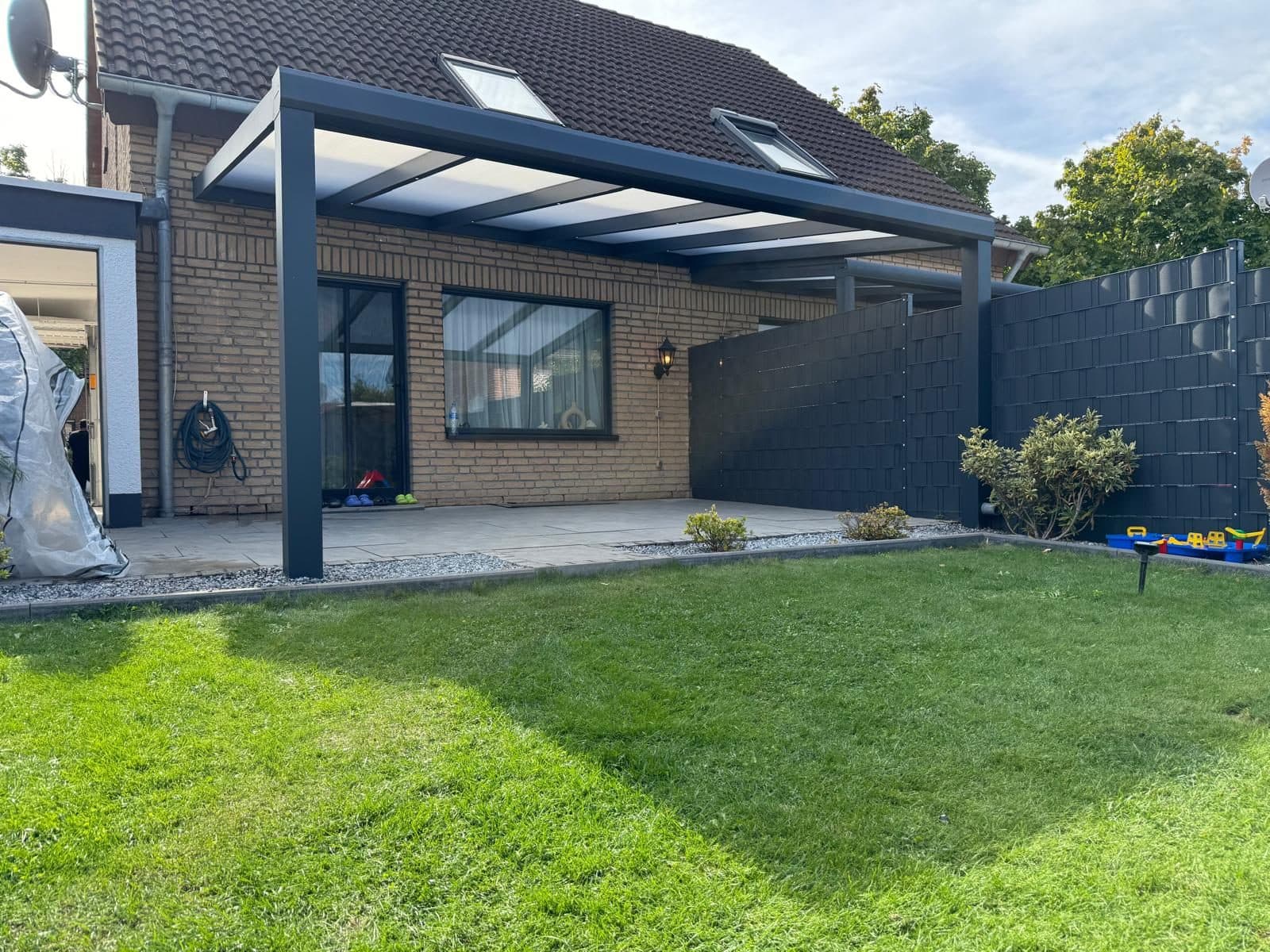
Sliding glass systems: real projects
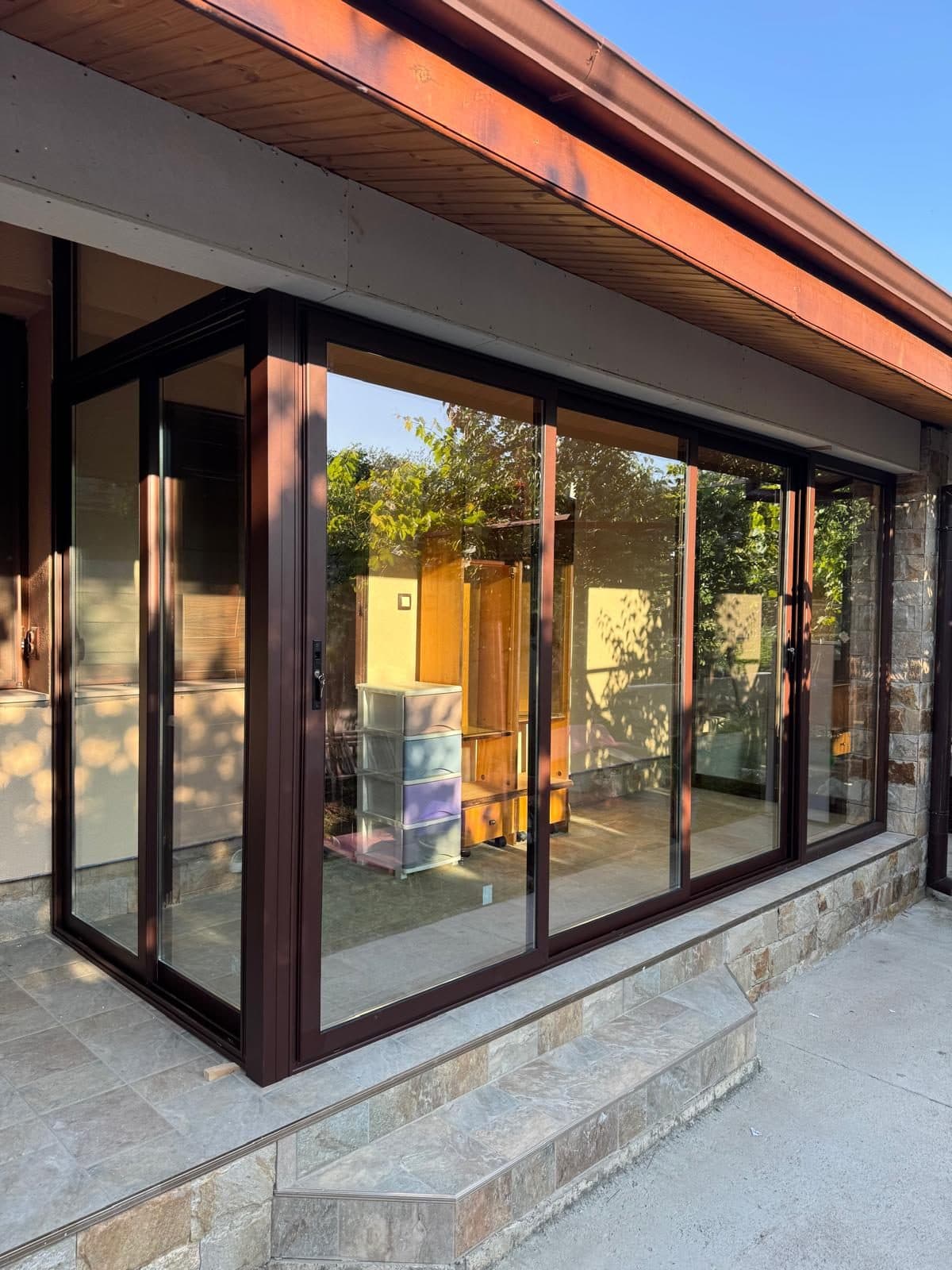
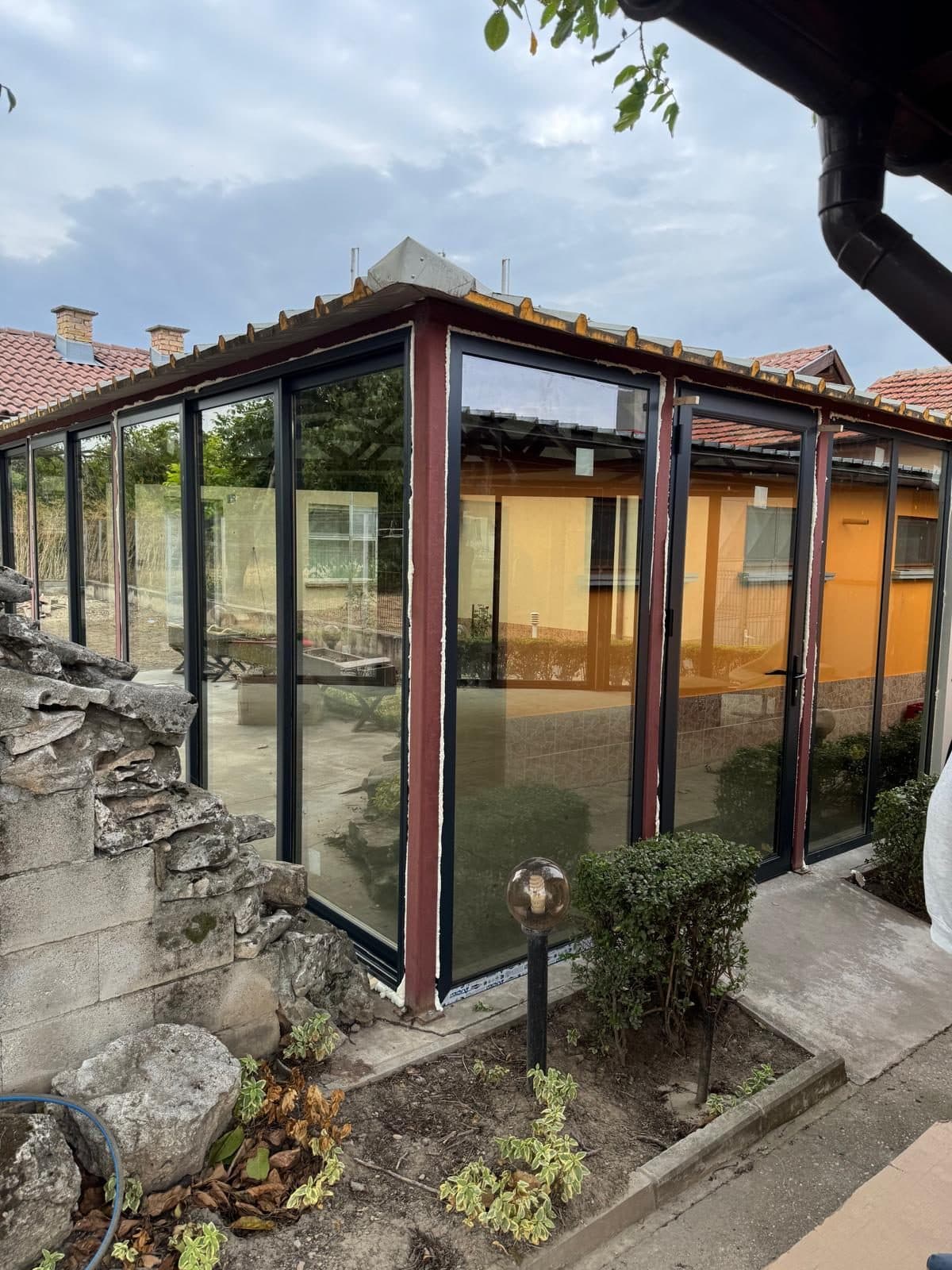
Photos of projects made and installed by our team.
Showing 6 of 9 photos
Frameless glazing for terraces and balconies: what to know
Glazing a terrace or balcony is one of the most common requests we get. Here is what is worth knowing before you order: which types of system exist, what drives the price, when you need a permit and how to look after the glass. That way you come to the site visit with a clear idea of what you want.
Types of terrace and balcony glazing
When people say “terrace glazing” they can mean several different systems. They differ in how much frame you see, how the panels open and how tightly they close the space.
- Frameless glazing. Toughened glass panels with no vertical profiles between them. They run in aluminium tracks at the top and bottom, slide along and stack at one or both ends. From outside you see almost nothing but glass, which is why this type is the most popular for terraces with a good view.
- Sliding systems with profiles. The glass sits in slim aluminium frames that run on two or more tracks and overlap. Part of the opening always stays behind another panel.
- Folding systems (bi-fold). The panels are hinged together and fold to one side. They open almost the whole width, but the frames are more visible.
- Glazing with windows. Classic PVC or aluminium windows with frames and double or triple glazing. They close the balcony most tightly and make it part of the home.
What frameless glazing does and doesn't do
Frameless glass systems keep out wind, rain, dust and street noise. The terrace becomes usable for much more of the year: spring starts earlier, autumn ends later, and in summer you simply slide the panels aside.
It is, however, single toughened glass with narrow gaps between the panels. The system is not an insulated wall and is not heated like a room. In cold, damp weather condensation can form on the inside of the glass, especially if the terrace is fully closed, has many plants or is used for drying laundry. Leaving one panel slightly open is usually enough.
If you want a warm room you can use in winter too, look at winter gardens or glazing with PVC or aluminium windows. If the terrace sits under a pergola, sliding glass can close it at the sides. You'll find a detailed comparison in the articles types of terrace glazing and frameless glazing: pros and cons.
What drives the price of glazing
We don't publish prices per square metre, because two balconies of the same size rarely cost the same. The price of frameless glazing mainly depends on:
- the length and height of the opening and the number of panels;
- the glass thickness, which depends on the panel size and how much wind the façade takes;
- the type of system: frameless, sliding with profiles or folding;
- corners and angles: a straight balcony is simpler than one with two or three corners;
- the state of the balustrade: whether the bottom track can sit on it or a new balustrade or base is needed;
- the profile colour, the locking and extras such as seals or blinds;
- the floor and access: on higher floors installation needs more preparation.
Do you need a permit to glaze a balcony?
This is one of the most common questions and there is no single answer for every case. Glazing changes how the façade looks, so the requirements depend on the building and the municipality. The general rule is: ask before you order.
- Flat in an apartment block. You usually need the consent of the owners' association, and in many municipalities approval from the municipality (the chief architect) too. Ask the municipality what applies to your address.
- Detached house. Glazing an existing terrace usually involves fewer requirements, but if the structure changes or a roof is added, check with the municipality as well.
- Restaurants and cafés. Outdoor seating areas in public spaces have their own rules, which are agreed with the municipality.
Care: glass, tracks and locking
Frameless glazing needs little care, but a few habits keep it in good shape for years:
- Keep the bottom track clear of leaves, sand and dust. A clean track matters most for easy sliding.
- Check the drainage holes in the track so that water runs outside.
- Wash the glass with water and ordinary glass cleaner, without abrasive sponges or sharp scrapers.
- In strong wind don't leave the panels ajar: close and lock them.
- If a panel starts to move more stiffly, don't force it. It is usually a matter of cleaning or adjustment.
How an order with us works
Every site is different, so we don't sell ready-made kits; we make the system to measure. The steps are always the same:
- Enquiry. Write to us through the quote form or call. If you can, send photos of the terrace or balcony.
- Free site visit. We come out, check the balustrade, ceiling and walls and take exact measurements.
- Quote. You get a quote for your specific site, with a description of the system.
- Production. The panels and tracks are made to the measured sizes.
- Installation. We install the system, adjust the panels and show you how to open, stack and lock them.
Frameless glazing in Ruse and North-East Bulgaria
Our showroom is in Ruse, at bul. Lipnik 135, where you can visit us and talk to us in person. We work all over Bulgaria and come for site visits outside Ruse too, for example to Varna, Veliko Tarnovo, Shumen, Razgrad, Silistra and Dobrich.
Before starting in Bulgaria we worked for more than 15 years in Germany and the Netherlands. That is where our habit of measuring precisely and installing cleanly comes from. If you are thinking about glazing a terrace or balcony, book a free site visit and we'll tell you which system suits your home.
Four steps to a finished project
Free site visit
We come to you, take measurements and talk through your idea, the profiles and the glass.
Clear quote
You receive a quote setting out the system, the materials and the price. No hidden costs.
Manufacture
We build the structure to the exact measurements of your property.
Installation
Our team installs it, cleans up afterwards and checks everything together with you.
Guides on Sliding glass systems
Questions about sliding glass systems
Call or message us. We also answer specific questions about your project before we come for the visit.
Are the glass panels heavy to slide?
No. The panels run on rollers along the tracks and can be moved with one hand.
Can they be fitted to an existing veranda or pergola?
In most cases, yes. At the site visit we'll check the structure and take exact measurements.
Do sliding glass panels keep out wind and rain?
Yes. When closed, the panels stop wind, rain and dust. It is not a fully sealed, insulated wall like a winter garden, though, but a light system you close and open depending on the weather.
Can it be opened completely?
Yes. The panels slide and stack at one or both ends, leaving the opening almost entirely free.
How do you clean the glass?
Like ordinary windows, with water and glass cleaner. The panels stack to the side, so you can easily reach both faces. It's worth keeping the bottom track free of leaves and dust so the panels keep sliding smoothly.
Do they lock?
Yes. The panels are fixed and locked from the inside so they can't be opened by wind or from outside. We'll show you the options at the site visit.
Does frameless glazing insulate like windows?
No. The glass is single and there are gaps between the panels, so the system keeps out wind and rain but doesn't insulate like windows with double glazing. For a room you use all year, a winter garden or glazing with windows is a better fit.
Does frameless glazing get condensation?
It can in cold, damp weather, especially when the terrace is fully closed. The easiest way to avoid it is ventilation: leave one panel slightly open.
Can the glazing go on the old balcony balustrade?
That depends on its condition and height. If the balustrade is solid and level, the bottom track can often sit on it. If not, a new balustrade or base is built. We check this at the site visit.
Is the glass safe with children in the house?
Toughened glass is used, which is much stronger than ordinary glass. If it does break, it shatters into small pieces that are far less dangerous than the sharp shards of ordinary glass. The panels lock from the inside.
Do I need a permit to glaze a terrace?
It depends on the building and the municipality. For a flat in a block you usually need the consent of the owners' association and often approval from the municipality. Before ordering, ask the municipality what applies to your address.
Can a corner terrace be glazed?
Yes, corner terraces and balconies are glazed too. How the corner is solved depends on the system and the structure, so we work it out at the site visit.
Other services
Thinking about sliding glass systems?
We'll come for a free site visit, take exact measurements and send you a clear quote, with no obligation.