ZIP screens, patio awnings and window awnings
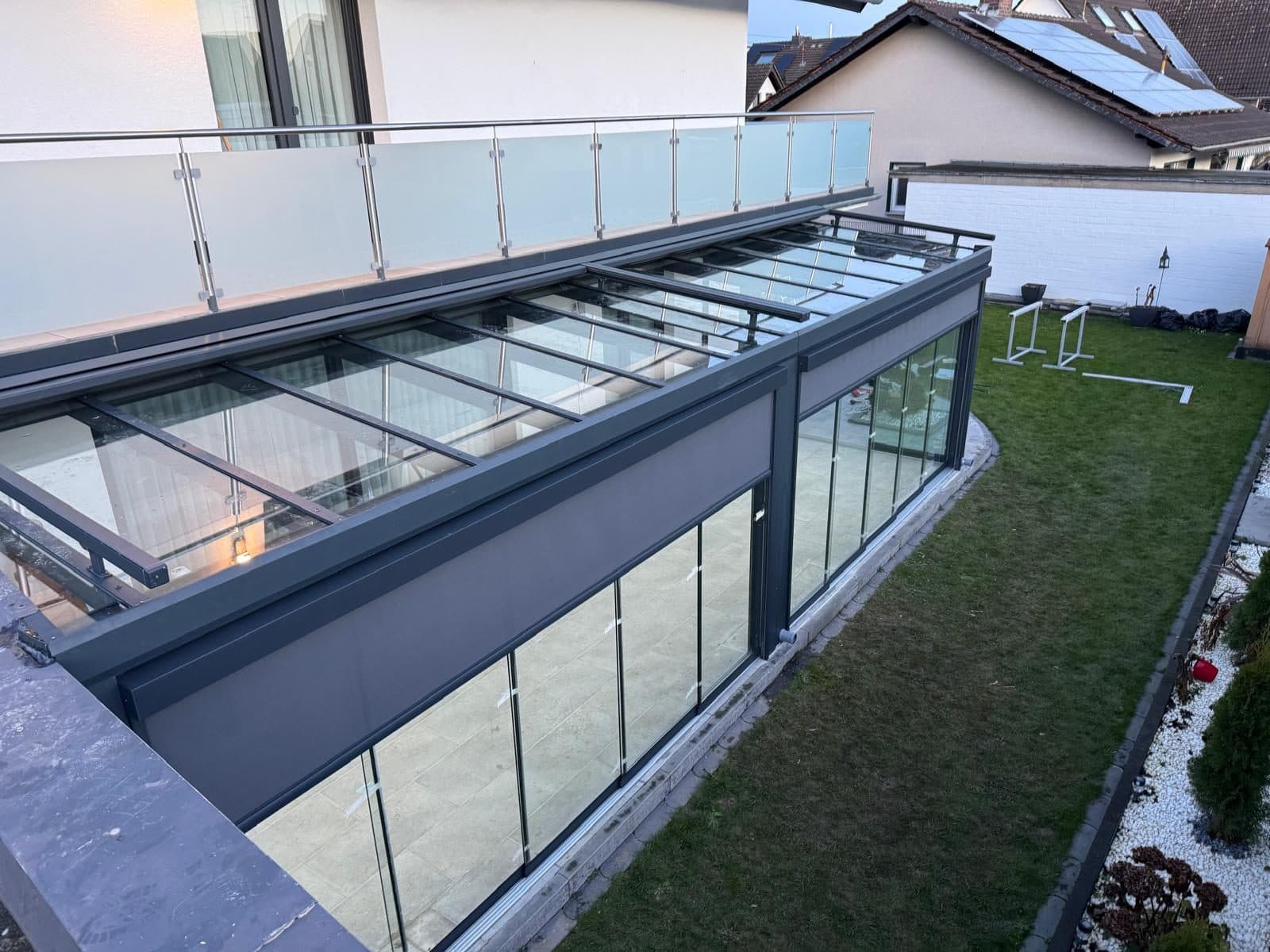
ZIP screens drop down along the sides of a pergola or veranda and close the space off from sun, wind and insects. Awnings provide shade over the terrace.
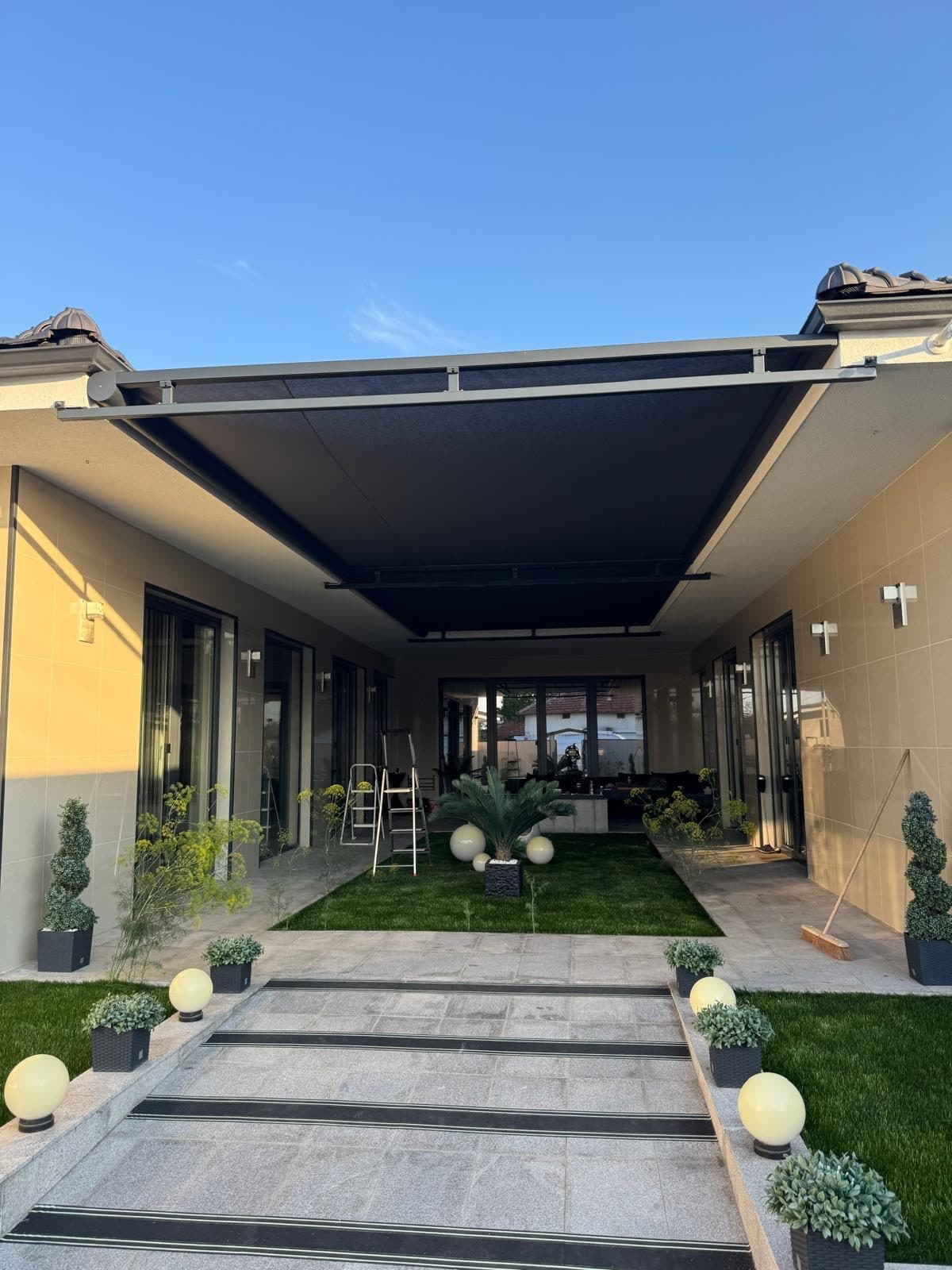
Shade exactly where you need it
ZIP screens have fabric that runs in side channels with a zip edge, so it stays taut even in the wind instead of flapping. They are ideal for pergolas, verandas, winter gardens and windows.
Awnings extend over the terrace or shopfront and retract when you don't need them. We fit them to houses, flats, restaurants and cafés.
At a glance
- Fabric stays taut even in wind
- Protection from sun and insects
- For pergolas, verandas and windows
- Awnings for terraces and shopfronts
What we offer
ZIP screens
Fabric in side channels that closes off the sides of a pergola or veranda.
Patio awnings
Shade over the terrace that retracts when you don't need it.
Window awnings
Sunshades for windows and for shopfronts of shops, restaurants and cafés.
ZIP screens and awnings: real projects
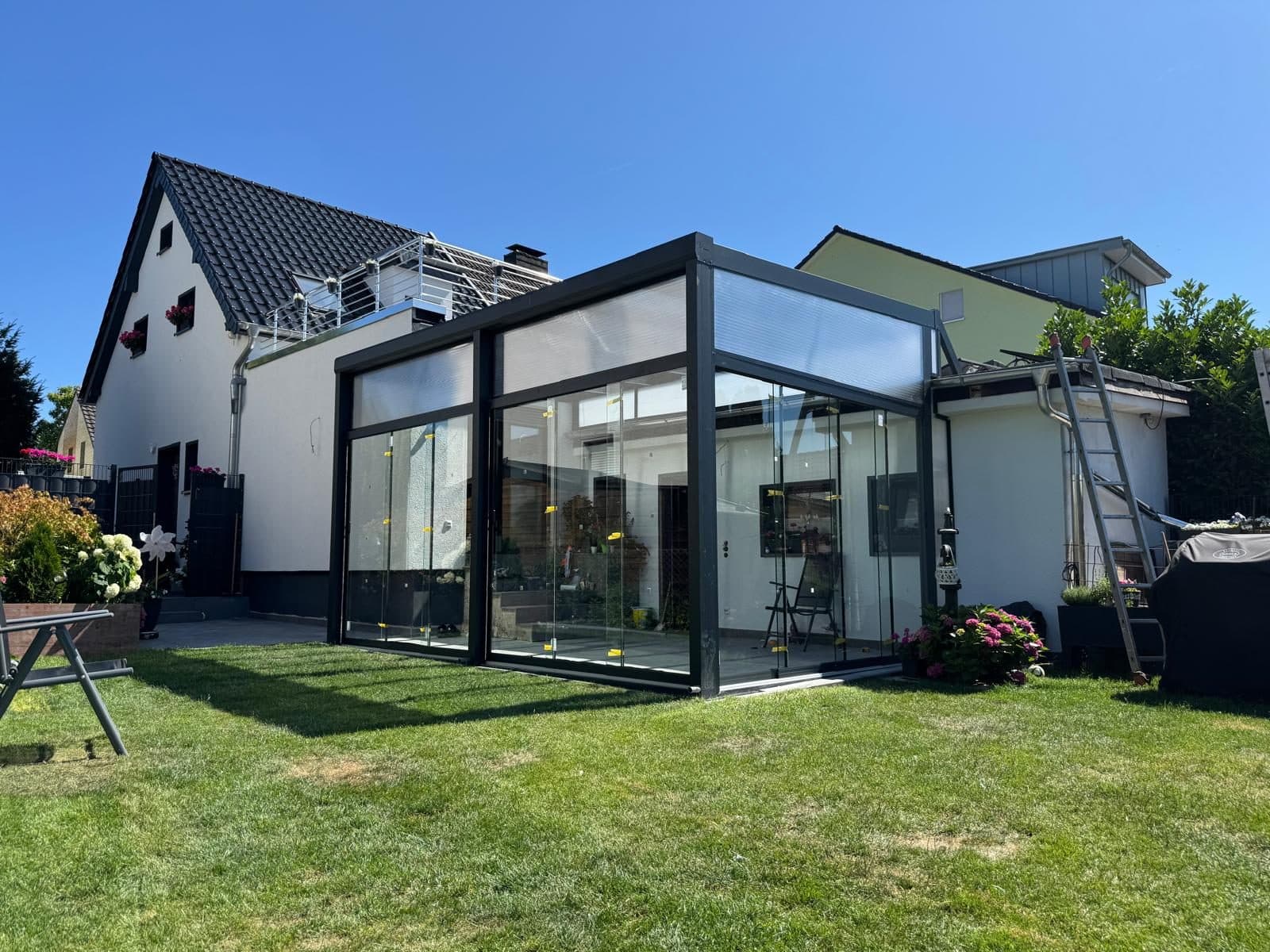
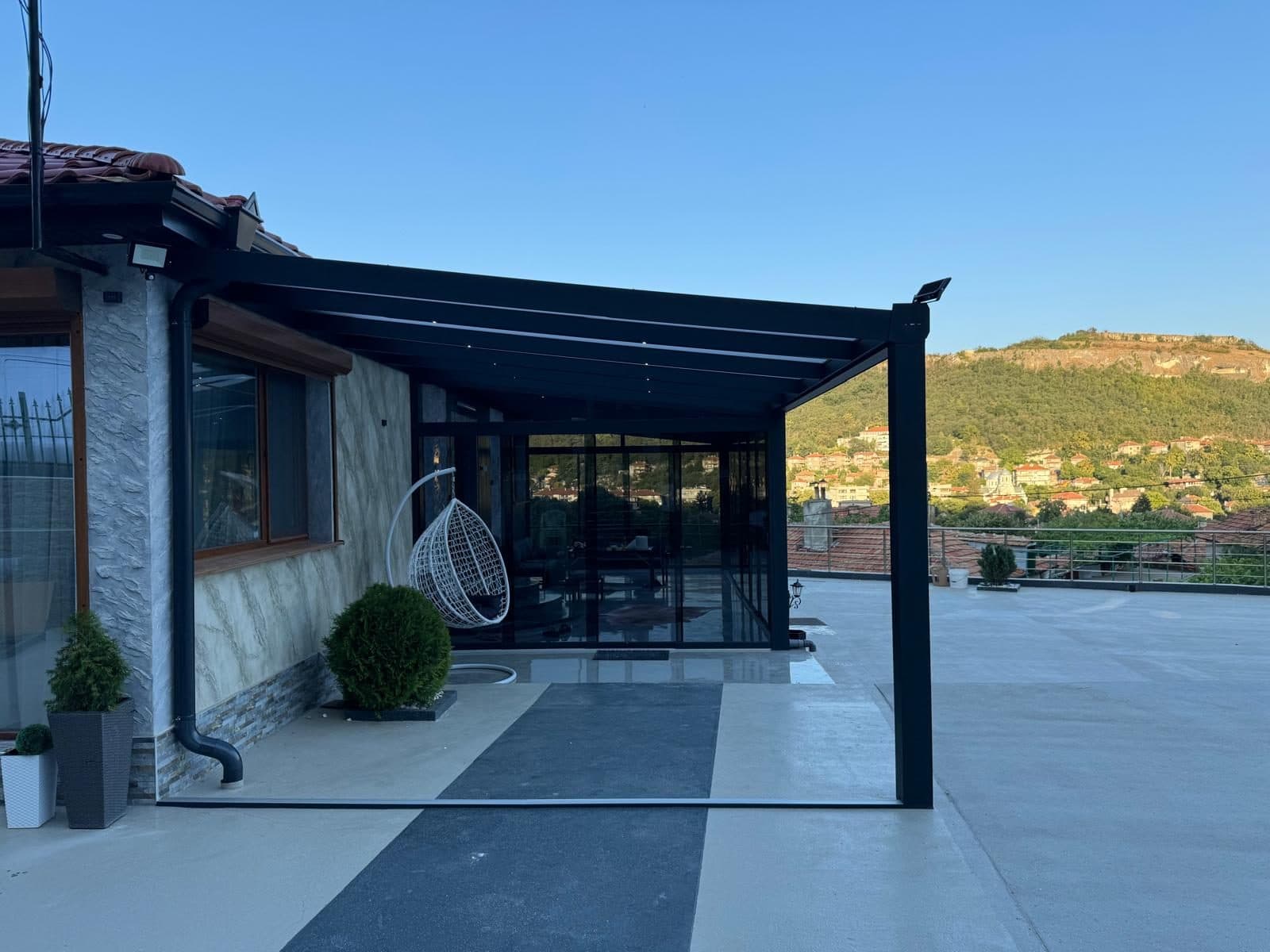
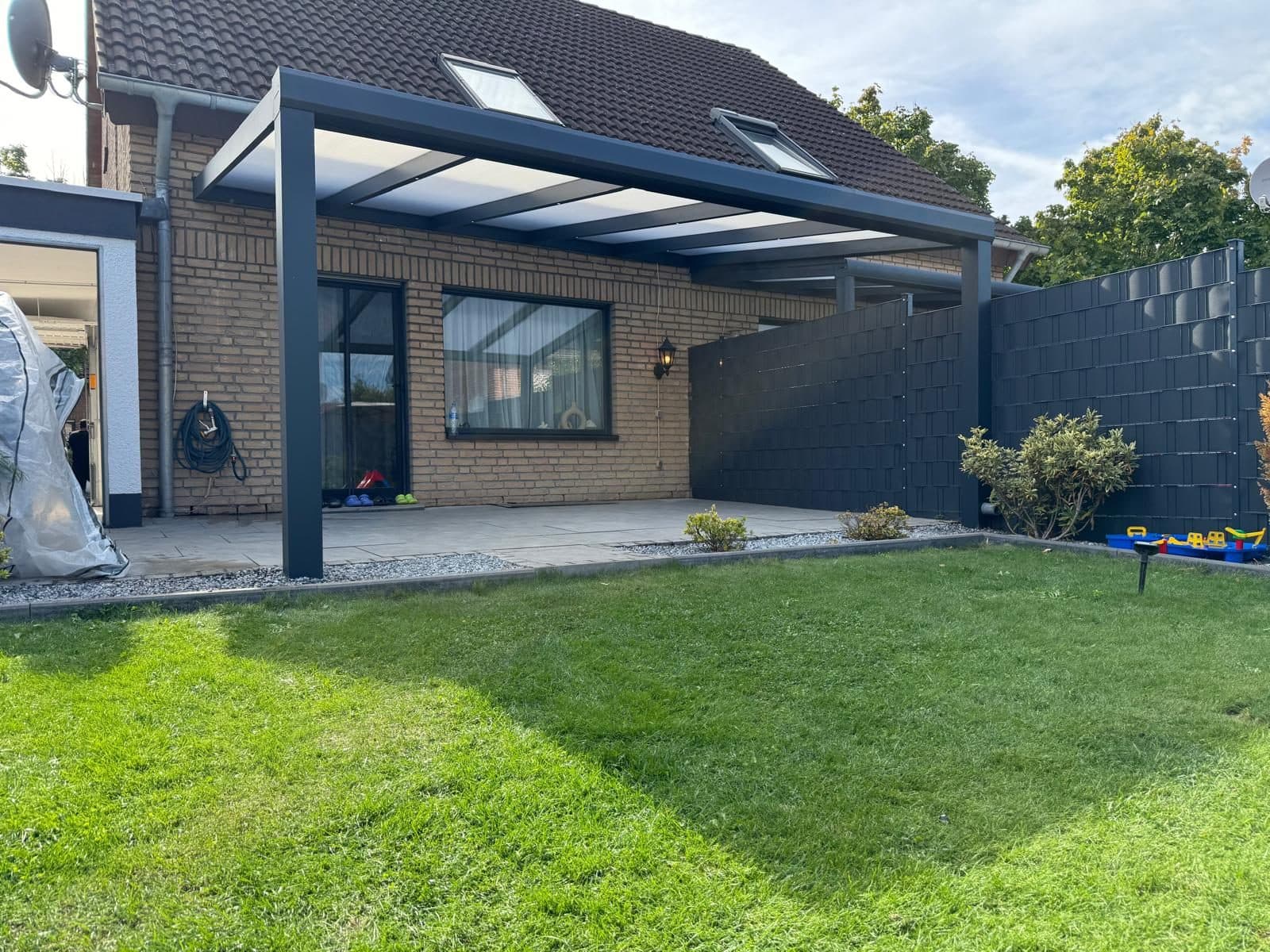
Photos of projects made and installed by our team.
ZIP screens and awnings: how to choose your shading
A terrace, pergola or window can be shaded in several ways. The right one depends on where the sun comes from, how windy it is and whether you want to close the space at the sides or cover it from above. Here we compare ZIP screens, folding-arm awnings and window awnings, explain how to choose the fabric, what drives the price and how to look after them.
ZIP screens, awnings and window awnings: the difference
Often the best answer is a combination: a pergola or veranda as the roof and ZIP screens at the sides. You can read more in the article ZIP screens: what to know.
The three systems are often confused, but they do different jobs:
- ZIP screens. Vertical outdoor blinds whose fabric edges are held by a zip in side guide rails. They close a pergola, veranda or window at the side and block the low morning and evening sun. Because the fabric is held along its full height, they are the most wind-resistant outdoor blinds.
- Awnings. A shade over the terrace, usually with folding arms, that extends from the façade and retracts. It gives shade from above when the sun is high.
- Window awnings. Smaller awnings over windows and the shopfronts of shops and cafés.
How to choose the fabric
The fabric decides how much light and view remain and how much heat the screen blocks.
Colour matters too: light fabrics reflect more heat, while with screen fabrics darker colours usually give a clearer view out. We'll bring samples to the site visit, and you can also see them in our showroom in Ruse.
The main types of fabric are:
- Screen (mesh) fabric. Blocks most of the sun and heat but lets air through and keeps the view out during the day. The most popular choice for terraces and pergolas.
- Blackout fabric. Lets through neither light nor views. Suits bedrooms or when you want complete privacy.
- Clear panel. There are also ZIP systems with a clear PVC sheet that keeps out wind and rain but lets light in. Whether it suits your space, we work out at the site visit.
Wind-resistant blinds: what it means in practice
With ordinary outdoor blinds the fabric hangs freely and flaps and bangs in the wind. With ZIP screens the fabric edges are held in the side rails, so it stays taut and doesn't pull out. That's why they're called wind-resistant screens.
Wind-resistant doesn't mean the screen can stay down in any weather, though. How much wind it takes depends on its size and the system, and in a storm it's safer to retract it. Awnings are more sensitive and should always be retracted in strong wind.
There are also systems with wind or sun sensors that raise or lower the screens on their own. We'll discuss what's possible for you at the site visit.
What drives the price of ZIP screens and awnings
We don't give a price per square metre without a site visit, because every screen and awning is made to measure for a specific place. Book a free site visit and you'll get a quote. The price mainly depends on:
- the width and height of each screen and how many there are;
- the type of fabric;
- manual or motorised operation and whether there's power on site;
- how it's mounted: in a pergola, on the façade, in a window reveal or under a ceiling;
- the cassette and the profile colour;
- for awnings: the arm projection and whether a cassette protects the fabric when retracted;
- access and the mounting height.
Care: fabric, guide rails and winter
ZIP screens and awnings need little care, but a few habits keep them in good shape:
- Clean the fabric with water and a soft brush, without harsh cleaners and without a pressure washer.
- Keep the side rails and bottom bar free of leaves and dust.
- If an awning or screen was retracted wet, extend it again to dry as soon as the weather allows. Fabric left rolled up wet for long can stain and get mouldy.
- In winter, don't lower or raise screens when the fabric or rails are iced up, and don't leave snow on an awning.
- If a motorised screen stops moving smoothly, don't force it with the remote; get in touch with us.
How an order with us works
We make screens and awnings to measure, so everything starts with a site visit:
- Enquiry. Write to us through the quote form or call. Tell us where you need shade and where the sun comes from.
- Free site visit. We measure, check the structure or wall it will be fixed to and, if you want a motor, where power can come from.
- Quote. You get a quote describing the system, fabric and operation.
- Production. The screens and awnings are made to the measured sizes.
- Installation. We install, adjust and show you how to use them.
ZIP screens and awnings in Ruse and North-East Bulgaria
Our showroom is in Ruse, at bul. Lipnik 135, where you can see profiles and samples. We come for site visits all over Bulgaria, including Varna, Veliko Tarnovo, Shumen, Razgrad, Silistra and Dobrich. The visit and the quote are free.
Before Bulgaria we worked for more than 15 years in Germany and the Netherlands. We fit ZIP screens to new and existing pergolas and verandas alike, and if you're still planning a roof for your terrace, read about the bioclimatic pergola too. If you're looking for ZIP screens or awnings in Ruse and the region, book a free site visit.
Four steps to a finished project
Free site visit
We come to you, take measurements and talk through your idea, the profiles and the glass.
Clear quote
You receive a quote setting out the system, the materials and the price. No hidden costs.
Manufacture
We build the structure to the exact measurements of your property.
Installation
Our team installs it, cleans up afterwards and checks everything together with you.
Guides on ZIP screens and awnings
Questions about ZIP screens and awnings
Call or message us. We also answer specific questions about your project before we come for the visit.
Can ZIP screens be fitted to an existing pergola?
In most cases, yes. At the site visit we'll check the structure and take measurements.
Do ZIP screens let light through?
It depends on the fabric. Some fabrics block the sun but keep the view outside, while others black out completely.
Are the screens and awnings motorised?
ZIP screens can be motorised with a remote control or operated by hand. Awnings can be motorised too. A motor needs a power supply, which we'll plan at the site visit.
Do they cope with wind?
ZIP screens run in side guides and the fabric stays taut, so they hold up in wind much better than loose fabric. Awnings are best retracted in strong wind.
What fabrics and colours are there?
We offer a range of fabrics in different densities and colours: from mesh that blocks the sun but keeps the view, to blackout. We'll show you samples at the site visit.
How do you clean them?
With water and a soft brush or sponge, no harsh cleaners. When not in use, the screens and awnings retract and the fabric is protected from dust and rain.
What's the difference between a ZIP screen and an ordinary outdoor blind?
On a ZIP screen the fabric edges are held by a zip in the side rails, so the fabric stays taut in the wind and doesn't flap. On an ordinary outdoor blind the fabric hangs freely or runs only on cables, and it has to be raised sooner when the wind picks up.
Do ZIP screens keep out mosquitoes?
Yes, when they're down. The fabric is enclosed in the side rails, so there are no gaps at the edges for insects to get through. Screen fabrics let air through, so it doesn't get stuffy.
Awning or ZIP screen for the terrace?
An awning gives shade from above when the sun is high. A ZIP screen closes the side and blocks low sun, wind and views. On east- and west-facing terraces a ZIP screen is often more useful, and the two can be combined.
Can the screens stay down in winter?
It's better to raise them in snow, ice and strong wind. Don't lower or raise a screen when the fabric or rails are iced up.
Do I need permission for an awning on a balcony in a block of flats?
It depends on the building and the municipality. The façade is shared, and some owners' associations and municipalities have rules on the colour and type of awnings. If you're unsure, ask the owners' association and the municipality before ordering.
Do you fit ZIP screens to windows?
Yes. ZIP screens are also fitted in front of windows, in the reveal or on the façade above it. The method depends on the wall and the window frames, so we choose it at the site visit.
Other services
Thinking about ZIP screens and awnings?
We'll come for a free site visit, take exact measurements and send you a clear quote, with no obligation.