ZIP screens – what are they and can they withstand wind?
ZIP screens look like ordinary outdoor blinds, but the fabric is held along its full height. We explain how they work, when they withstand wind and how to choose them.
Published: November 4, 20267 min read
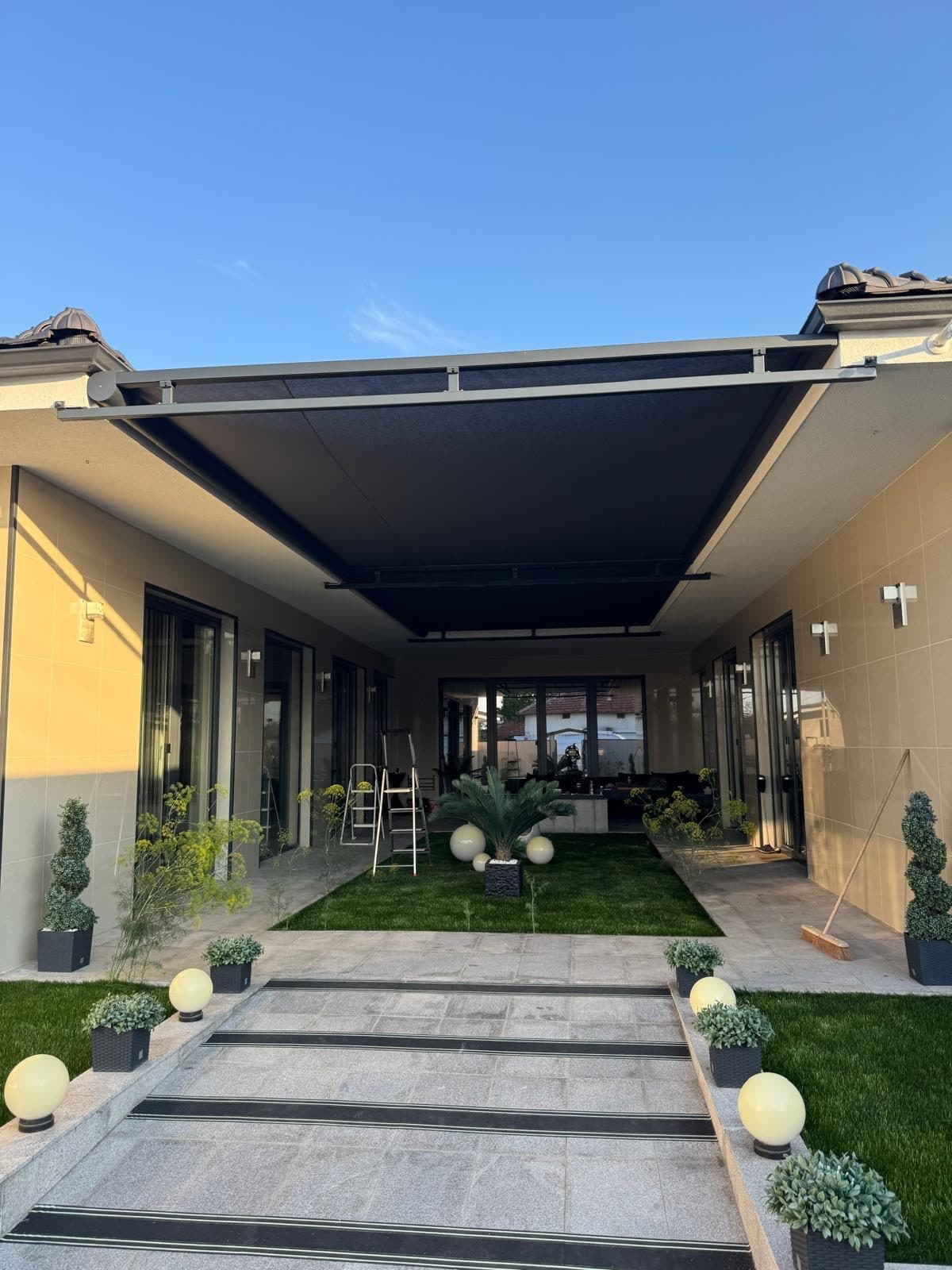
ZIP screens (also called zip blinds, screen blinds or windproof blinds) are external vertical blinds that roll down in front of a window, a terrace opening or the side of a pergola. At first glance they look like an ordinary fabric roller blind. The difference lies in the detail that gives them their name, and it changes a lot: how they behave in wind, whether insects get through and how neat they look.
What ZIP screens are and how they work
The system has three main parts: a cassette at the top into which the fabric rolls, two side guides, and a bottom bar that keeps the fabric taut. The special part is that both edges of the fabric have a welded strip with “teeth”, like half a zip. This strip runs in a channel inside the side guide and cannot come out. So the fabric is held along its full height, not just at the top and bottom.
- No side gaps: the fabric reaches into the guide, so light, wind and insects don't get past it.
- No flapping: the fabric is taut and doesn't billow like a sail.
- Neat look: when lowered, the screen looks like a tensioned fabric wall.
How they differ from ordinary outdoor blinds and awnings
An ordinary fabric outdoor blind is usually guided by cables or thin rails, with the fabric free in between. In wind it sways and bangs and has to be retracted early. An awning, on the other hand, is horizontal or sloped and protects from above, but not from low sun or side wind. A ZIP screen is vertical and closes the opening completely. That is why it is mostly used where side enclosure is needed: on a terrace, between the posts of a pergola or veranda, in front of large windows.
Can ZIP screens withstand wind?
In short: much better than ordinary blinds, but not any wind. Because the fabric is held in both guides, the wind cannot push it out; the pressure passes into the guides and from there into the wall or structure. This lets them stay down in wind in which an ordinary blind should long since have been raised.
Exactly how much they take depends on several things:
- Width: the wider the screen, the more the fabric deflects and the greater the pressure on the guides. A narrow screen withstands more than a wide one of the same system.
- System: manufacturers state a wind resistance class for external blinds under the European standard EN 13561, usually for specific sizes.
- Fixing: the guides must be fixed into a solid base. On pergola posts, the screen passes the pressure to the pergola itself.
- Exposure: a screen on an open terrace high up is loaded far more than one in a courtyard.
In a storm the rule is simple: retract the screens. With a motor, a wind sensor can do it for you. If the screens are on a pergola, the side enclosure must be allowed for in the structural design, because a lowered screen passes the wind to it. More on this in can a pergola withstand wind and snow.
Which fabrics are available
- Screen fabric: perforated, blocks much of the sun while you can see out from inside. The most common choice for terraces.
- Blackout fabric: lets no light through, suited to bedrooms or projection areas.
- Clear PVC: protects from wind and rain without hiding the view. Often used in restaurants and on terraces you want to use on cooler days.
Colour matters too. With screen fabrics, dark colours usually give better visibility outwards and less glare, while light colours reflect more sun and look lighter from outside. It is best to see samples on site, in your own light.
Where ZIP screens are fitted
- On windows: as external blinds that stop the sun before it passes through the glass, keeping the room cooler.
- On a terrace or balcony: for shade, insect protection and privacy.
- On a pergola or veranda: between the posts, as the side walls of the pergola or veranda.
- On a winter garden: outside, in front of the glass, so it doesn't overheat in summer.
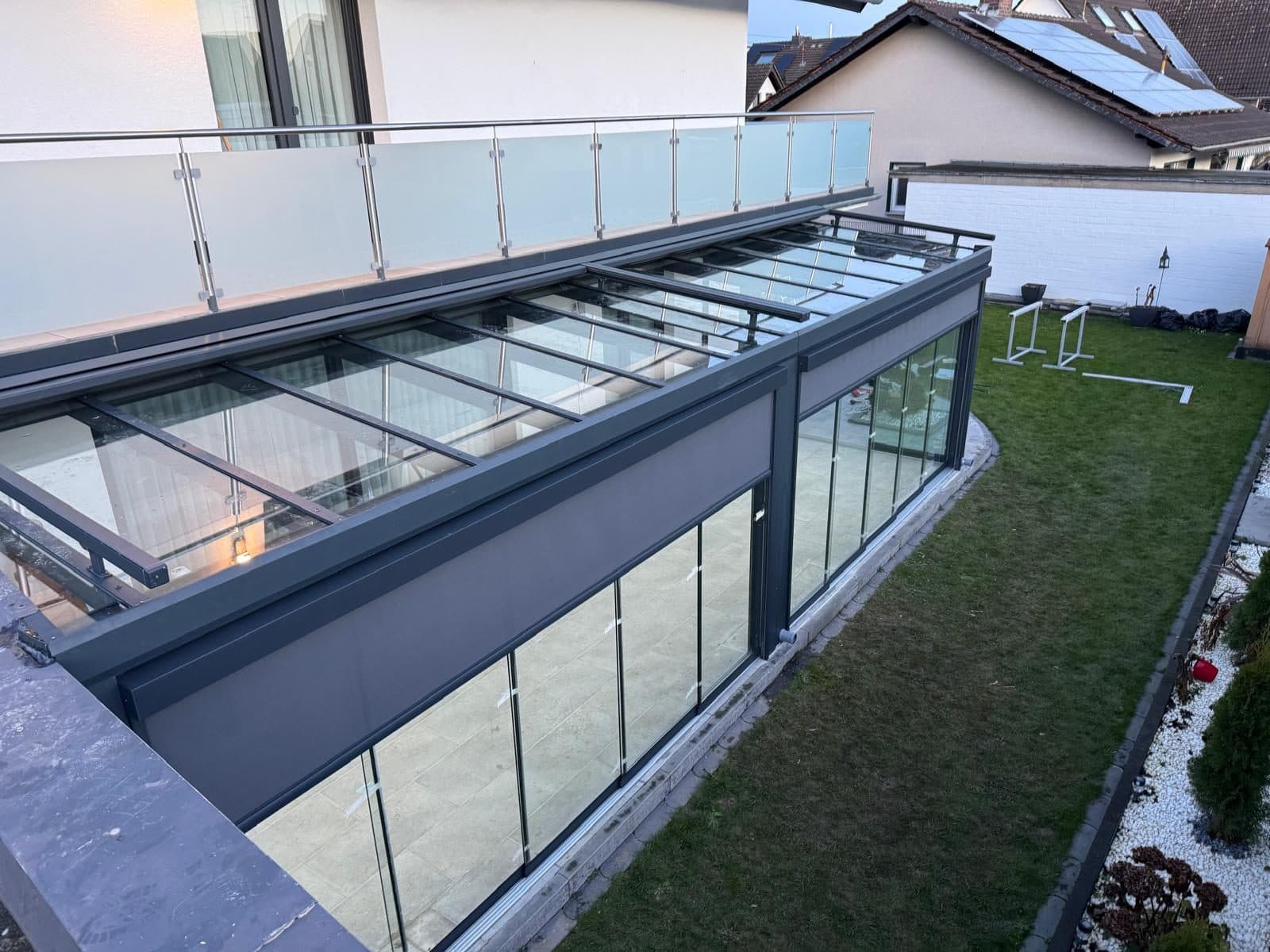
The cassette can be surface-mounted on the wall or hidden in the façade or in the pergola beam. Concealed fitting looks cleaner but has to be planned early, ideally during construction or when ordering the pergola.
Manual or motorised
Smaller screens can have a hand crank. For larger sizes and several screens, a motor is far more convenient: you operate them by remote, and there are also systems with wind and sun sensors and app control. What applies in your case we clarify at the site visit. If you want a motor, think early about a power supply to the cassette.
What to prepare before the visit
- The width and height of each opening you want to close.
- What the screen will be fixed to: wall, post, pergola beam.
- What is in the way: window handles, railings, gutters, lights.
- Whether there is power nearby and where a cable could run.
- Which side the wind and sun usually come from.
Every system has a maximum width and height. If the opening is larger, it is split into two or more screens with a shared guide in the middle. This is also decided when measuring. You can book a free site visit and we will measure on site.
ZIP screens or glass?
Screens give shade, wind protection and insect protection, but they don't close the space thermally. If you want to use the terrace in winter too, sliding glass or a winter garden is a better fit. The two are often combined: glass for the cold months and ZIP screens for the summer sun. You can also find ideas for pergolas with screens in the 3D configurator.
Maintenance
- Wash the fabric with lukewarm water and a mild cleaner, without stiff brushes or a pressure washer.
- Clear leaves and dust from the guides so the fabric runs smoothly.
- If you retracted the screen wet, lower it to dry at the first opportunity.
- Don't operate it if something is stuck in the bottom bar or the guides.
If you are considering ZIP screens for a terrace, pergola or windows in Ruse, North-East Bulgaria or elsewhere in the country, take a look at our ZIP screens and awnings. Book a free site visit so we can measure, you can see fabric samples on site and get a no-obligation quote.
Frequently asked questions about ZIP screens
What is the difference between ZIP screens and screen blinds?
The terms are often used interchangeably. Screen is the type of fabric, perforated and semi-transparent, while ZIP is the system in which the fabric edges are held in the side guides. Most ZIP screens for terraces use screen fabric.
Can ZIP screens withstand strong wind?
They are much more resistant than ordinary outdoor blinds because the fabric is held along its full height. Wind resistance depends on the system, the width and the fixing. In a storm the screens should be retracted.
Do ZIP screens keep mosquitoes out?
Yes, when fully lowered, because the fabric has no gaps at the sides or bottom. That is why they are often used as insect protection on terraces and pergolas.
Can ZIP screens be fitted to an existing pergola?
Often yes, but it must be checked whether the profiles and posts allow the fixing and whether the structure can take the extra wind pressure. This is assessed on site.
Can I see out through a lowered ZIP screen?
With screen fabric yes, especially in daytime and with darker fabric. With blackout fabric no. Clear PVC keeps the view completely.