Aluminium verandas and patio covers
An aluminium veranda covers your terrace and makes it usable in rain and strong sun. It can stay open, or be enclosed later with glass or ZIP screens.
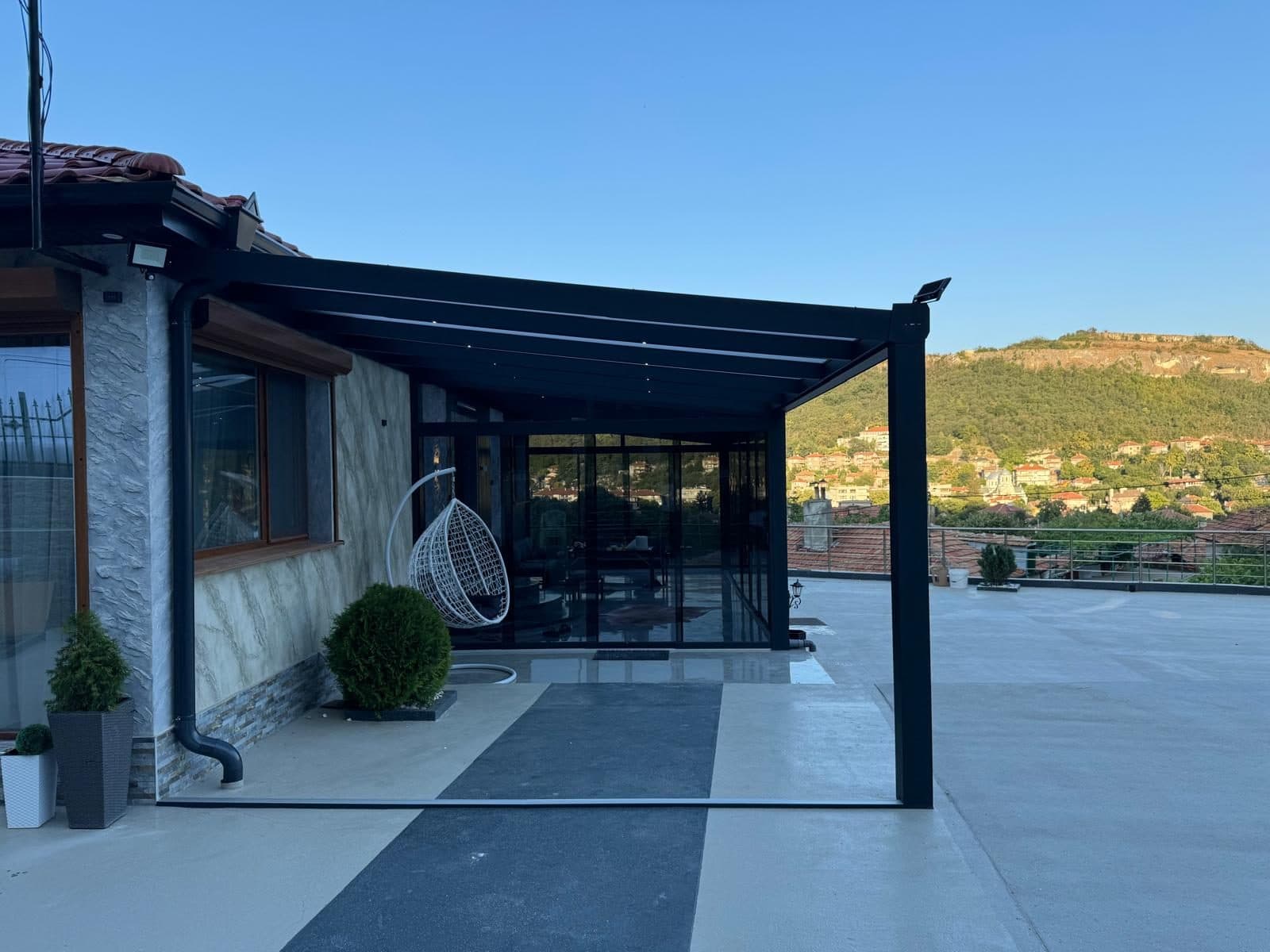
More time outdoors, whatever the weather
A veranda is an aluminium load-bearing structure with a roof, fixed to the façade or free-standing. We make it to the size of your terrace, with a pitch and drainage designed for the location.
The roof is toughened glass or polycarbonate. The sides can stay open or be fitted with sliding glass and ZIP screens whenever you decide.
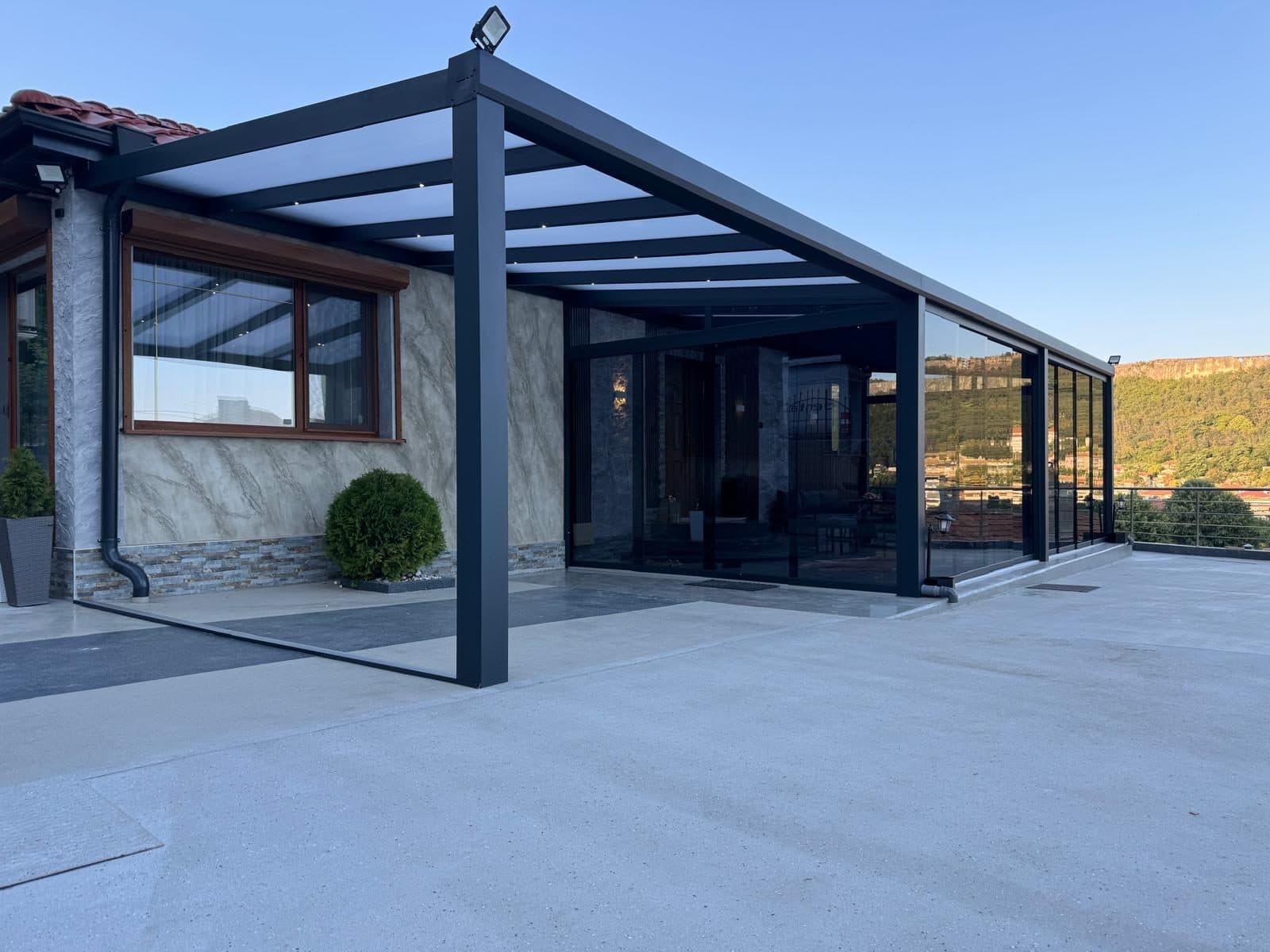
At a glance
- Glass or polycarbonate roof
- Integrated drainage
- Can be extended with glass and screens
- Anthracite, black, white or another colour
Roof options
Glass roof
Maximum light and a clean look. Ideal if you want to see the sky.
Polycarbonate
Lighter and more affordable; diffuses sunlight and protects against UV rays.
With side glazing
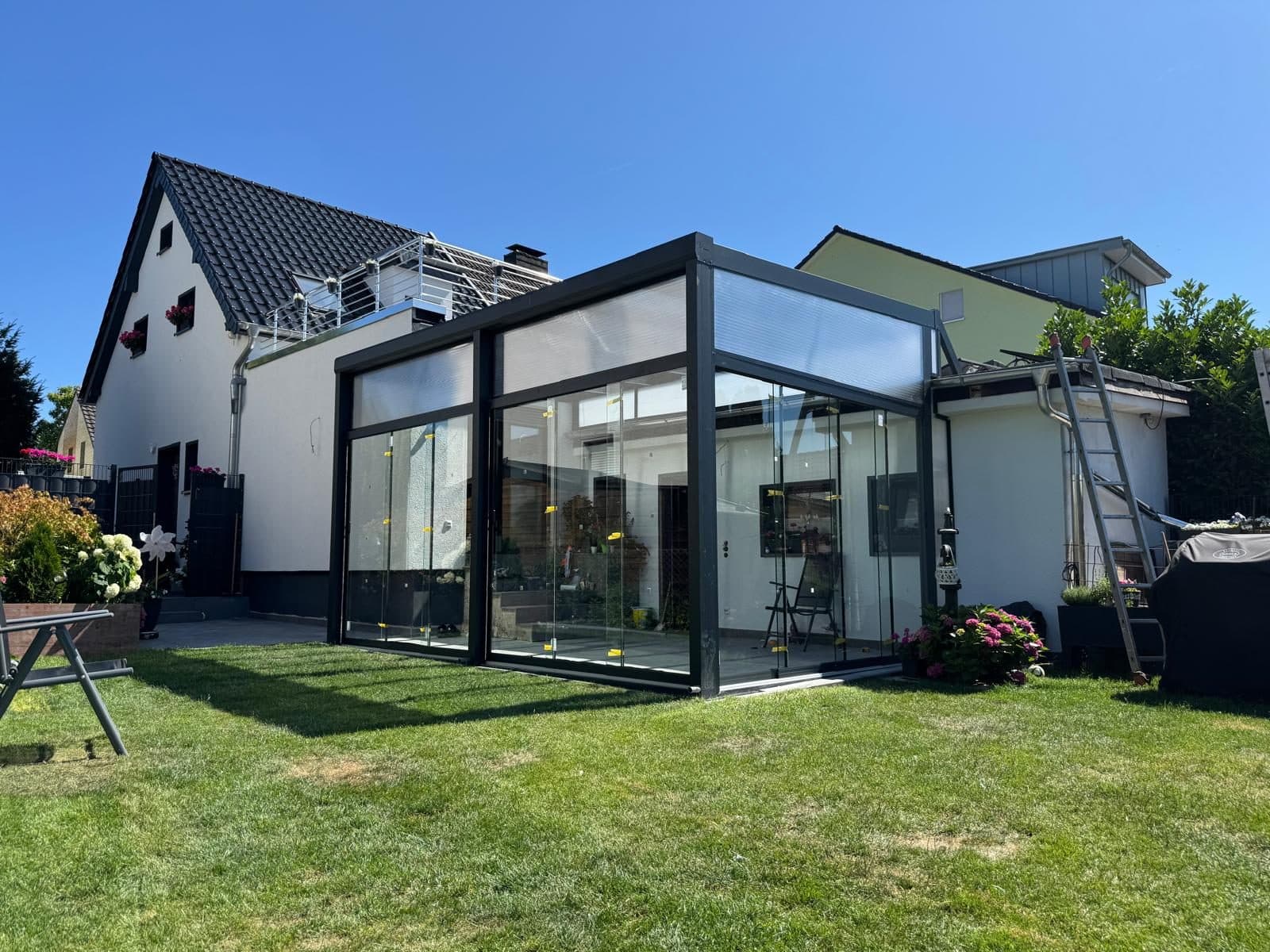
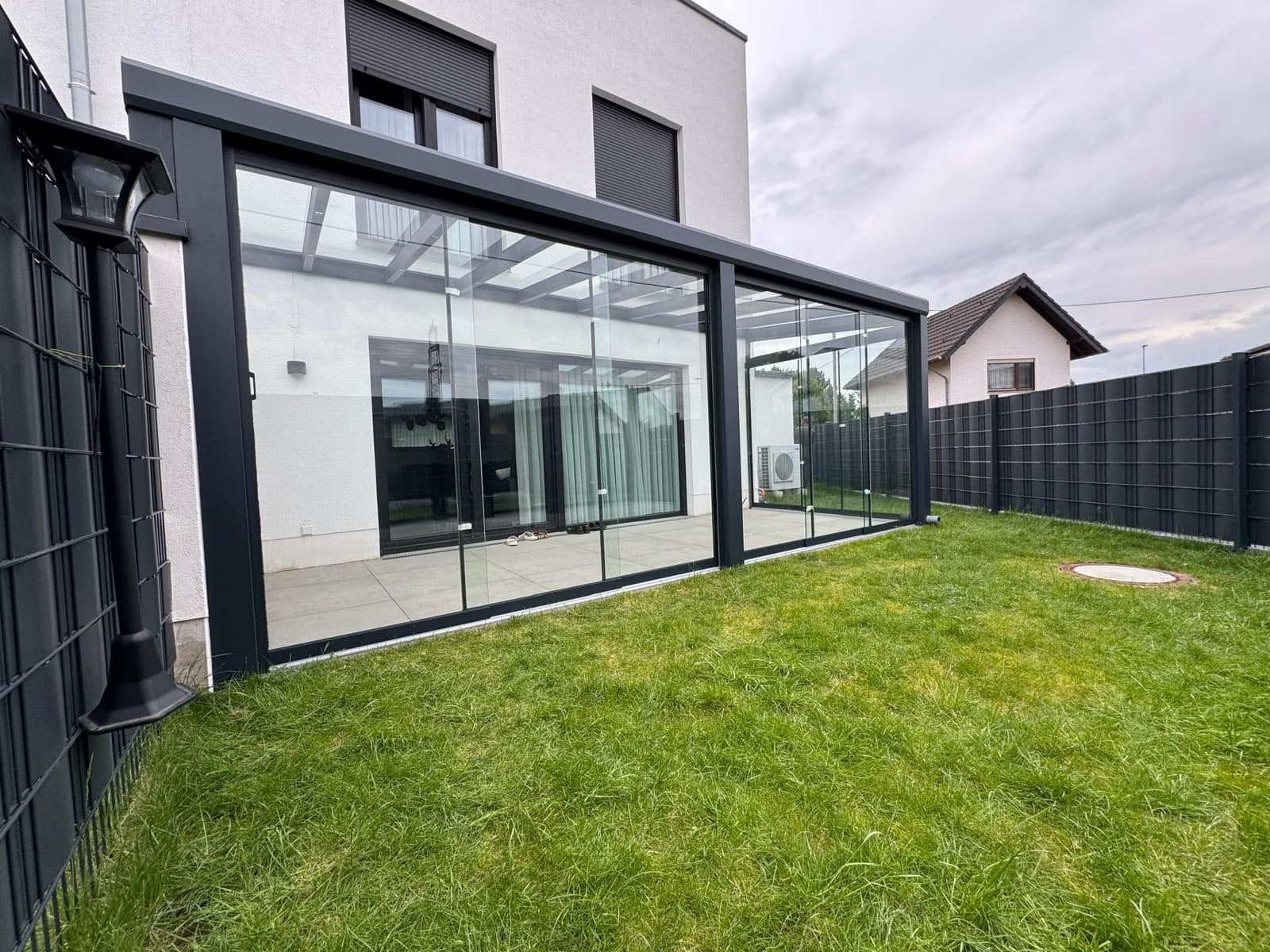
Sliding glass along the sides turns the veranda into something close to a summer garden.
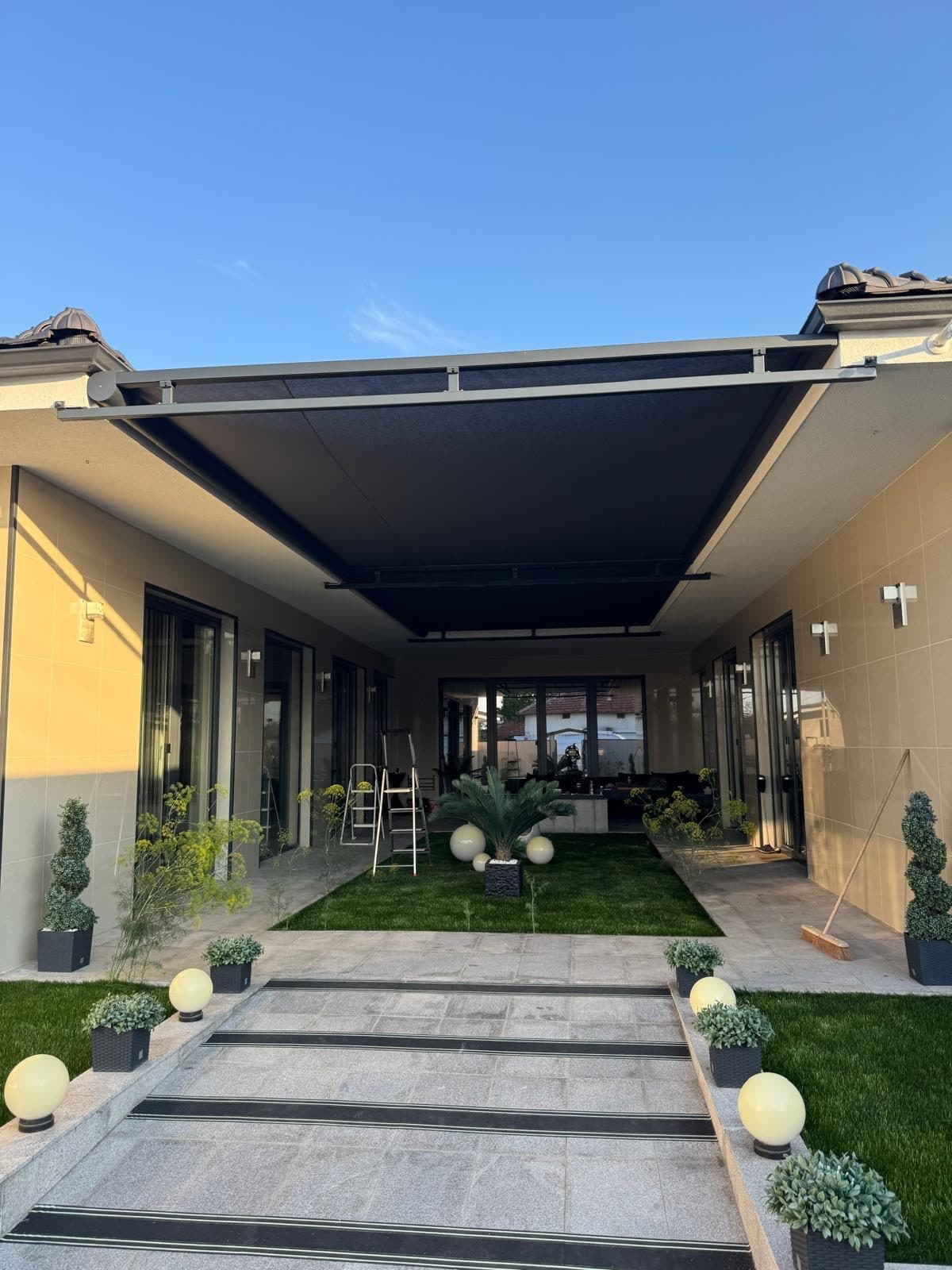
Aluminium verandas: real projects
Photos of projects made and installed by our team.
Showing 6 of 9 photos
Aluminium veranda: how to choose a terrace roof
An aluminium veranda is the simplest way to cover your terrace and use it in rain and strong sun. Before you order, it's worth knowing which types of veranda exist, which terrace roof suits your house, what drives the price, when a permit may be needed and how working with us goes.
Types of veranda: from terrace roof to glazed veranda
The big advantage of an aluminium veranda is that it can be built in stages. You start with the roof and close one or more sides a year or two later. If you already know you'll want that, tell us at the site visit so we can plan the structure for it.
- Terrace roof – an open veranda fixed to the facade and standing on posts at the front. It protects from rain and sun without closing off the view.
- Freestanding aluminium canopy on its own posts – when the facade can't take fixings or you want a covered spot in the garden, for example over a table or a summer kitchen.
- Partly enclosed veranda – one or two sides are closed with sliding glass or ZIP screens to stop wind and driving rain.
- Glazed veranda – all sides with sliding glass. The result is a summer garden that opens up completely in the warm months.
Veranda, pergola or winter garden?
The three look alike but do different jobs. A veranda has a fixed, sloped roof that drains into a gutter. A pergola, especially a bioclimatic one, has louvres that open for air and light, so it suits places where you want to control the shade. The differences are explained in bioclimatic or standard pergola.
A winter garden is a closed, sealed room that can be heated. If you want to use the terrace as a room in winter too, not just as a covered spot, it's better to plan a winter garden from the start. For a comparison of roofing materials, see terrace roof: glass, polycarbonate or louvres.
How to choose the veranda roof
Choosing between glass, polycarbonate and panels isn't only about budget. The roof changes the light in the room behind the veranda, the noise when it rains and how often you'll clean it. Here's what to weigh up:
- Light in the house – the veranda also shades the windows behind it. In front of a living room or kitchen, people often choose a clear roof so it doesn't get dark inside.
- Orientation – facing south, glass brings lots of light but also heat; polycarbonate diffuses it and panels give full shade.
- Rain noise – under polycarbonate you hear the rain more; glass and sandwich panels are quieter.
- Depth – the deeper the veranda, the lower its front edge at the same slope. That's why the fixing height on the facade matters.
- Span and snow – wider spans without an intermediate post need stronger profiles. The structure is sized for the specific site.
- Cleaning – dust and leaves show on glass, but it's easy to wash; under trees, think about how often you'll clean it.
What the price of an aluminium veranda depends on
The price of a glazed veranda or terrace roof is set after measuring, but the factors are clear from the outset:
- Width and depth – the roof area and the number of posts.
- Roof material – glass, polycarbonate or panels.
- Fixed to the facade or freestanding – a freestanding veranda has more posts and beams.
- Side enclosure – sliding glass, ZIP screens or fixed panels, now or later.
- The base – whether the posts stand on an existing slab or need footings.
- Colour and details – profile colour, drainage, extra shading.
- Access – an upper floor, a narrow yard or a spot where materials have to be carried by hand.
Do you need a permit for a veranda?
It depends on the size, on whether the veranda is fixed to the building, on the distance to the neighbours and on the municipality's rules. A terrace roof on a detached house and a glazed veranda on a block of flats are different cases – in the second, the other owners' consent may also be needed.
Before you order, ask the municipality what applies to your property. At the visit we'll tell you what we have seen in practice, but the final answer comes from the municipality.
How an order works and how to look after the veranda
We start with a free site visit: we come to you, look at the facade and the base, measure and talk through the roof and any future enclosure. Then you get a quote with the chosen materials and time frame. The veranda is made to the measurements from the visit and installed on site. If you'd like to see how it could look before calling us, try the 3D configurator.
Care is simple: aluminium doesn't rust or need painting. Wash the roof and profiles with water and a mild cleaner, clean the gutter at least once a year, and remove any heavy snow carefully without scratching the roof.
Aluminium verandas in Ruse and North-East Bulgaria
Our showroom is in Ruse, at bul. Lipnik 135, where you can see profiles and roofing materials in person. Before starting out in Bulgaria, we spent more than 15 years working in Germany and the Netherlands.
We come for site visits all over Bulgaria – from Ruse we easily reach Varna, Veliko Tarnovo, Shumen, Razgrad, Silistra and Dobrich, and further afield. If you'd like a terrace roof or a glazed veranda, ask for a free site visit and quote.
Four steps to a finished project
Free site visit
We come to you, take measurements and talk through your idea, the profiles and the glass.
Clear quote
You receive a quote setting out the system, the materials and the price. No hidden costs.
Manufacture
We build the structure to the exact measurements of your property.
Installation
Our team installs it, cleans up afterwards and checks everything together with you.
Guides on Aluminium verandas
Questions about aluminium verandas
Call or message us. We also answer specific questions about your project before we come for the visit.
Which is better: glass or polycarbonate?
Glass is clearer and keeps its looks longer; polycarbonate is lighter and more affordable. The choice depends on your budget and how much light you want.
Can I enclose the veranda later?
Yes. A veranda can be fitted with sliding glass or ZIP screens at a later stage. Mention it at the site visit so we can allow for it.
Will the veranda cope with snow and wind?
The structure is sized for your location: span, pitch and load. That's why we take the measurements at the site visit, not over the phone.
Where does the rainwater go?
The roof is pitched and the gutter and drainage are built into the structure. There are no external pipes and no water dripping onto the terrace.
Can it be attached to any façade?
To most, yes. The wall needs to be solid and there must be room for fixing above the doors and windows. If the façade doesn't allow it, the veranda can stand on its own posts.
Does it get hot under a glass roof?
Glass gives more light, but also more heat in direct sun. Polycarbonate diffuses the light, and an awning or screen can be added for shade. We'll discuss it at the site visit depending on which way the terrace faces.
What is the difference between a veranda and a pergola?
A veranda has a fixed roof of glass, polycarbonate or panels that always keeps the rain off. A bioclimatic pergola has rotating louvres that you open for air and light and close when it rains. If you want constant protection and as much light as possible, a veranda is the better fit.
Does a veranda make the room behind it darker?
Somewhat, especially with a panel roof. Glass and clear polycarbonate let through the most light, so in front of a living room or kitchen a clear roof is a common choice. At the visit we'll look at the orientation and the windows.
Is it noisy under the roof when it rains?
That depends on the material. Under polycarbonate you hear the rain more, while glass and sandwich panels are quieter. If the veranda will be a place to relax, that's a good reason to choose the roof carefully.
How deep can a veranda be?
The depth depends on how high the roof is fixed to the facade and on the slope. The deeper the veranda, the lower its front edge. That's why we set it only after measuring on site.
Can a veranda cover a summer kitchen or barbecue?
Yes, a covered cooking area is a common reason for a veranda or a canopy on posts. If a barbecue or fire pit goes underneath, the distance to the roof and ventilation need thought. We discuss this at the site visit.
Do I need a permit for a veranda?
It depends on the size, how it is fixed to the building and the municipality. In a block of flats, the other owners' consent may also be needed. Ask the municipality before you order; at the visit we'll tell you what we know from practice.
Other services
Thinking about aluminium verandas?
We'll come for a free site visit, take exact measurements and send you a clear quote, with no obligation.