Bioclimatic pergola with louvres or a classic pergola: which should you choose?
Both give shade, but they work differently. Here's how to choose between a pergola with rotating louvres and a classic pergola with a fixed roof.
Updated: November 4, 20267 min read
A pergola is the easiest way to make your garden or terrace usable even on the hottest days. As soon as you start looking, you'll find two big groups: bioclimatic pergolas with rotating aluminium louvres, and classic pergolas with a fixed roof. In photos they look similar, but they work differently and suit different people.
In this article we explain how each one works, what the real pros and cons are, and how to judge which suits your garden, terrace or business better.
What is a bioclimatic pergola?
A bioclimatic pergola is an aluminium structure whose roof is made of louvres that rotate on their axis. That's why you'll also see it called a “louvred pergola”, “pergola with an opening roof” or “louvred roof”. The name comes from the idea that the louvres let you control the microclimate underneath: light, shade and air movement.
- Open louvres: let light and air through, it feels almost like being outdoors.
- Tilted louvres: block direct sun while warm air escapes between them. It's noticeably cooler underneath.
- Closed louvres: form a solid roof that keeps out rain. Water collects in a gutter hidden in the frame and drains down the posts.
Depending on the system, the louvres are turned by hand with a mechanism or by a motor. There are also systems with remote control, rain and wind sensors or built-in lighting. What is possible for your project, we clarify at the site visit.
What is a classic pergola?
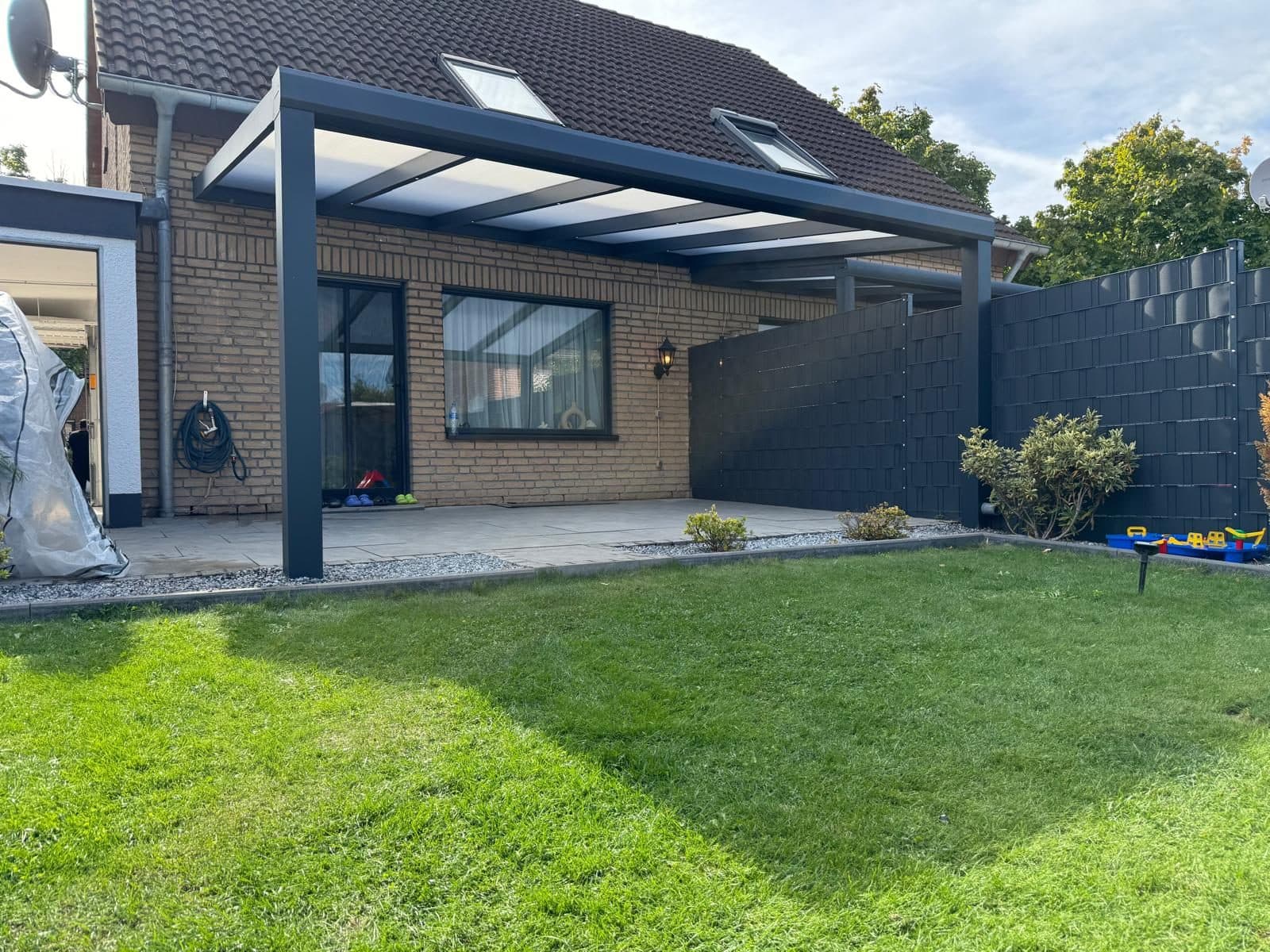
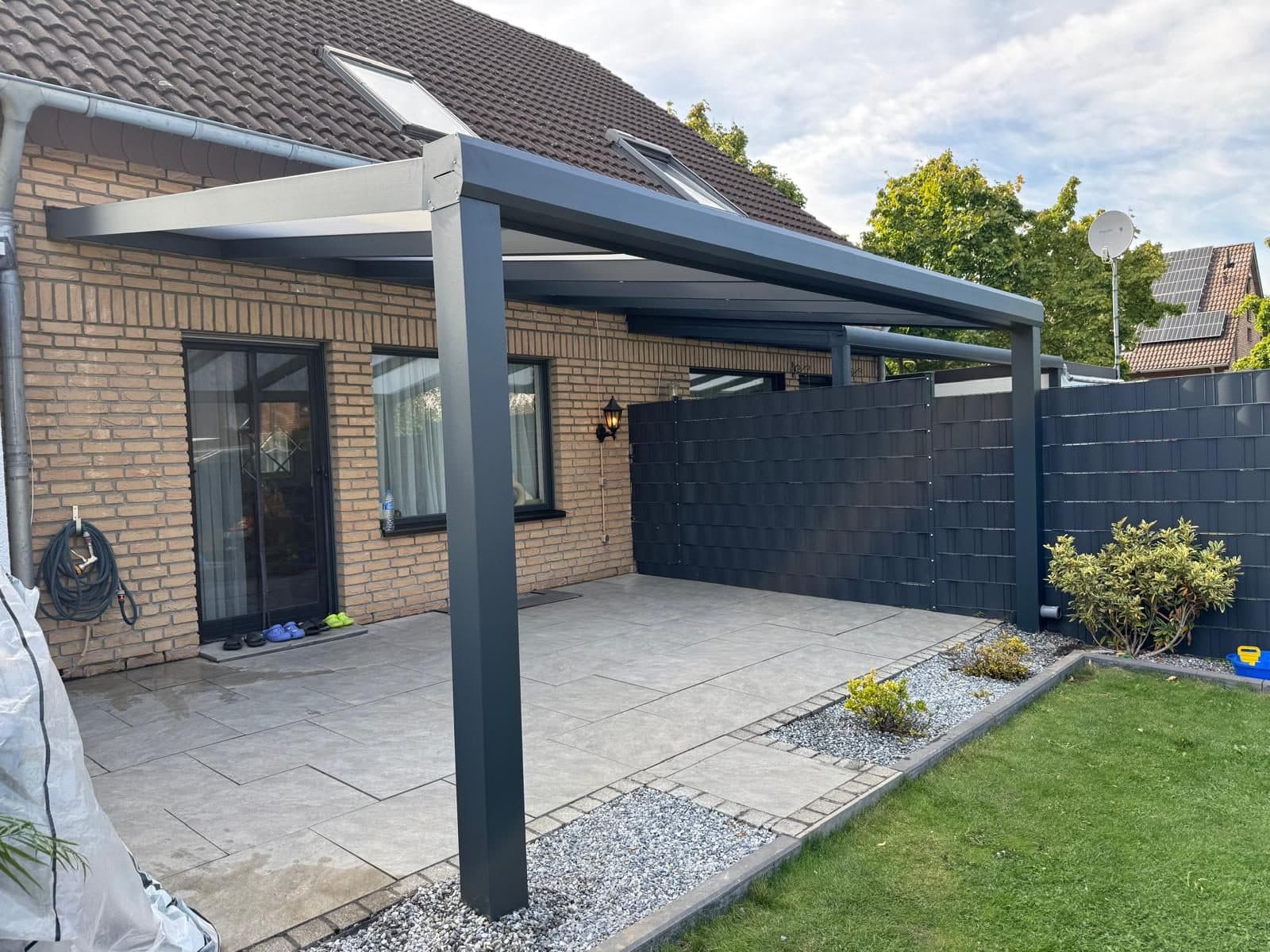
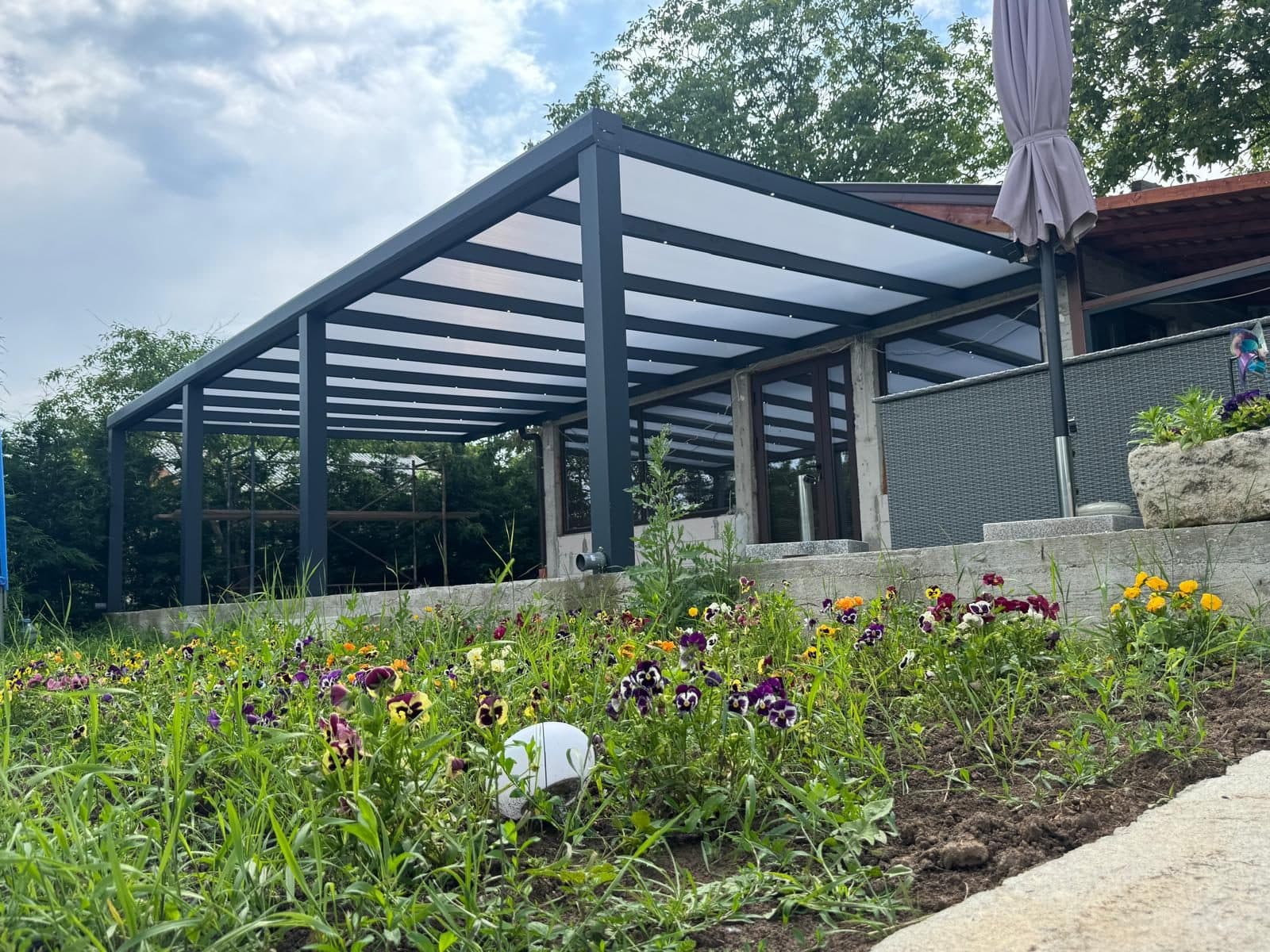
A classic aluminium pergola has a fixed roof that doesn't move. Most often it is made of:
- Polycarbonate: light, diffuses light, keeps out rain. The most common choice for house terraces.
- Glass: a clean look and lots of light, but also more heat underneath in summer.
- Sandwich panels: dense shade and quiet in the rain, but darker underneath.
- Fabric (awning): a retractable or tensioned fabric, gives shade but is no real protection in a downpour.
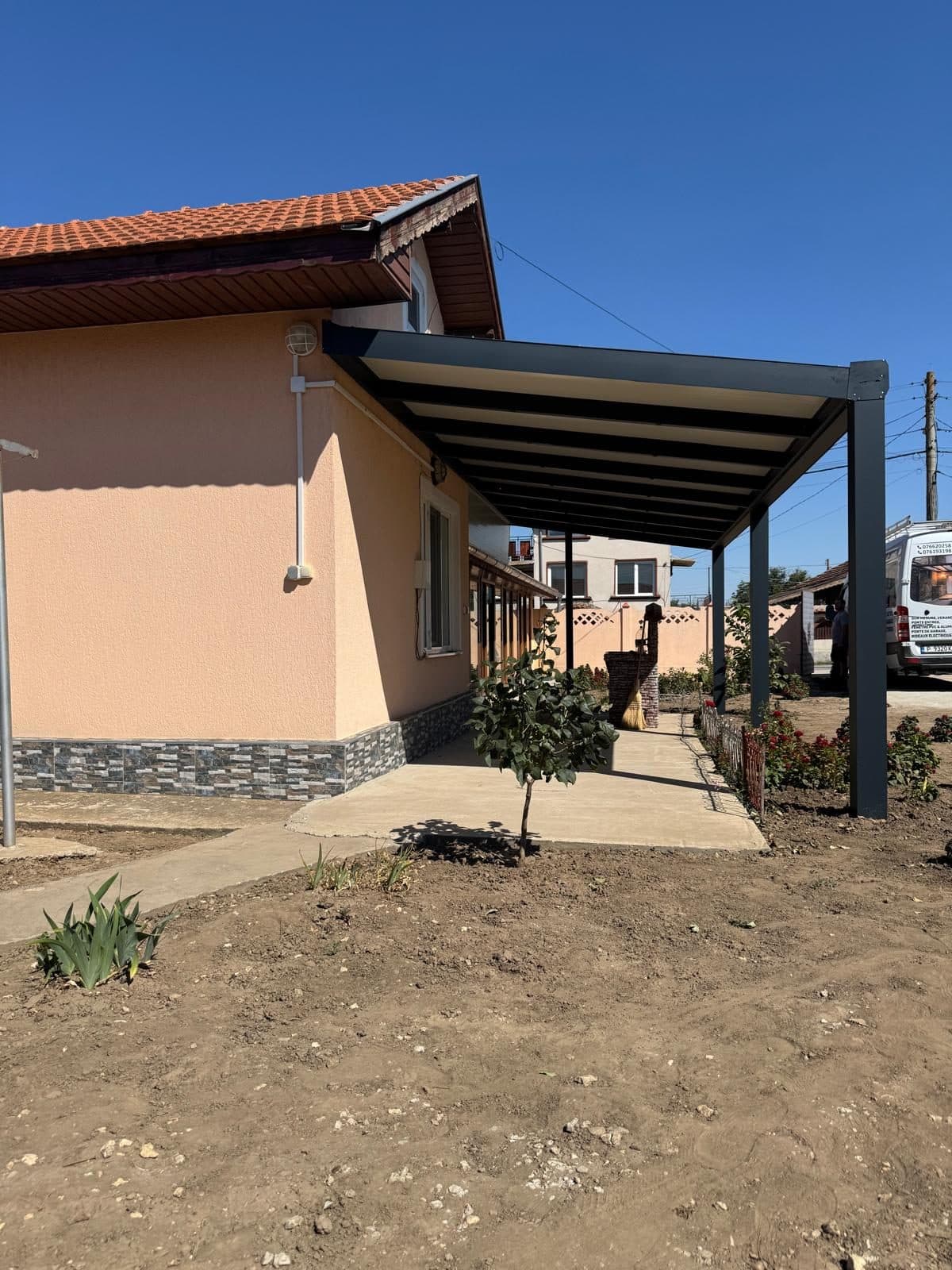
A classic pergola is a simpler structure with fewer moving parts. It protects from rain and sun, but you can't “open” the roof when you want more light or air.
Comparison: bioclimatic or classic pergola
- Light control: with a bioclimatic pergola you adjust the louvres by time of day and season. With a classic one the light depends on the roof you chose once.
- Summer heat: tilted louvres let warm air escape upwards, so it is usually more pleasant under a bioclimatic pergola in the heat. Under glass or polycarbonate the air tends to build up.
- Rain protection: both keep out rain. With a classic one there's nothing to forget open; with a bioclimatic one you close the louvres.
- Winter: a classic pergola lets light through in winter too. A bioclimatic one can be opened fully so it doesn't darken the rooms behind it.
- Maintenance: the classic one has fewer moving parts. The bioclimatic one needs the louvres and gutters cleaned now and then.
- Price: a bioclimatic pergola usually costs more because of the louvres, the mechanism and the built-in drainage.
- Look: the bioclimatic one looks more solid and modern, the classic one lighter and slimmer.
When a bioclimatic pergola is worth it
- The terrace faces south or west and summers there are hard going.
- The pergola is in front of windows or a glass front you don't want to darken in winter.
- You want to sit outside in the sun or the shade, depending on the time of day.
- For cafés and restaurants that want to serve outside in sunshine and brief showers.
- You want a modern, clean look with a flat roof.
When a classic pergola is the more sensible choice
- You mainly want shade and rain protection at a lower price.
- You want a bright spot in winter too, for example in front of the living room.
- The pergola is over a parking space, an outdoor kitchen or a walkway, where controlling light doesn't matter.
- You prefer as little mechanism and maintenance as possible.
The two don't exclude each other. Some clients put a classic pergola over the dining area and want a more flexible roof over the lounge area. See all the options on the pergolas page, or design your own in the 3D configurator.
Wind, snow and rain
Every pergola is designed for the wind and snow where it will stand. This matters even more for bioclimatic pergolas, because the louvres are moving parts. Follow the system manufacturer's instructions on how to leave them in strong wind, storms or snow. If the house is exposed, on a hill or near the sea, say so at the site visit so it's taken into account for the posts, anchoring and post spacing. We've written a separate article on this: can a pergola withstand wind and snow.
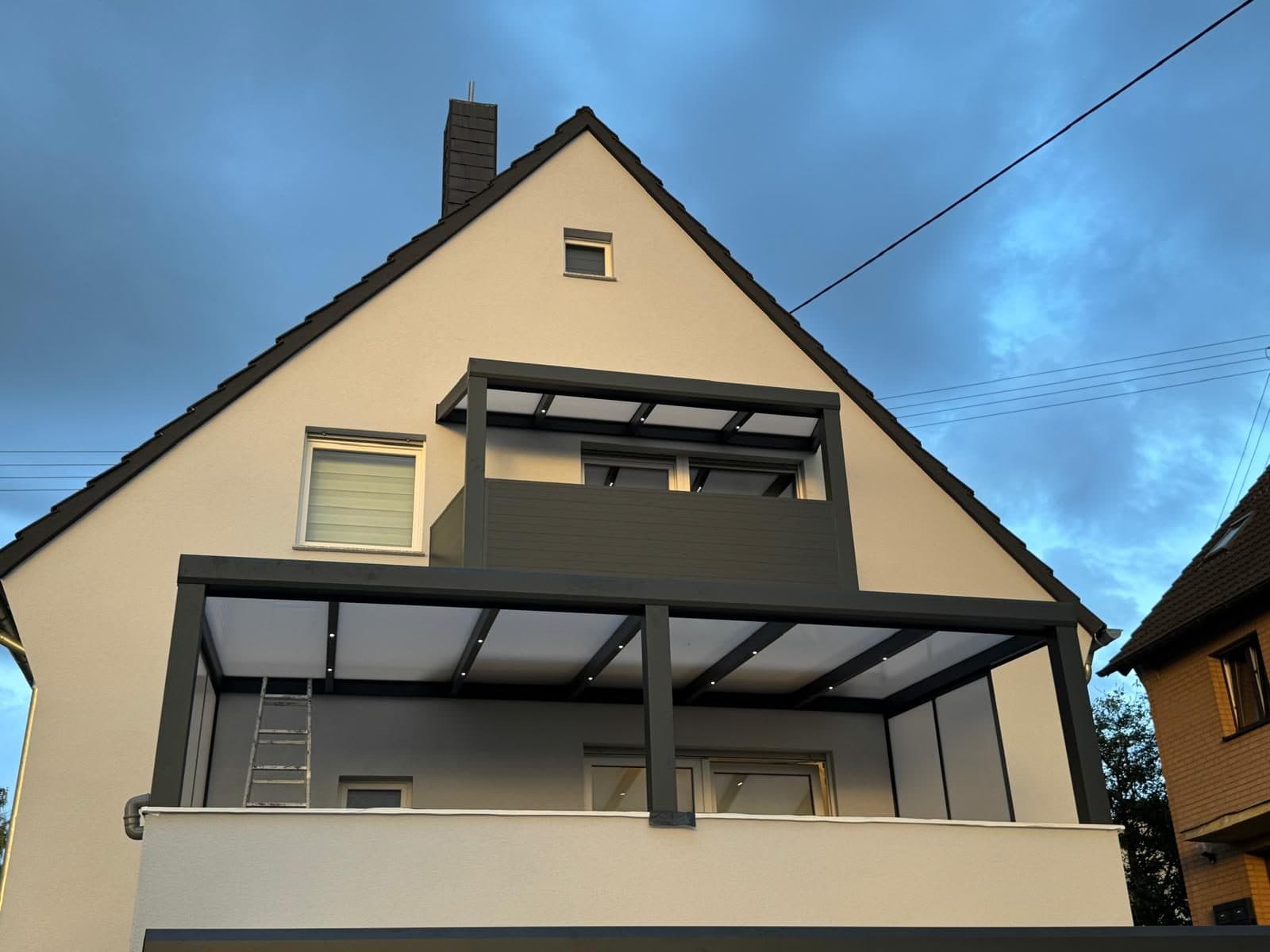
Side screens and glass: a pergola for more months
The roof protects from above, but evening sun and wind come from the side. That's why many people add side ZIP screens, which block sun and wind and keep insects out, or sliding glass, which closes the pergola almost like a glazed veranda. If you're thinking of a space enclosed all year round, look at winter gardens too.
What drives the price of a pergola
- Size, post spacing and height.
- Freestanding or fixed to the wall of the building.
- Roof type: polycarbonate, glass, panels or rotating louvres.
- Manual or motorised louvre control.
- Extras: side screens, glass, lighting.
- The base and access to the site.
We go through each factor in the article how much does a bioclimatic pergola cost. You get the real price for your garden after a free site visit and measurement.
How to choose: a short checklist
- Work out which way the terrace faces and when in the day you'll use it most.
- Decide whether you want to control the light or whether constant shade is enough.
- Consider whether the pergola will darken rooms behind it in winter.
- Decide whether you'll add screens or glass now or later, so the structure allows for it.
- Plan the drainage, and a power supply if there'll be a motor or lighting.
- Book a site visit so we can check the base, the location and the measurements.
GS Aluminium has a showroom in Ruse and installs pergolas all over Bulgaria. If you're torn between a bioclimatic and a classic pergola, book a free site visit: we'll look at the space, talk about how you use it and suggest a solution that makes sense for your garden.
Bioclimatic pergola FAQ
What is a bioclimatic pergola?
It is an aluminium pergola with a roof of rotating louvres. By turning them you control light, shade and ventilation, and when they are closed they keep out rain, with the water draining down the posts.
Is a bioclimatic pergola waterproof?
With the louvres closed the roof keeps out rain, and the water collects in a gutter in the frame and drains down the posts. In very heavy rain with side wind some water can get in, which is why some clients add side screens or glass.
What's the difference between a louvred pergola and a polycarbonate pergola?
A louvred pergola lets you control the light and let warm air out. A polycarbonate pergola has a fixed roof that always lets diffused light through and keeps out rain, but cannot be opened.
Can a bioclimatic pergola handle snow?
The structure is designed for the snow load in the area, and the louvres should be left in the position the system manufacturer recommends. Mention it at the site visit if the location is high or exposed.
Can a bioclimatic pergola be closed at the sides?
Yes. The most common options are side ZIP screens, which block sun, wind and insects, and sliding glass, which closes the pergola almost like a glazed veranda.
Do I need a permit for a pergola?
It depends on the size, whether it is attached to the building, and the municipality. Check with the municipality beforehand, as the rules are not the same everywhere.