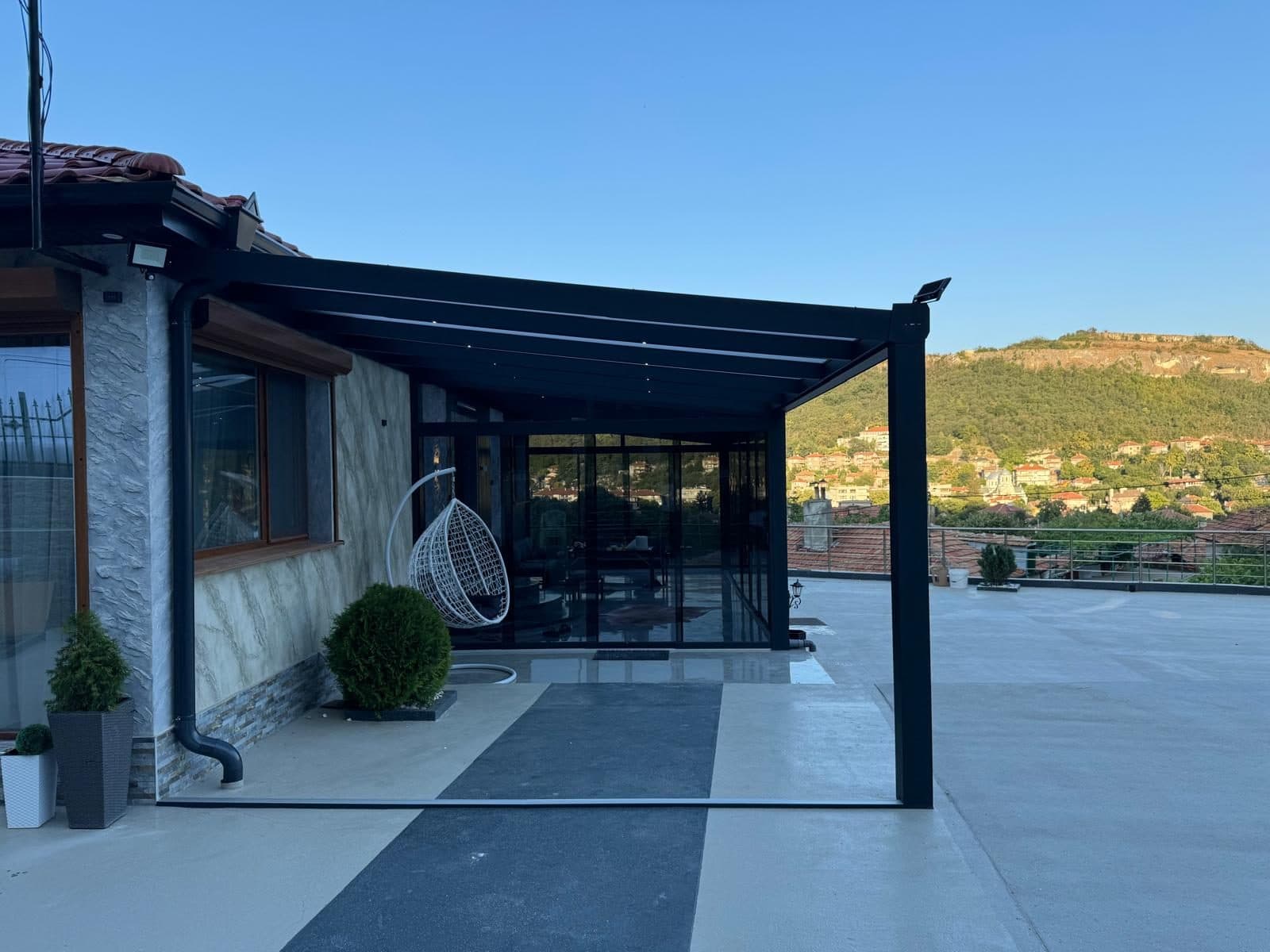
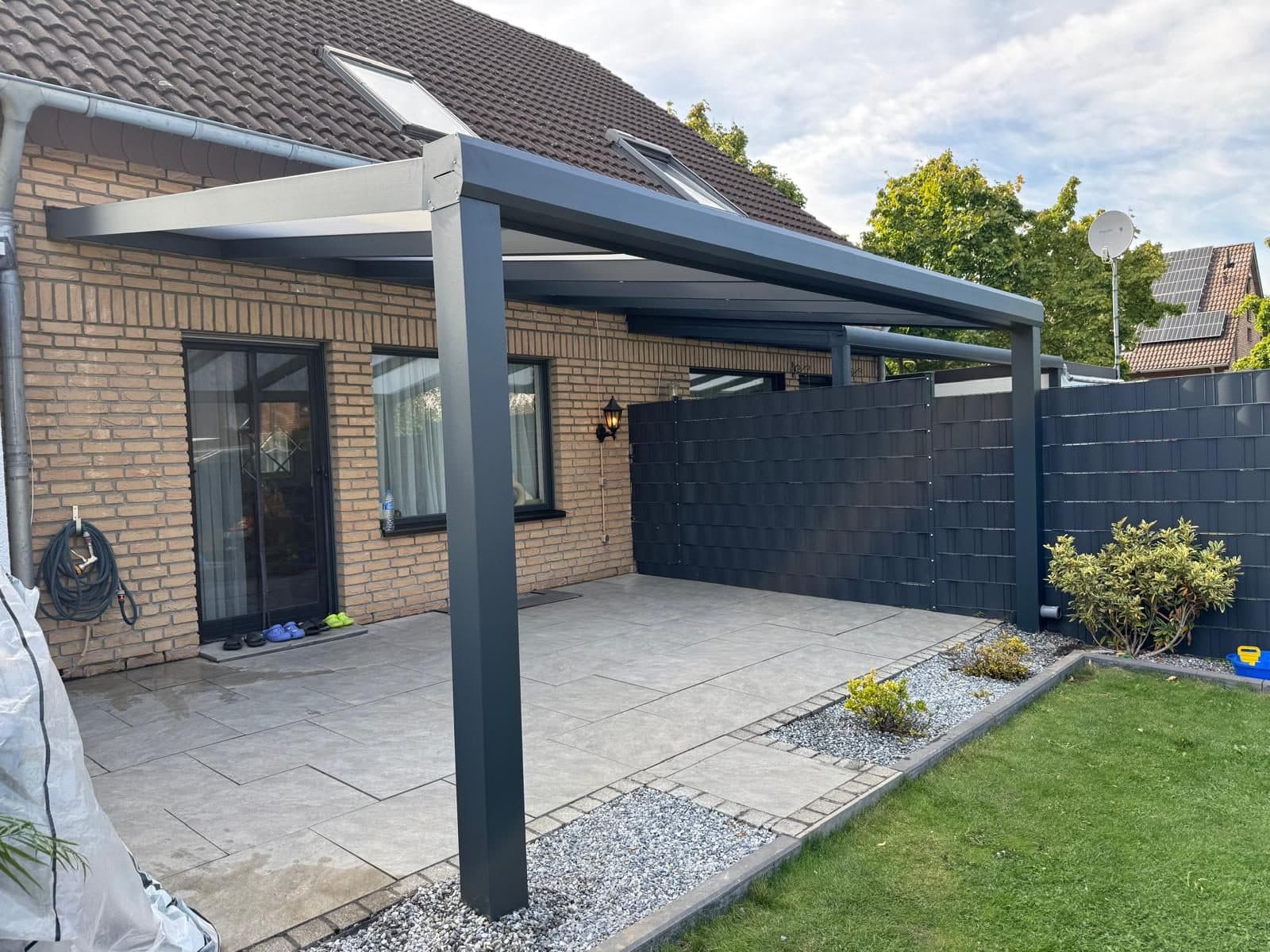
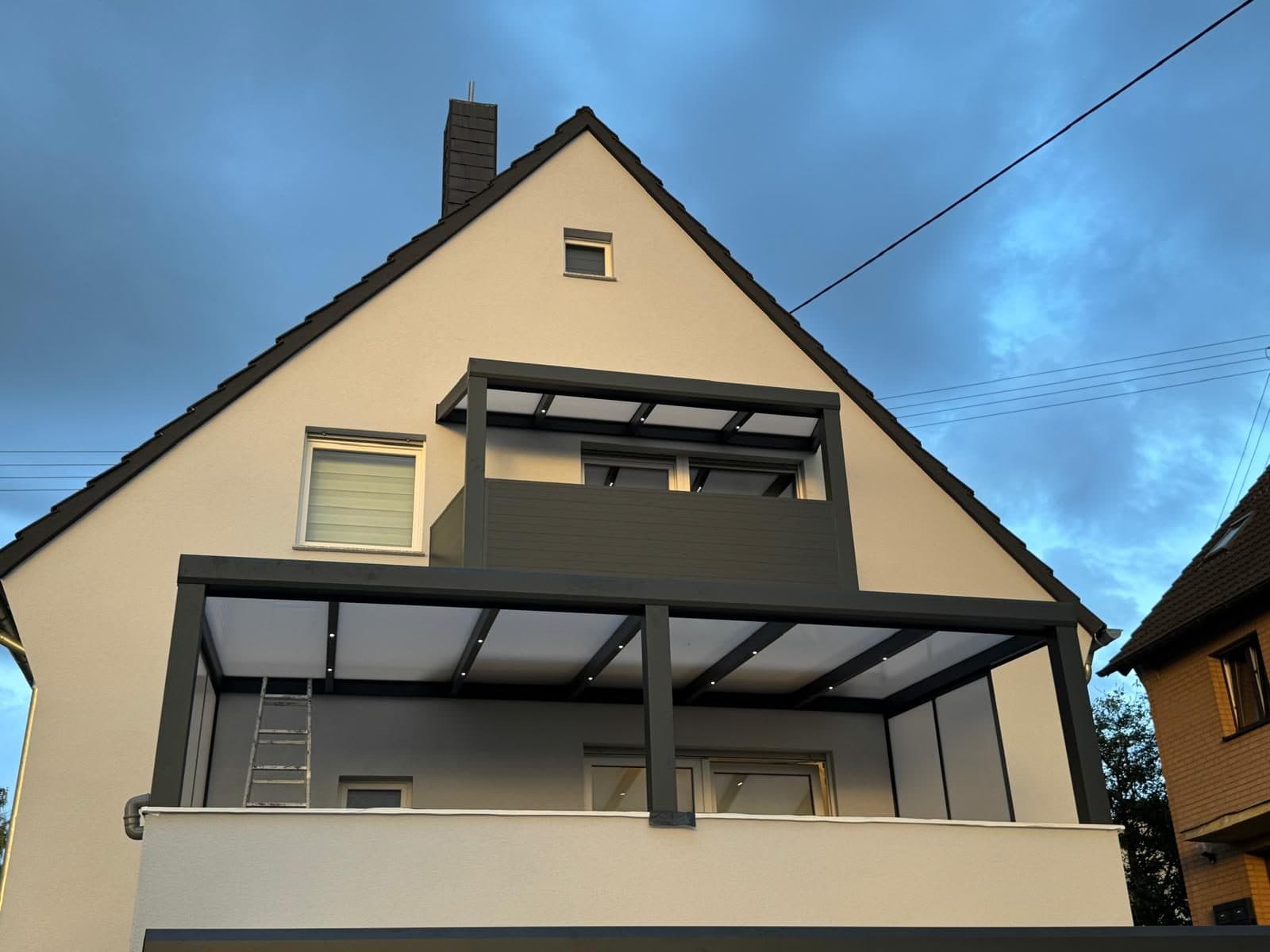
Terrace roof: glass, polycarbonate or movable louvres?
The roof decides how the terrace feels: bright or shady, quiet or loud in the rain, hot or pleasant in July. Here is how to choose the material.
Published: November 4, 20266 min read
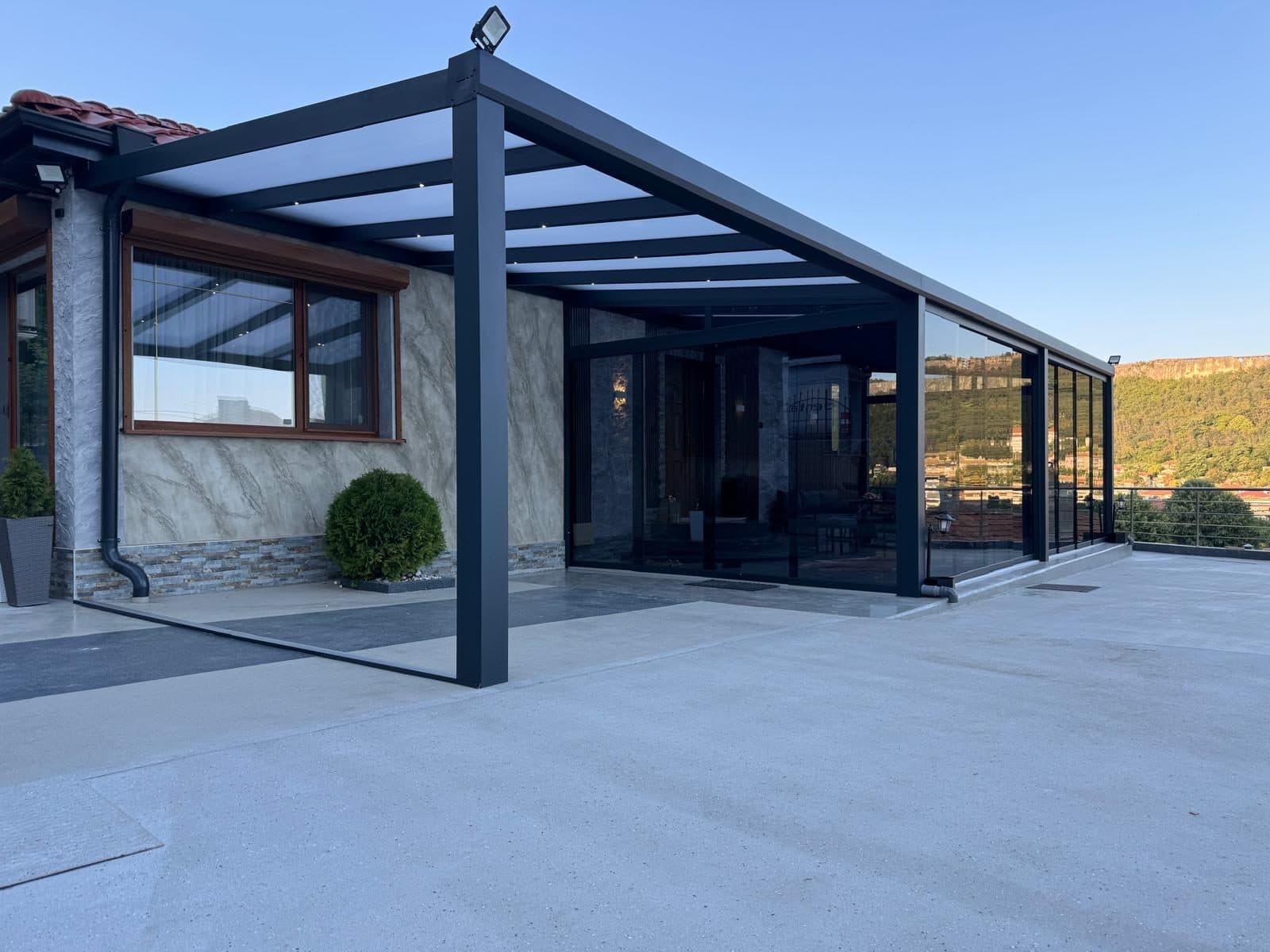
A terrace roof is the first thing people think of and the last thing they think through. Yet the roof decides whether you get a bright breakfast spot or a shady afternoon corner, whether rain sounds like a drum and whether you can sit under it in summer. In this article we compare the main options for an aluminium terrace roof: glass, polycarbonate, solid panels and movable louvres.
The structure: why aluminium?
Whatever the covering, the frame usually consists of posts, beams and a gutter. Aluminium is light, does not rust, needs no painting and allows slim profiles with wide spans between posts. The roof is fixed to the house wall or stands freely on four or more posts. Water runs into the gutter and often down through the posts. This is the basis of every aluminium veranda and pergola.
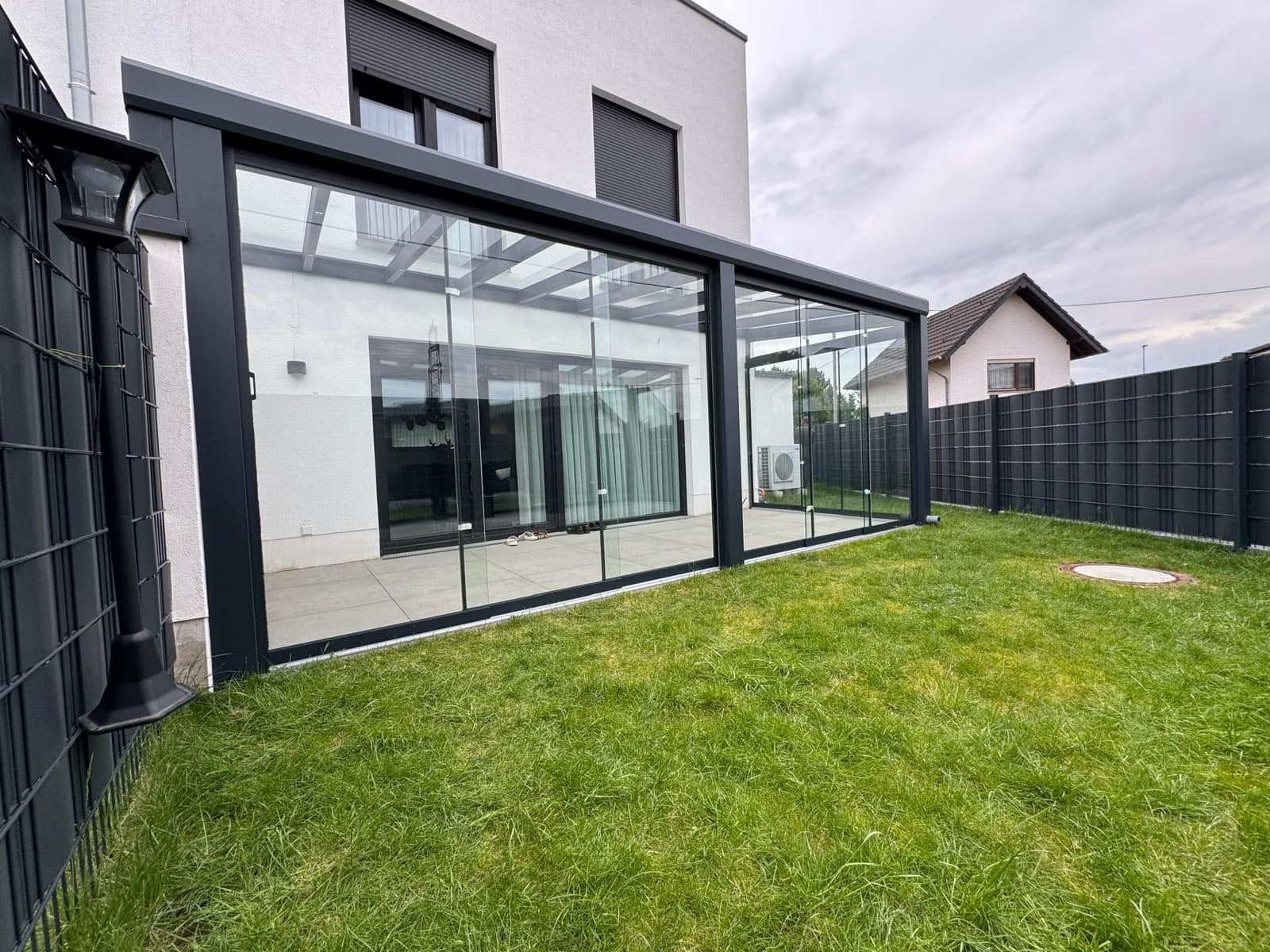
1. Glass terrace roof
Roofs use laminated safety glass: two panes bonded with an interlayer. If it cracks, the pieces stay stuck to the interlayer and do not fall. That is why overhead glass is usually laminated, not just toughened.
- Pros: maximum light, a view of the sky, an elegant look, long life, no yellowing, fairly quiet in rain.
- Cons: it gets hot under clear glass in summer; more weight, so a sturdier frame; dust and leaves show and the glass needs cleaning.
- Good to know: frosted and solar-control glass exist, and an awning can be added under or over the roof. What is possible at your home is clarified at the site visit.
2. Polycarbonate
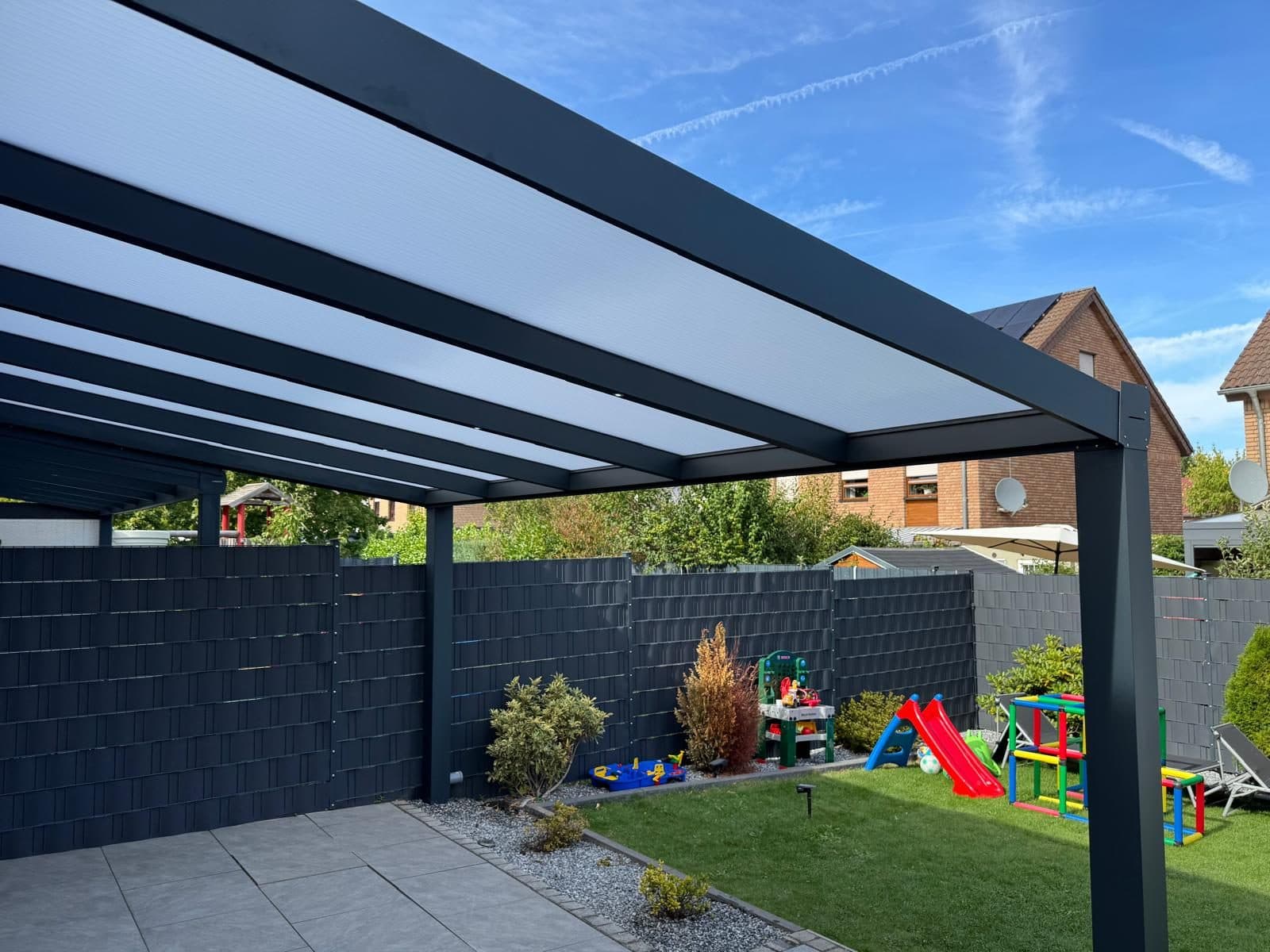
Polycarbonate is a light plastic sheet. There are two main types: multiwall (with internal chambers, lighter and slightly more insulating) and solid (clearer and more glass-like). It comes clear, opal (milky) and tinted.
- Pros: cheaper than glass, light, and the opal version diffuses the sun for pleasant shade.
- Cons: louder in rain; scratches; cheaper sheets without good UV protection yellow and turn brittle over the years; it expands in heat and must be fixed properly.
- Good for: verandas and canopies where you want light but not direct sun, on a tighter budget.
3. Solid aluminium panels
Sandwich panels with insulation between two aluminium skins. The roof is opaque, like a real ceiling.
- Pros: full shade, quiet in rain, less heat build-up, dirt hardly visible.
- Cons: the terrace and the rooms behind it get darker. With a deep terrace in front of the living room you will notice it.
- Good for: sunny south-facing terraces, carports, summer kitchens.
4. Movable louvred roof (bioclimatic pergola)
The roof is made of rotating aluminium louvres. Open, they let air and light through; closed, they form a solid roof and water drains through gutters in the frame and posts. When people search for an opening terrace roof, this is usually what they mean. For the difference from a classic pergola, see bioclimatic or classic pergola.
- Pros: you decide how much shade and air there is; hot air escapes between the louvres; it looks great.
- Cons: pricier than a fixed roof; the sides stay open unless you add glass or screens; in snow and strong wind, follow the manufacturer's instructions.
There are also sliding glass roofs that partly retract, and fabric awning-type roofs. They are less common and suit particular cases.
The comparison in short
- Light: glass > solid polycarbonate > opal polycarbonate > louvres (depending on position) > panels.
- Summer heat: hottest under clear glass without shading, most pleasant under panels and open louvres.
- Rain noise: quietest under panels and glass, loudest under polycarbonate.
- Upkeep: glass is cleaned more often, polycarbonate carefully so it does not scratch, louvres need clean gutters.
- Price level: polycarbonate is usually the most affordable, then glass and panels, with movable louvres the most expensive.
What to check before ordering a terrace roof
- Orientation. South and west-facing terraces under a clear roof heat up a lot. Consider opal covering, panels, louvres or shading with ZIP screens.
- Snow and wind. In northern Bulgaria, Ruse included, snow can be heavy. The frame and covering are sized for the site. More in can a pergola withstand wind and snow.
- Pitch and drainage. The roof needs a fall towards the gutter, and the water needs somewhere to go without wetting the neighbour or the foundations.
- The house wall. If the roof is fixed to the facade, the wall must be strong enough. External insulation and a high eave can complicate fixing.
- Height and doors. Think about the height under the gutter, how windows and doors to the terrace open, and future sliding glass.
- Permits. Depending on size and municipality, a permit or notification may be needed. Check with the municipality before installation.
Will you close the sides later?
Many people start with a roof and add glass or screens a year later. If that is likely, say so at the start: the frame and gutter can be prepared for sliding glass systems or a full winter garden. For a comparison of side glazing, see terrace glazing: folding, sliding or frameless.
What the price of a terrace roof depends on
The price depends on the area, the span between posts, the covering, the number of posts, wall-mounted or freestanding, profile colour, drainage, extras such as lighting or side walls, and preparation of the base. Ask for a quote and we will tell you exactly what it includes.
We work from Ruse and build verandas and pergolas all over Bulgaria, with more than 15 years of experience in Germany and the Netherlands. Book a free site visit: we will look at the terrace, measure up and show you which roof will work best for your orientation, wall and way of living.
Frequently asked questions about terrace roofs
Which is better for a terrace roof, glass or polycarbonate?
Glass lets in more light, does not yellow and is quieter in rain, but it is heavier and usually more expensive. Polycarbonate is light and more affordable, and the opal version gives pleasant diffused light. The choice depends on orientation, budget and how much light you want.
Is it hot under a glass roof in summer?
Under clear glass on a south-facing terrace it gets hot without shading. Frosted or solar-control glass, an awning under or over the roof and good ventilation help. With open sides, hot air escapes more easily.
What is an opening terrace roof?
Usually a bioclimatic pergola with rotating aluminium louvres. Open, they let air and light through; closed, they keep out rain. Sliding glass and fabric roofs also exist but are less common.
Is polycarbonate noisy in the rain?
Yes, in rain and especially hail you hear polycarbonate more than glass or panels. Multiwall sheets are slightly quieter than solid ones. If the terrace is next to a bedroom, keep that in mind.
Do I need a permit for a terrace roof?
It depends on the size, type of structure and municipality. Some canopies and pergolas require a notification or permit. Check with the municipality before installation to avoid surprises.
Can a terrace roof be closed in with glass later?
Yes, if the structure is designed for it. Say at the start that you are thinking about glass or screens so the beams and gutter are prepared. Sliding glass or a winter garden can then be added later without unnecessary changes.