Winter garden: what to know before you order
A winter garden is the biggest upgrade to your home without real construction. Here are the decisions worth making before the site visit, and the mistakes worth avoiding.
Updated: November 4, 20269 min read
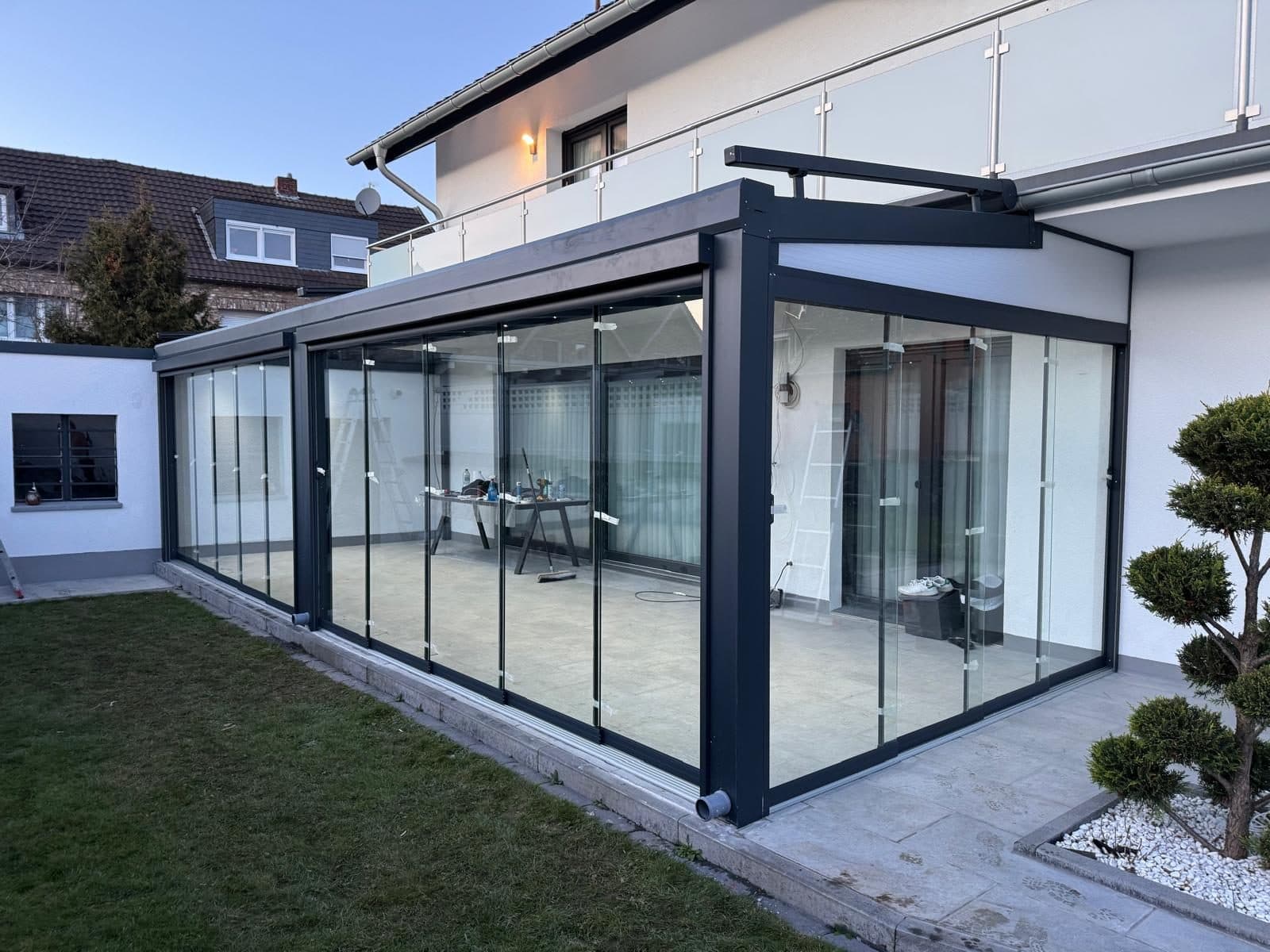
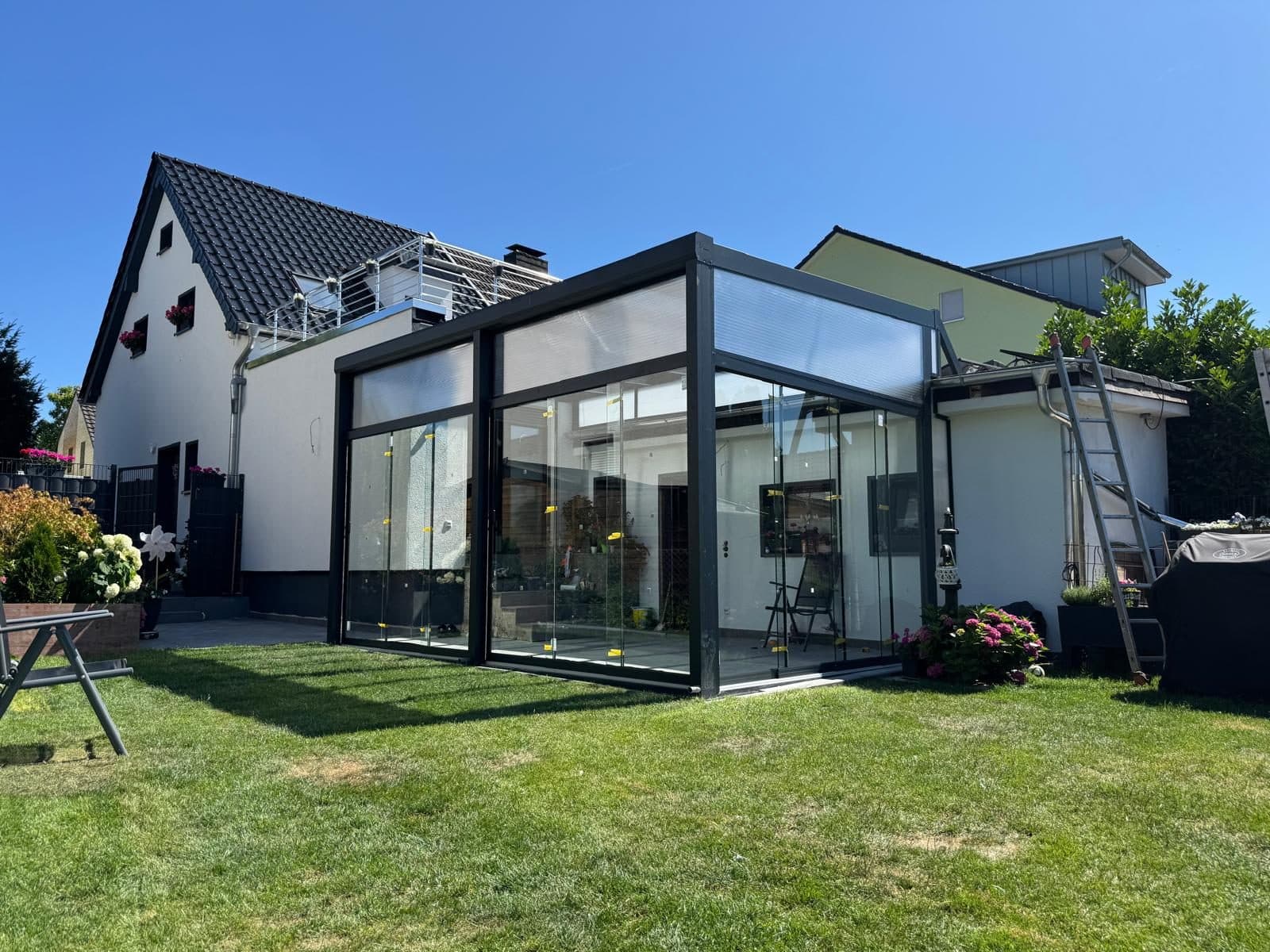
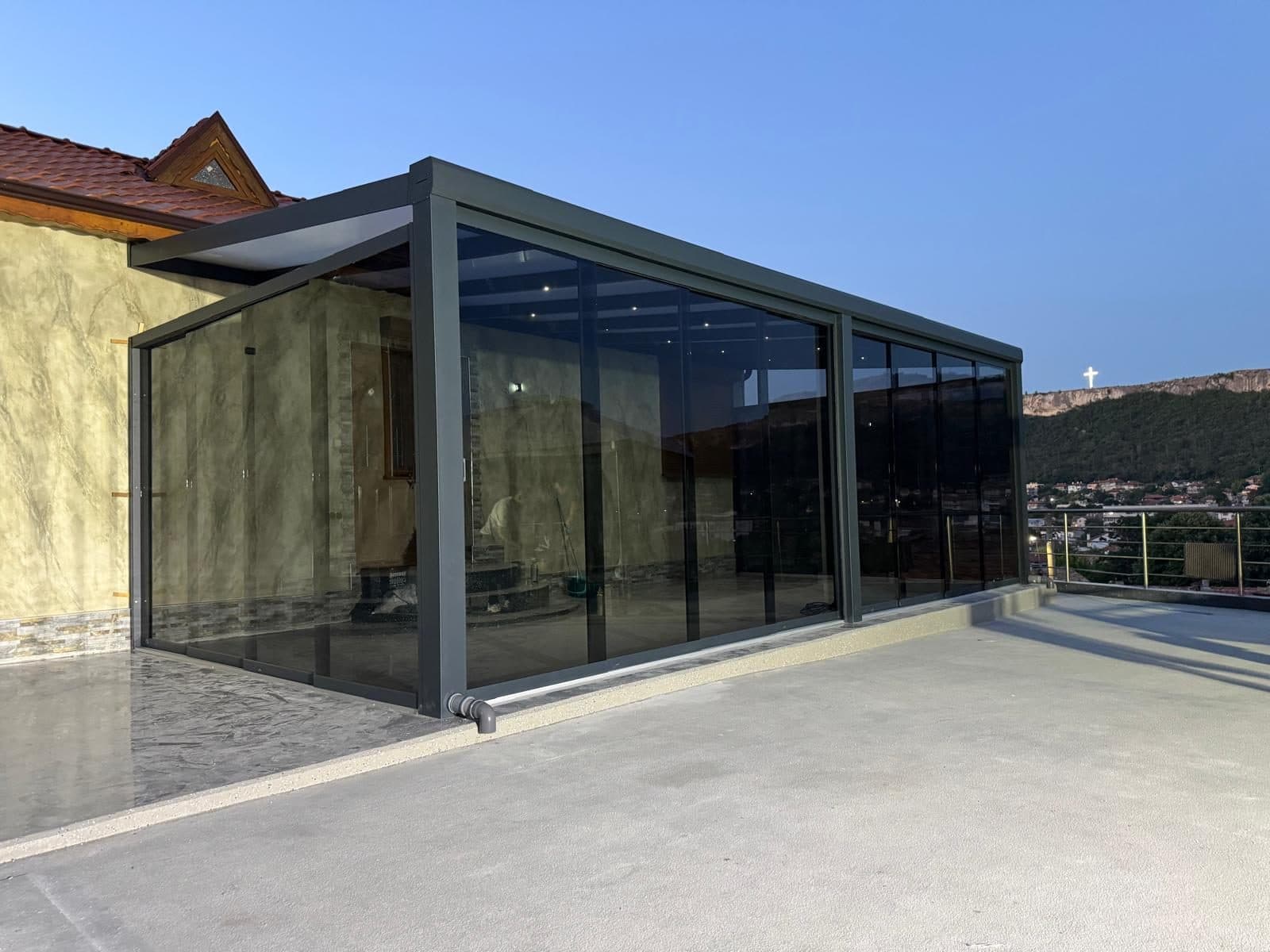
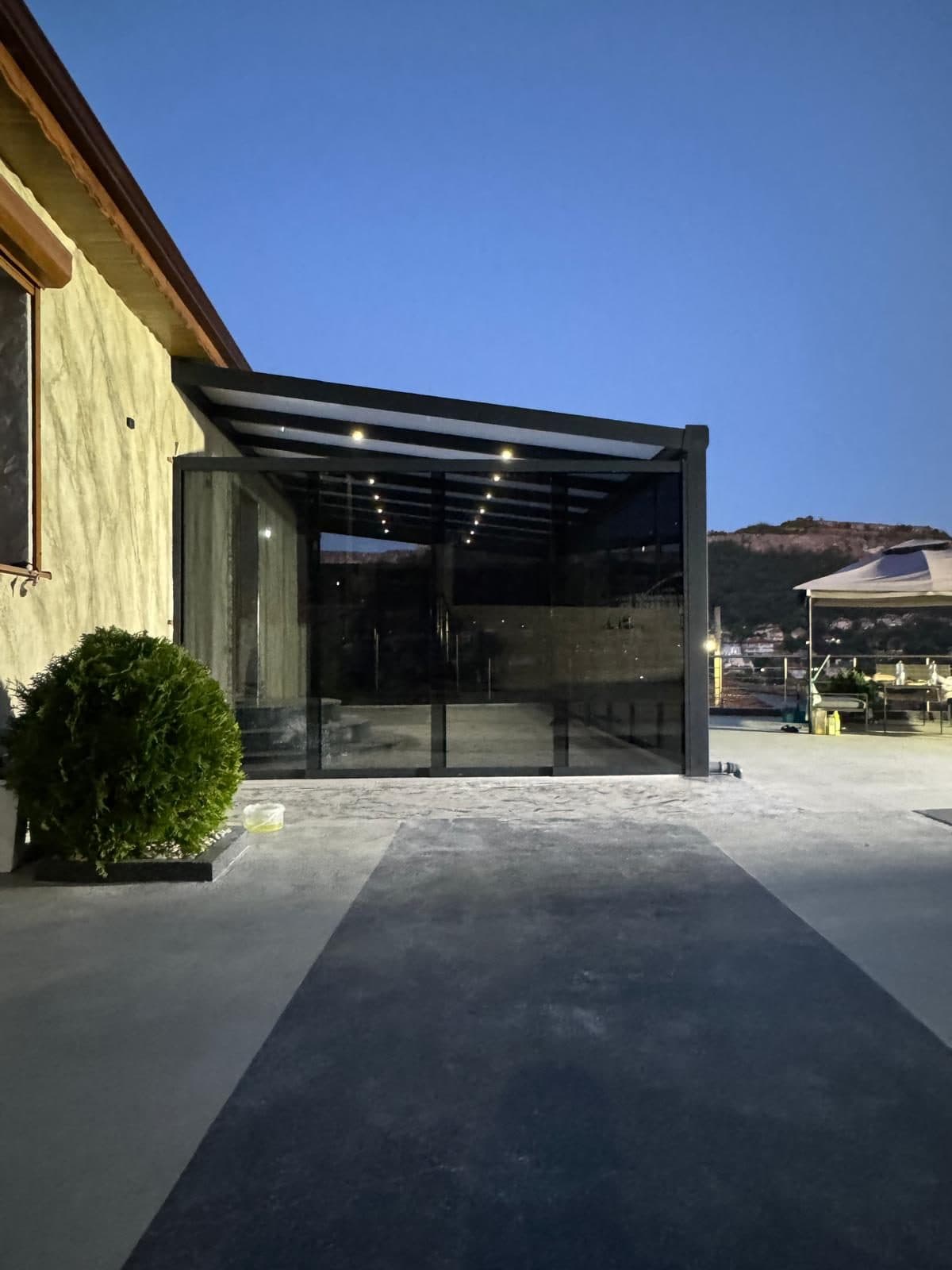
A winter garden adds a bright room to your home where you are inside and outside at the same time: you have breakfast looking out at the garden, your plants overwinter in the light, and the terrace gets used in November, not just in July. Unlike an extension, it is built from an aluminium frame and glass, goes up quickly and needs almost no wet building work.
Precisely because it looks simple, many people order a winter garden without asking themselves a few key questions. Later it turns out that it is too hot inside in summer, the glass mists up in winter, and rainwater from the roof runs where it shouldn't. In this article we go through the decisions worth making before the site visit, so you get exactly what you need.
What is a winter garden and how is it different from a veranda?
“Winter garden” can mean several different things. So first make sure you know what you mean, and what the company quoting you means.
- Warm winter garden: a fully enclosed, sealed room with insulating double glazing and insulated profiles, designed for use even below freezing, usually heated. In practice, an extra room.
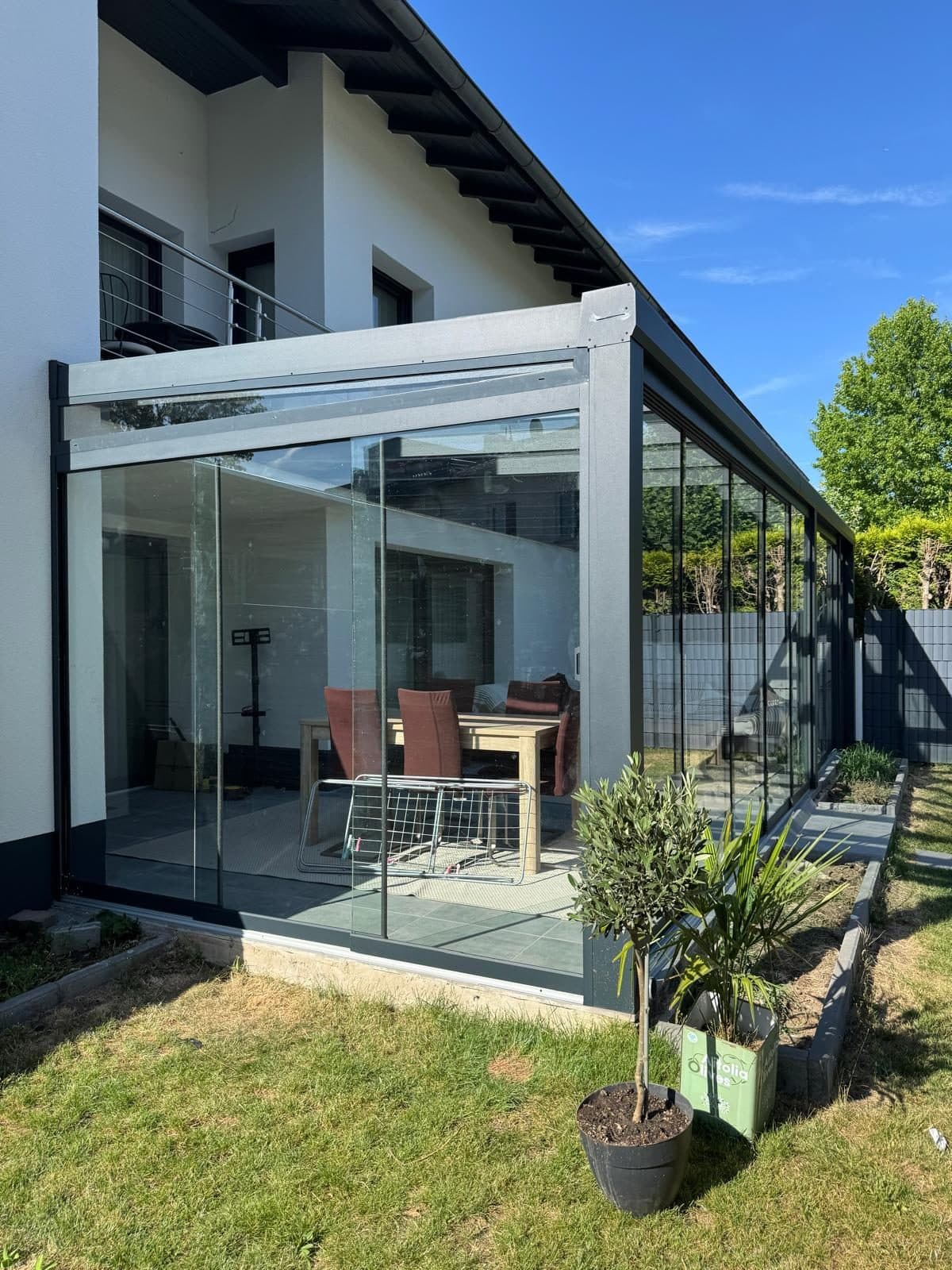
- Cold winter garden (often called a summer garden or glazed veranda): a roof plus sliding glass panels without insulated profiles. It keeps out wind, rain and snow and extends the season by months, but it is cool in winter.
- Covered terrace or veranda: just a roof on posts, no walls. You can close it later with glass or screens.
No option is “better” in itself. What matters is how you will use the space. If you are torn between an open solution and an enclosed room, see also our comparison pergola or winter garden.
1. How will you use the winter garden?
Start with how you'll use it, not with materials. Write down your answers to these questions and bring them to the site visit:
- Will you use it all year round or mainly from spring to autumn?
- What goes inside: dining area, lounge, workspace, plants, play area?
- Will it open straight into the house (no door in between) or be separate?
- Do you want to be able to open it almost completely in summer?
- Will you heat it, and with what: air conditioning, underfloor heating, a stove?
If you mainly need a space for the warm months, a lighter summer garden with sliding glass is often the more sensible choice. If you want a real room for every season, plan a warm structure and heating from the start. How to heat such a room and how usable it really is in winter, we cover in detail in the article on heating a winter garden.
2. Which roof should you choose?
The roof decides how much light gets in, how much the room heats up and how well it holds warmth. There are three main options:
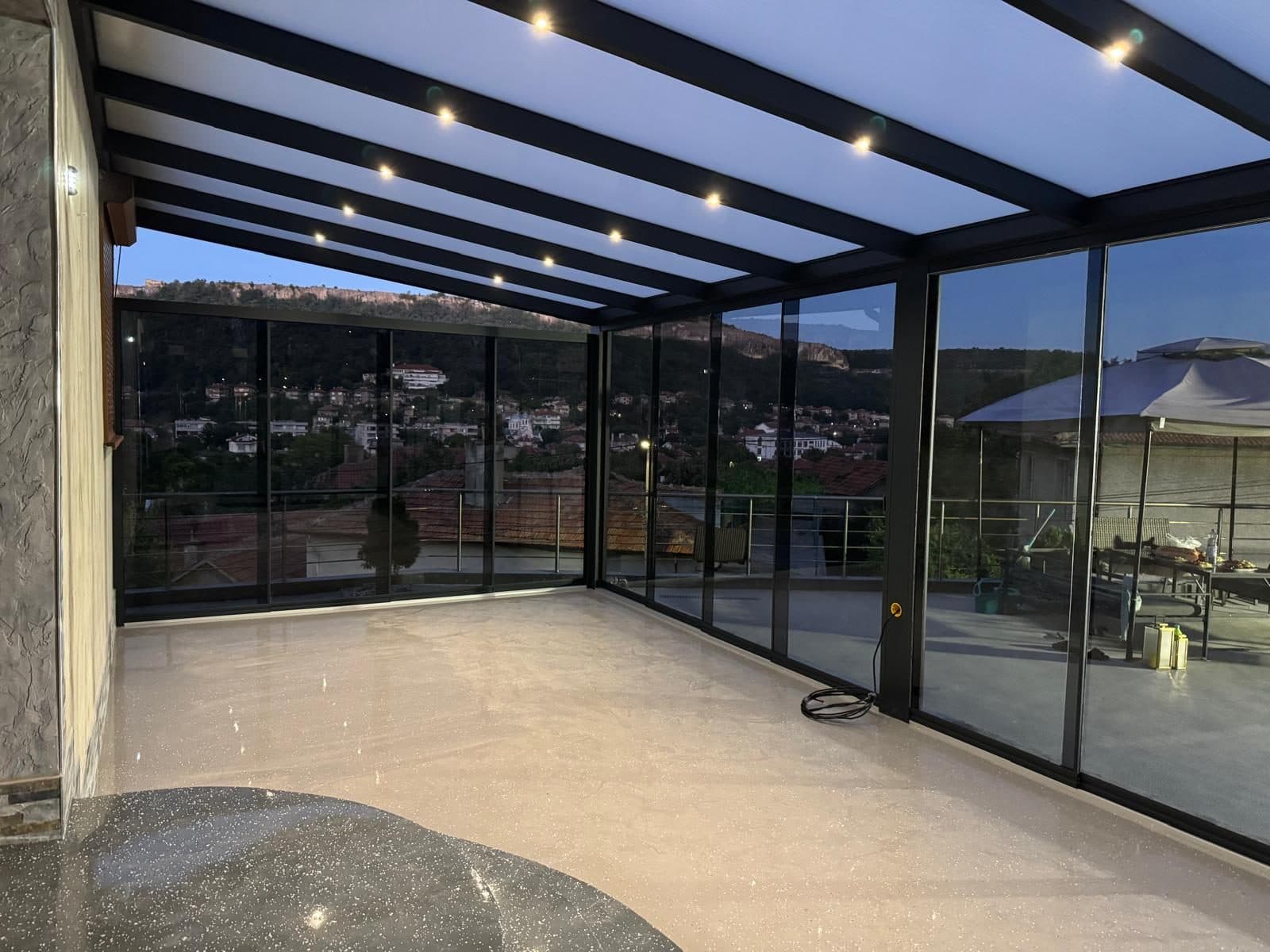
- Glass: the most light and the cleanest look, you see the sky. Roofs normally use safety (laminated) glass. But glass also brings the most heat in summer, so you almost always need to think about shade.
- Polycarbonate: lighter, diffuses sunlight and gives a soft light. It insulates less than good double glazing and is noisier in the rain.
- Panels (sandwich panels): a solid, insulated roof. Cooler in summer and warmer in winter, but darker. Often combined with a translucent strip or ceiling lights.
The pitch matters too. A winter garden roof needs enough fall for water to drain, plus a gutter and a downpipe taken to the right place. The structure is also designed for the snow load in your area: higher or more northern locations carry more. This is calculated for the specific site, not judged “by eye”.
3. Walls, glass and openings
The sides of a winter garden can be fixed glass, sliding glass, opening windows and doors, or a mix. It helps to decide:
- Which sides should open, and how wide. Usually at least one side slides open fully so you can “open up” the garden in summer.
- Where you will walk in: from the house, from the garden, or both.
- Whether you'll have thresholds. Low or floor-recessed tracks are convenient but need a more precise base.
- What glass you need: single toughened glass for a cold garden, or insulating double glazing for a warm one.
If you want a cold but very open solution, also look at sliding glass systems, including frameless glazing. They can also be fitted under an existing veranda roof.
4. The foundation: the most underrated part
A winter garden stands on an existing terrace, a concrete slab or a new foundation. Whichever it is, it must be:
- Level: sliding glass does not forgive big differences in height.
- Load-bearing: the posts carry the weight of the roof, glass and snow to specific points.
- Properly sloped and drained: water from the garden and roof must not collect against the glass.
- Free of cracks and washout: old terraces sometimes have weak spots that only show at the site visit.
With a warm winter garden there is also the floor: if the base isn't insulated, the floor will be cold however good the glass is. That's why we check the foundation at the site visit and tell you whether preparation is needed, before we talk about structural details.
5. Sun, shade and ventilation
Glass collects heat. A south- or west-facing winter garden with no shade and no ventilation can get hotter than the garden outside in July. The answer is not less glass, but well-planned shade and air movement:
- External ZIP screens or awnings that stop the sun before it passes through the glass.
- Opening glass on two sides, so air can flow through.
- Some systems allow vents high in the roof where warm air can escape.
- A translucent rather than fully clear roof if the side is very sunny.
Orientation works the other way too: a north-facing winter garden hardly overheats, but it will be colder in winter and need more heating.
6. Condensation and how to avoid it
Misted-up glass is the most common complaint in the first winter. The reason is simple: warm, humid air meets a cold surface. These help:
- Air the room briefly every day, even when it's cold.
- Don't keep too many plants or dry laundry in the closed garden in winter.
- Heat evenly rather than blasting heat for an hour and switching it off.
- In a warm garden, choose insulated profiles and double glazing that keep the inner surface warmer.
7. Do you need a permit for a winter garden?
Whether you need a permit depends on the size, the structure, whether it is attached to the building, and the municipality. In apartment buildings, glazing a terrace can change the façade and may need the other owners' consent or approval. Rules differ, so don't rely on what applied to your neighbour. Ask the planning department of your municipality before you sign a contract. At the site visit we'll tell you which documents and structural drawings we can prepare for your conversation with the municipality.
8. What drives winter garden cost
Every winter garden is made to measure, so the price is calculated for the specific site. The biggest factors are:
- Size: area, height and depth of the roof.
- Roof type: glass, polycarbonate or panels.
- Warm or cold construction, and the type of glass.
- Number and type of opening elements: sliding glass, doors, windows.
- Extras such as screens, lighting, gutters and trims.
- The condition of the foundation and access to the site.
We go through each factor in the article how much does a winter garden cost. If you want to see how yours could look, try sizes and colours in the 3D configurator, then request a quote with your real measurements.
The most common mistakes when ordering a winter garden
- Ordering a cold garden and expecting a warm room in January.
- A glass roof on the south side with no shade at all.
- A forgotten gutter, or a downpipe that empties onto the path.
- A weak or uneven foundation, “to save money”.
- No opening elements and no ventilation.
- Signing a contract before checking with the municipality whether a permit is needed.
GS Aluminium has a showroom in Ruse and builds winter gardens all over Bulgaria, with more than 15 years of experience in Germany, the Netherlands and Bulgaria. If you're considering a winter garden, book a free site visit: we'll come out, check the foundation and talk through the roof, glass and shade with you before we give you a quote.
Winter garden FAQ
What is the difference between a winter garden and a summer garden?
A warm winter garden is an insulated room with double glazing and usually heating, used all year round. A summer (cold) garden is a roof with sliding glass that keeps out wind and rain and extends the season, but is cool in winter.
Do I need a permit for a winter garden?
It depends on the size, the structure, how it connects to the building and the municipality, and in apartment buildings often on the other owners' consent. Check with the municipality before you sign a contract. The rules differ from place to place.
Can you use a winter garden in winter?
Yes, if it is designed as a warm one: with insulated profiles and double glazing, an insulated floor and heating. A cold garden protects from wind and snow, but on cold days the temperature inside is close to outside.
Does a winter garden get very hot in summer?
It can, especially on a south or west side with a glass roof. External shading such as ZIP screens, opening glass and ventilation solve the problem, which is why they are planned at the design stage.
Why does the glass in a winter garden mist up?
Warm, humid air condenses on cold glass. Regular airing, even heating, less moisture inside and better insulating glass and profiles all help.
Can a winter garden be built on an existing terrace?
In most cases yes, if the terrace is level, load-bearing and drained. At the site visit we check the base and tell you whether preparation is needed before we make an offer.