Winter garden on the terrace: ideas and what you need to know
The terrace is the easiest place for a winter garden, since the base is often already there. Here are ideas for using it and what to check before you glaze it in.
Published: November 4, 20267 min read
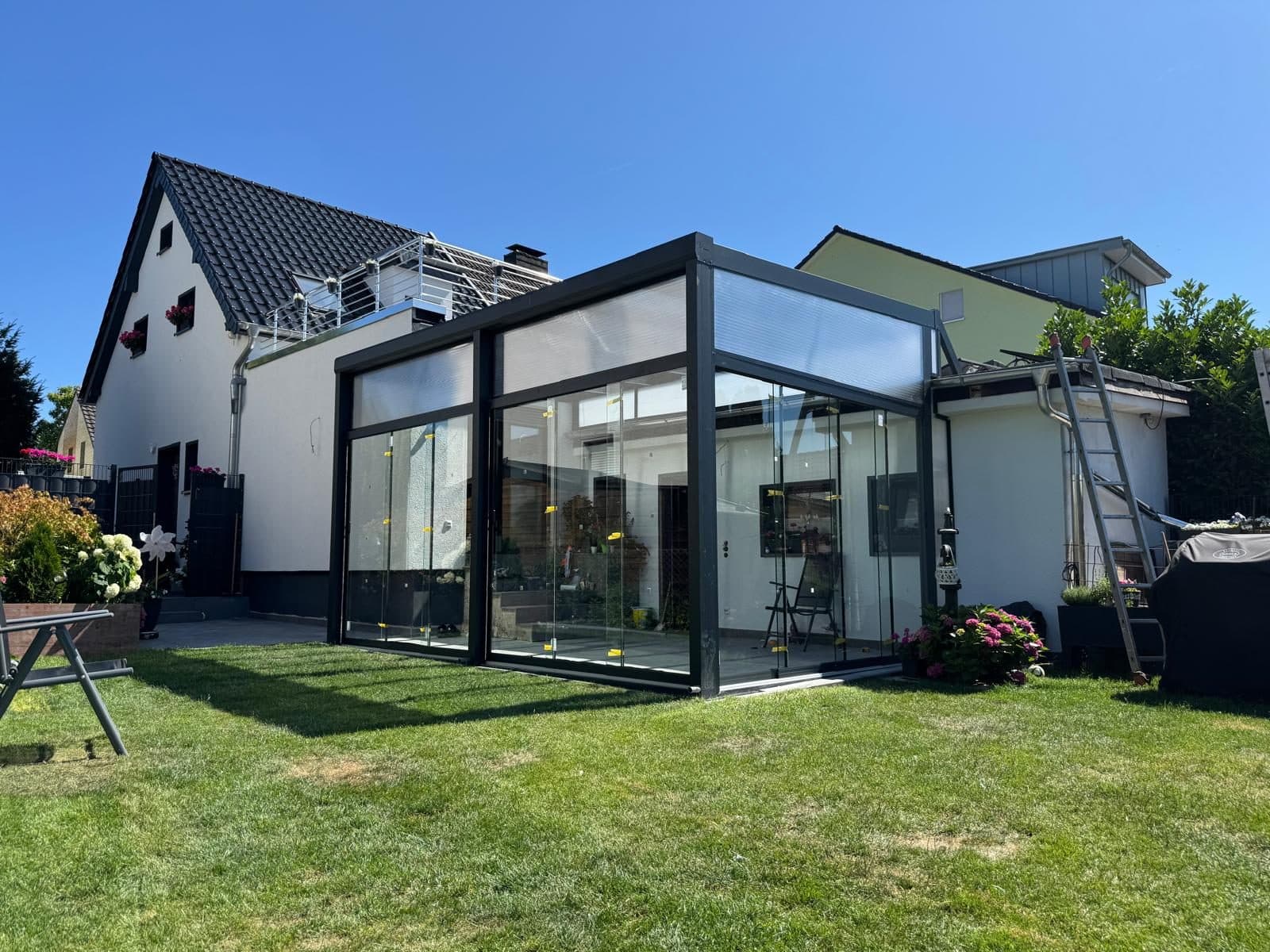
The terrace is the most natural place for a winter garden. It’s right next to the house, usually has a door to the living room or kitchen, and often has a solid base. With glass walls and a roof it becomes a bright room you use for many more months of the year. Here you’ll find winter garden ideas for your terrace, what to check before ordering and the mistakes we see most often.
What kind of terrace do you have?
The right solution depends a lot on the type of terrace:
- Ground-level terrace next to the house – the easiest case. The winter garden is fixed to the house wall and stands on the terrace slab or a new foundation.
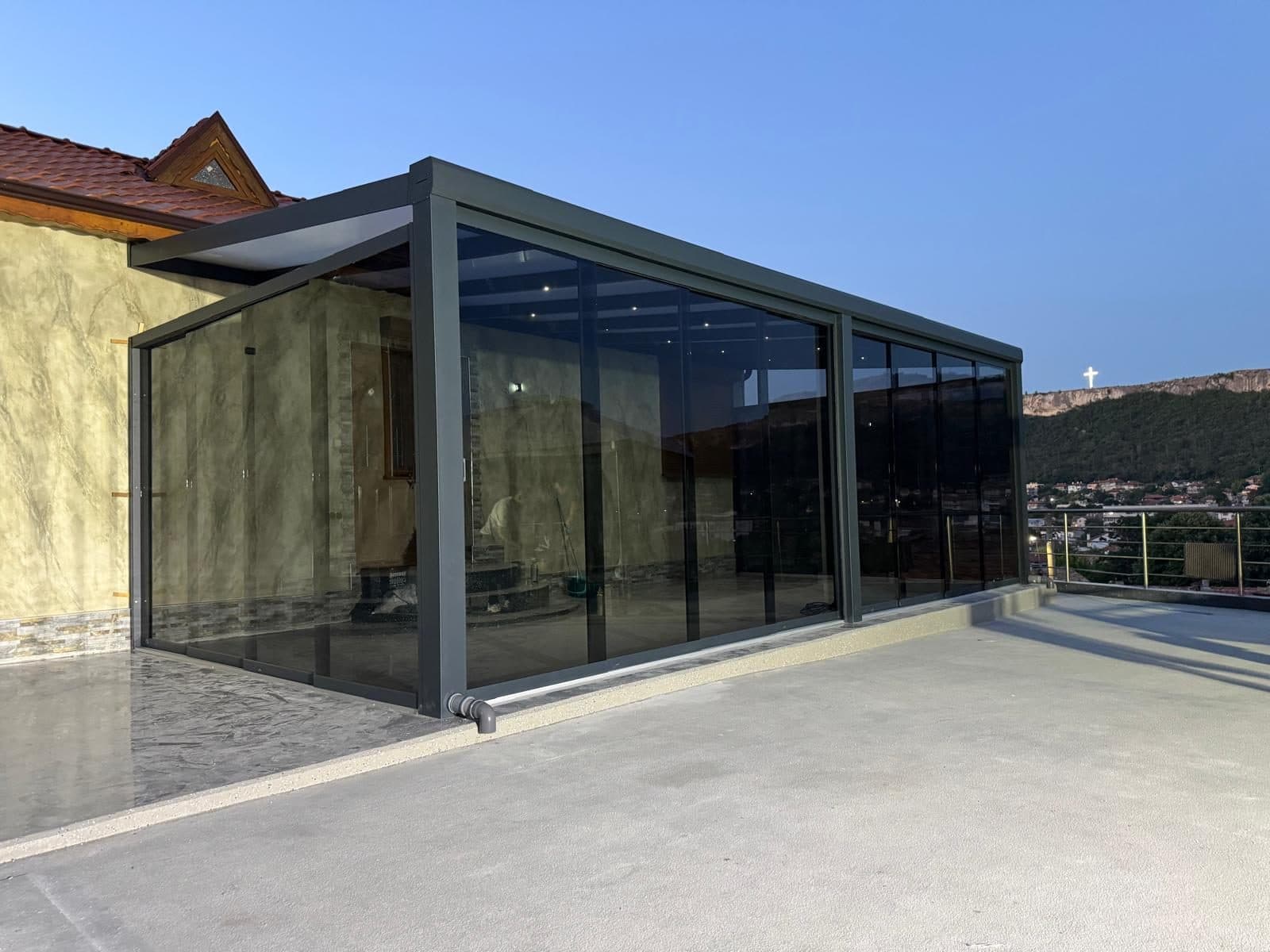
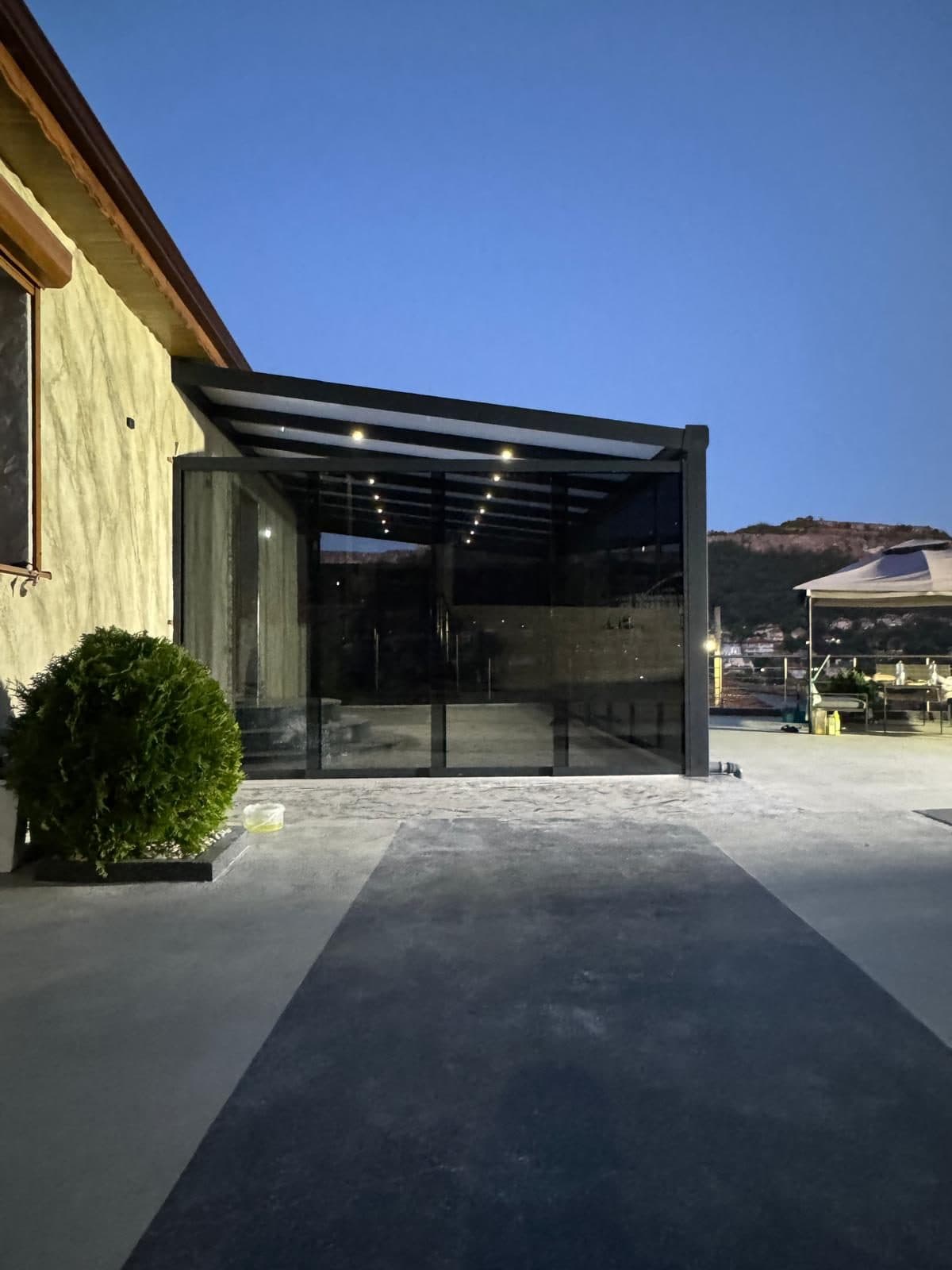
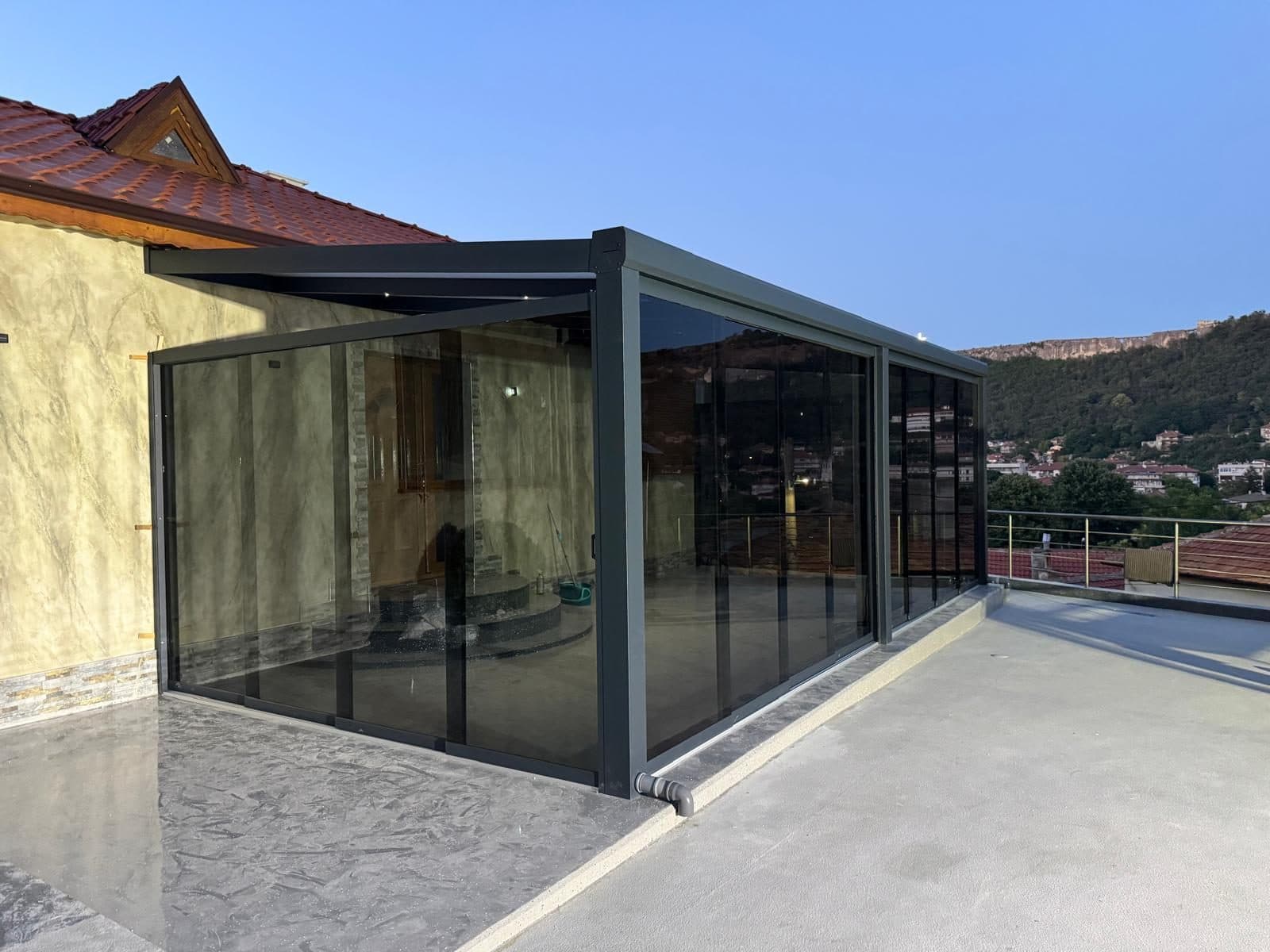
- Upper-floor or roof terrace – often with the best view, but needs more care: there may be a room below, the waterproofing must not be damaged, and the wind is stronger.
- Balcony in an apartment block – this is usually glazing with sliding glass rather than a winter garden. See our separate article do you need a permit to glaze a balcony.
7 ideas for a winter garden on the terrace
- Dining room with a view – a table for the whole family where you eat among the greenery in October and March too.
- Living room or reading corner – sofa, armchairs, a rug and plenty of light. The most used kind of winter garden.
- Home office – quiet, bright and away from household noise. Plan shading so the screen doesn’t glare.
- A place for plants – citrus, olives and potted plants that can’t take frost can overwinter somewhere cool and bright.
- Kitchen extension – if the terrace is next to the kitchen, the winter garden becomes a natural dining spot. The barbecue stays outside or under a separate canopy, though.
- Play area – somewhere to play when it rains, with the children still in sight.
- Relaxing spot on the upper terrace – when the view is the main reason, floor-to-ceiling glass keeps it all year.
Choosing an idea isn’t only about furniture. A dining room or office you’ll use in winter needs a heated, warm winter garden. A plant corner or summer dining area works in a cold one with sliding glass. So tell us at the visit exactly how you picture the space: the frames, glass and shading all depend on it.
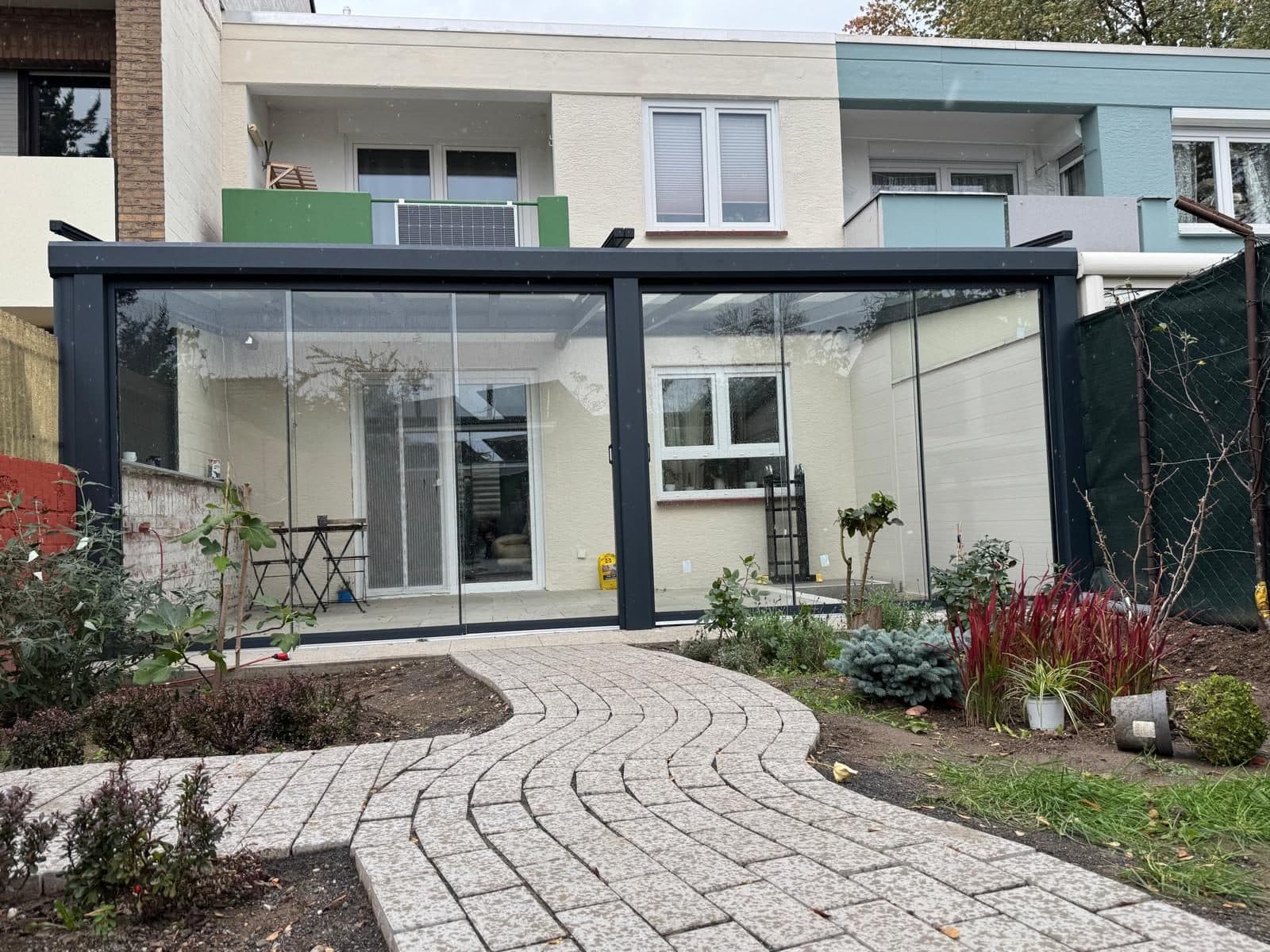
What to check before you glaze in your terrace
A good winter garden starts with things you can’t see. These are the most important:
- The base – the slab must be solid and level. On an upper-floor terrace, what lies below and how much load it can take matter. If unsure, consult a structural engineer.
- Drainage – terraces usually slope outwards. The winter garden must carry roof water away and not block the water’s path across the slab.
- Waterproofing – on a terrace above a room, fixings must not pierce it carelessly. This is resolved at the site visit.
- Height and wall – where exactly the roof attaches: under the eaves, below the upper-floor windows or above them. This sets the roof pitch.
- Doors from the house – will they stay or be replaced, and how high are the thresholds? The winter garden and the house must connect comfortably.
- Orientation – a south-facing terrace means lots of sun and a need for shade; a north-facing one is cooler and needs more light and warmth.
- Neighbours and permits – closeness to the boundary, a shared wall, shared ownership in a block. Ask the municipality what applies in your case.
Glazed veranda on a house: open or closed?
Not every terrace needs to be fully enclosed. There are three basic options and many combinations in between:
- Roof only – an aluminium veranda or pergola keeps off sun and rain while the terrace stays open. See also the article terrace roof.
- Roof plus sliding glass – a glazed veranda you open fully in summer and close in wind and rain. This is a cold winter garden.
- Warm winter garden – insulated frames, double glazing and heating, for use in winter too.
If you’re undecided, see the comparison pergola or winter garden and the article how to heat a winter garden. In our 3D configurator you can see the size and shape of your idea.
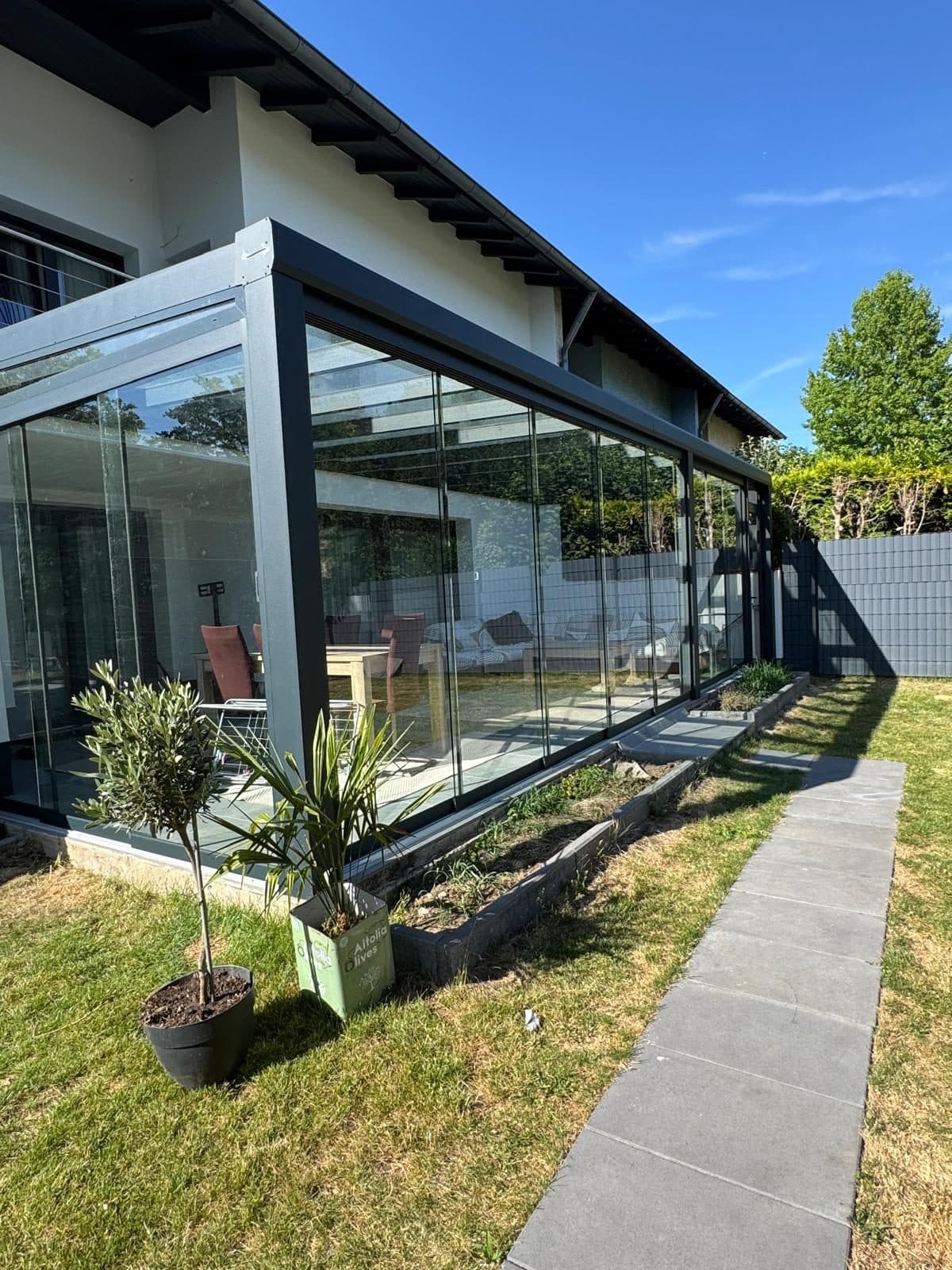
Furnishings and details that make the difference
- Floor – porcelain or stone tiles cope with both sun and moisture. If you want underfloor heating, decide before the floor is laid.
- Sockets and lighting – plan them before installation. Some clients add lighting built into the roof beams.
- Shading – ZIP screens outside or blinds inside. Without them a south-facing terrace gets hot as early as May.
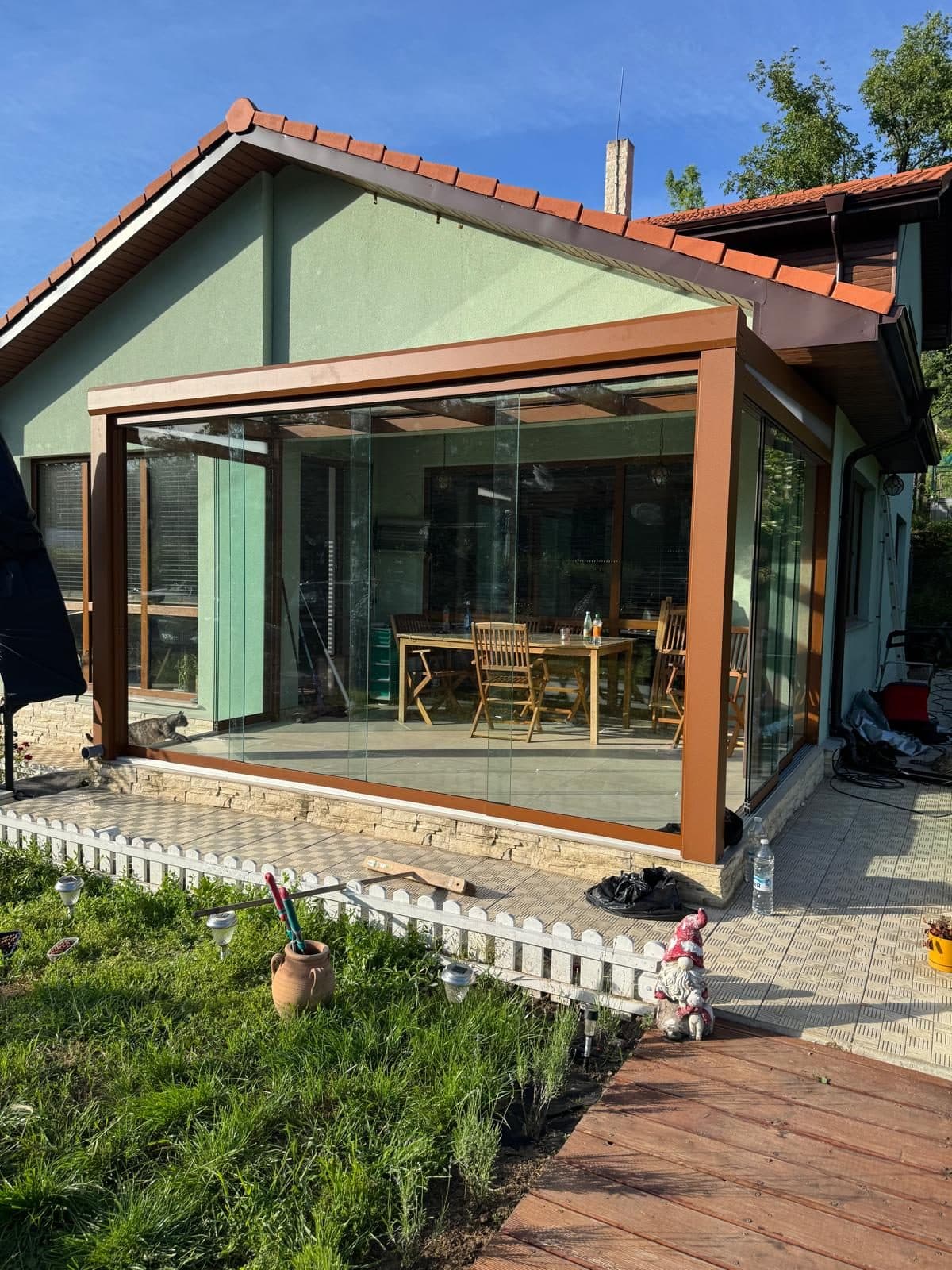
- Frame colour – anthracite suits most modern façades; on houses with timber windows some people choose wood-effect frames.
- Furniture – for a cold winter garden, choose furniture that copes with cool and damp. In a warm one, normal indoor furniture is fine.
- Plants – large pots look best, but think about watering and humidity, especially in winter.
Common mistakes with a terrace winter garden
- Ordering by area alone, without deciding whether it will be heated.
- No shading on a south-facing terrace.
- No opening sections for ventilation.
- Unresolved drainage from the roof and the slab.
- Sockets, lighting and heating thought of only after installation.
- Permits checked only once the structure is up.
The price depends on these choices too. To see which factors drive it, read how much does a winter garden cost.
We are based in Ruse, work all over Bulgaria and build winter gardens, verandas and terrace glazing. Before that we worked for more than 15 years in Germany and the Netherlands. If you have a terrace you’d like to use more, book a free site visit. We’ll come and check the base, the wall and the drainage, and suggest a solution for your terrace.
Frequently asked questions about a winter garden on the terrace
Can a winter garden be built on an existing terrace?
Yes, in most cases. The slab must be solid, level and well drained. At the site visit we check the base and tell you whether any preparation is needed.
Can I have a winter garden on an upper-floor terrace?
Yes, but it needs more care. What lies beneath the terrace, how much load the slab can take and how the waterproofing is preserved all matter. The stronger wind at height is also taken into account in the structure.
What is the difference between a glazed veranda and a winter garden?
A glazed veranda is usually a roof with sliding glass that opens fully, used from spring to autumn. A winter garden is more enclosed and, if insulated and heated, can be used all year.
Do I need a permit for a winter garden on my terrace?
It depends on the size, the structure, its position on the plot and the municipality. In a building with shared ownership, the other owners’ consent may also be needed. Check with the municipality in advance.
How do I stop a winter garden on a south-facing terrace getting too hot?
Plan external shading on the roof and walls, opening glass and high-level vents. Solar control glass or solid panels in part of the roof also help.