How to choose a front door for a house – aluminium or uPVC?
Your front door keeps out burglars, cold and noise and is the first thing guests see. Here is how to compare aluminium and uPVC doors and what to watch for in hardware, glass and fitting.
Published: November 4, 20267 min read
A front door does several jobs at once: it keeps out burglars, cold and noise, it opens thousands of times a year and it is the first thing guests see. For flats most people choose a steel security door, but for a house the question is almost always different: aluminium or uPVC front door? Here is how to compare them and what to watch for in hardware, glass and installation.
uPVC front door: pros and cons
A uPVC front door is made from the same kind of profiles as plastic windows, reinforced inside with steel. It insulates well, costs less and naturally suits a house with uPVC windows.
- Pros: good thermal insulation, lower price, easy care, a wide choice of decorative panels.
- Cons: less rigid than aluminium, so better suited to standard sizes. Dark colours in strong sun heat the profile and it can warp. The profiles are wider, and over the years the leaf can drop and need adjusting.
Aluminium front door: pros and cons
An aluminium front door has stronger profiles and keeps its shape even with large sizes and a heavy leaf. For a door into a heated hallway the profile must be thermally broken. We explain what that means in what are thermally broken aluminium windows.
- Pros: stability and strength, slimmer profiles, large sizes and side panels, dark colours without warping, a modern look, a long life with no painting.
- Cons: a higher price than uPVC for similar insulation. Cheap systems without a good thermal break can insulate less well, and the frame may sweat in winter.
Aluminium or uPVC: a quick comparison
- Insulation: comparable in good systems. With aluminium it depends on the thermal break and the door panel.
- Large or heavy door, wide side panel: aluminium.
- Dark colour on a sunny façade: aluminium.
- Tight budget and a standard opening: uPVC.
- Matching the windows: choose the material of your windows. See also uPVC or aluminium windows.
- Long life and little maintenance: aluminium.
Panel, glass and the look of the door
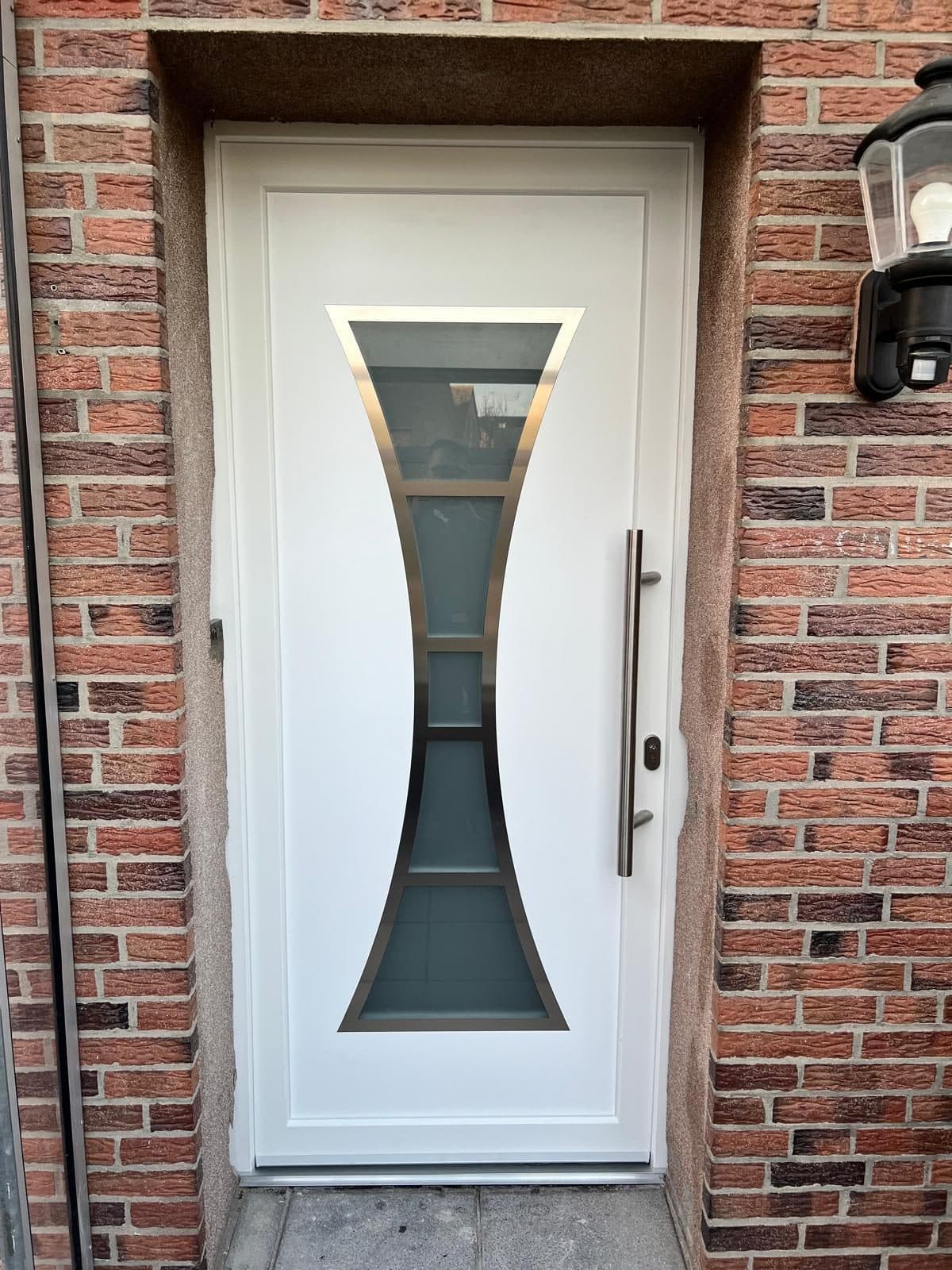
In modern front doors the leaf is usually filled with a panel: a solid board with an insulating core, faced with aluminium or plastic. There are also panels that cover the leaf on one or both sides, so no frame is visible from outside and the door looks like a single piece. Decisions to make:
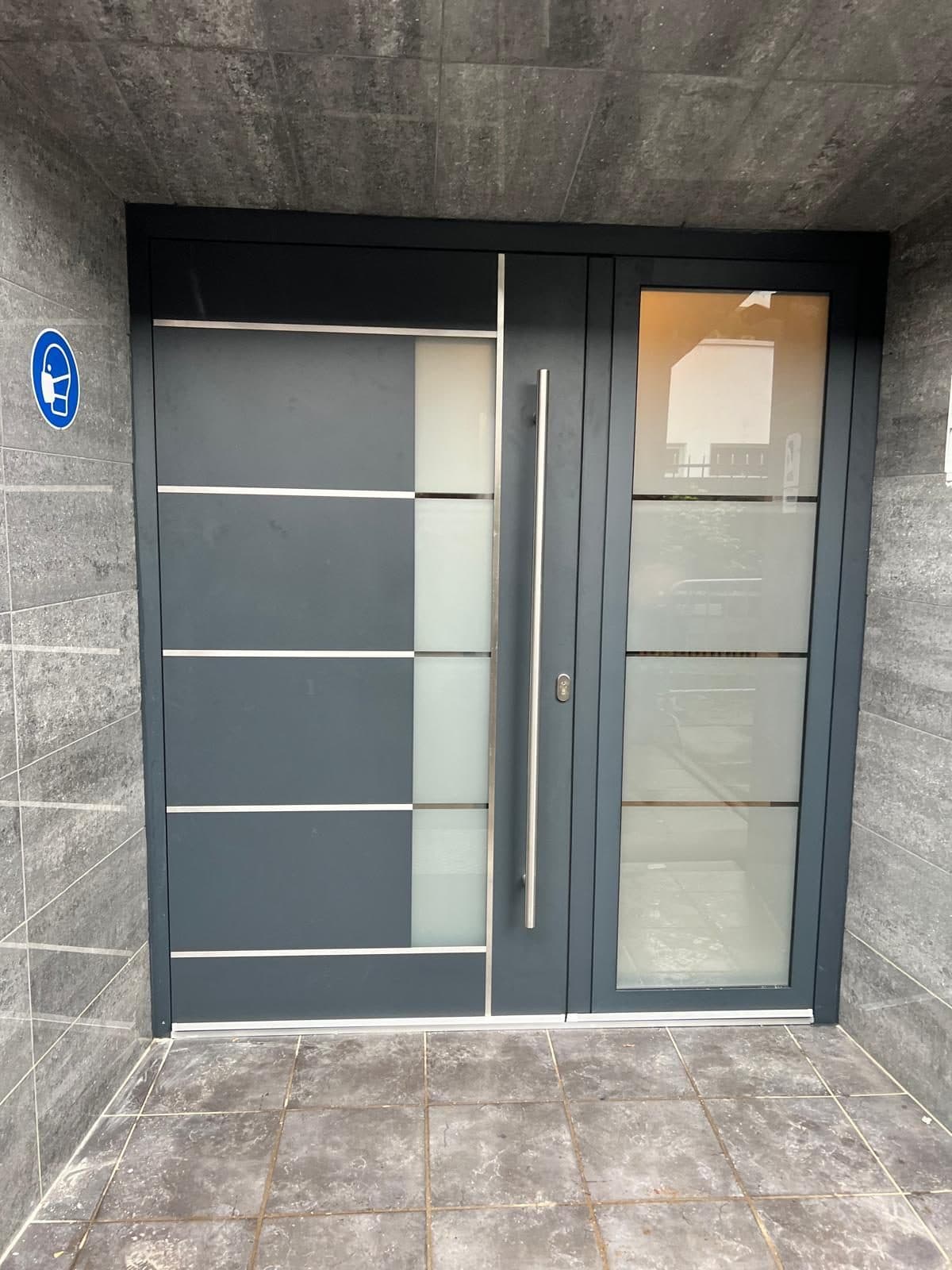
- Glass in the door: brings light into the hallway. Choose laminated or toughened glass, frosted or patterned if you don’t want people to see in.
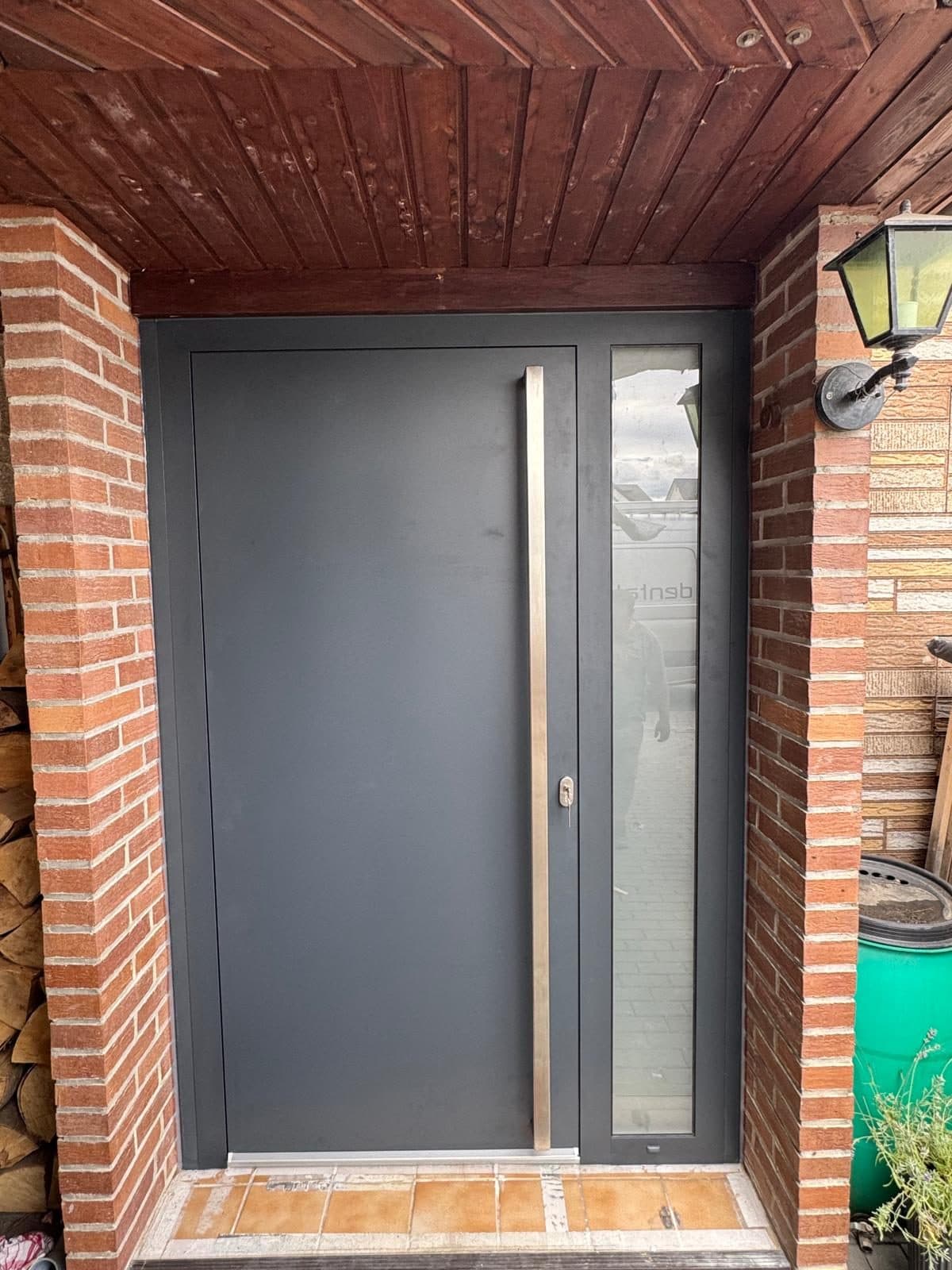
- Side panel and fanlight: glazed sections beside or above the door. They make the entrance brighter and more welcoming.
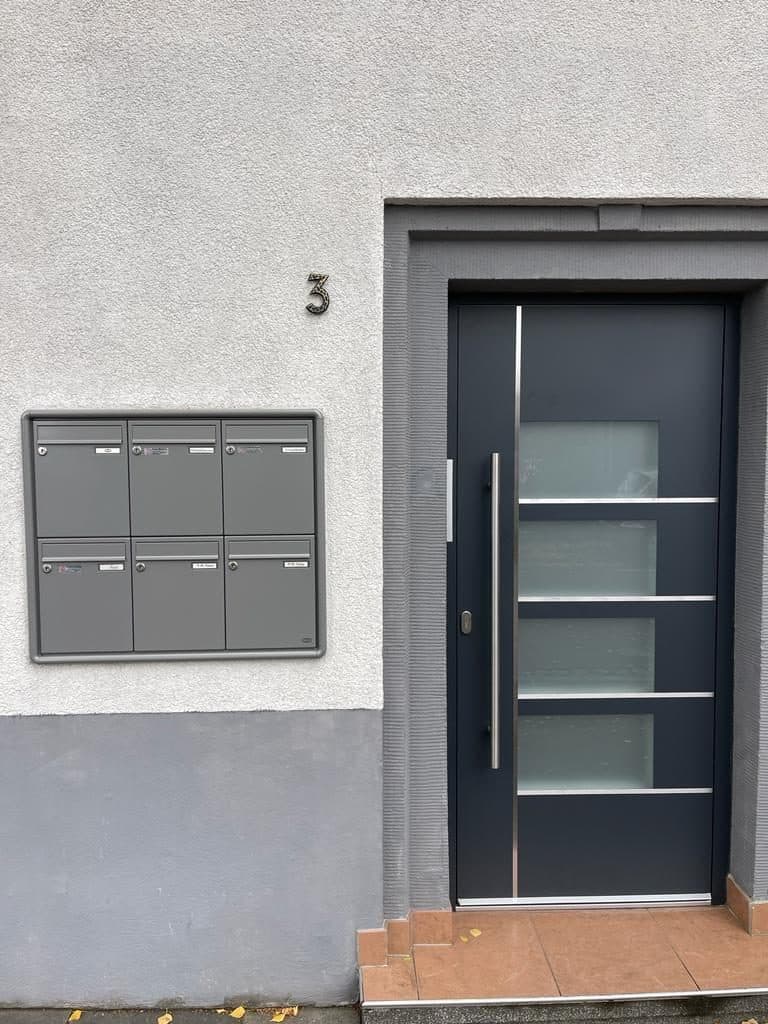
- Handle: outside there is often a long pull bar, inside a normal lever. A pull bar is convenient but means the door opens from outside only with a key or electronic access.
- Colour: anthracite, white, woodgrain finishes. Many systems allow a different colour inside and outside.
Security: what to check
A strong profile is only part of security. A door is as secure as its weakest point, and that is usually the lock, the cylinder or the installation.
- Multi-point locking: when you turn the key, the door locks at several points along its height, often with hooks or bolts that engage the frame. That makes the leaf much harder to force.
- A security cylinder protected against snapping, drilling and pulling, plus a security escutcheon that stops the cylinder from being gripped and broken.
- Strong hinges and anti-lift pins that protect the hinge side of the leaf.
- Laminated glass: it cracks when struck but stays in place.
- Burglar-resistance class: in Europe there are classes (RC2, RC3 and so on under EN 1627). If they matter to you, ask whether the specific door has been tested to such a class.
- Installation: the frame must be fixed firmly into the wall. A badly fixed frame makes even the most expensive lock pointless.
Hardware and electronics
Hardware is everything that moves and locks the door: hinges, lock, cylinder, handles, automatic locking. There are also keyless options: a fingerprint reader, a code keypad, an electronic lock or a motorised lock that locks the door automatically when it closes. They are convenient, but you need power to the door before the plastering is done. What is possible for your door we clarify at the site visit.
Threshold, opening direction and installation
- Threshold: a low threshold is handy for pushchairs, older people and robot vacuums, but it must seal well against wind and rain.
- Opening direction: house front doors usually open inwards. Outwards can be practical in a small hallway, but then the door must be sheltered from rain and the hinges protected against removal.
- A canopy over the entrance: shields the door and threshold from direct rain and makes the entrance more pleasant.
- Installation: the gap between frame and wall is sealed against moisture and air. In a new house the finished floor level must be fixed before the door is ordered.
Checklist before you order
- Set a budget and decide whether the door leads into a heated hallway.
- Choose the material: aluminium for large, dark or modern doors; uPVC for a standard opening and a lower budget.
- Decide whether you want glass in the leaf, a side panel or a fanlight.
- Check the locking, cylinder, escutcheon and hinges.
- Think about electronic access and plan power to the door.
- Choose the colour together with the windows and the garage door.
- Ask for a site visit so the opening can be measured and the threshold and fitting agreed.
What the price of a front door depends on
The price depends on the material and profile system, the size, the type of panel and glass, side panels and fanlights, hardware and locking, electronics, colour and how complex the installation is, for example whether an old frame must be removed or the opening adjusted. Two doors that look the same in a photo can differ a lot in these details. If you want to compare options for your entrance, ask for a quote and we will show you the differences.
GS Aluminium makes aluminium front doors for houses and buildings and installs them in Ruse, North-East Bulgaria and across the country. We can combine the door with new uPVC or aluminium windows and the garage door so the façade looks like one whole. Book a free site visit: we will measure the opening, show you the options and you will get a no-obligation quote.
Frequently asked questions about front doors
Which front door is better for a house: aluminium or uPVC?
For a standard opening and a smaller budget a uPVC door is a good choice. Aluminium suits large, heavy doors, dark colours on sunny façades and a modern look better, but it should be thermally broken.
Does an aluminium front door need a thermal break?
For a door into a heated hallway, yes. Without a thermal break the frame is cold, condensation forms on it and heat is lost through it.
How many locking points should a front door have?
For a house, multi-point locking along the height of the door is recommended, because the leaf is then much harder to force. A security cylinder, an escutcheon and solid installation are just as important.
Can a front door with glass be secure?
Yes, if the glass is laminated. It cracks when struck, but the interlayer holds it together so nobody can get through.
Should a front door open inwards or outwards?
In houses usually inwards, because the door is better protected from the weather and the hinges are inside. Outwards is possible in a small hallway, but then it needs rain protection and secured hinges.
How do you look after an aluminium front door?
Wash it with water and a mild detergent, no abrasives. Once or twice a year lubricate the moving parts of the hardware and check the seals; if the door starts to rub, the hinges are adjusted.