What are thermally broken aluminium windows and are they worth it?
“Thermal break” is not a sales slogan but simple physics that decides whether water runs down your frames in winter. Here is when it pays off and when cold aluminium is enough.
Published: November 4, 20269 min read
If you have asked about aluminium windows, you have almost certainly heard “with a thermal break” or “thermally broken profile”. It sounds like marketing, but behind it is simple physics, and that physics decides whether there will be water on your frames in winter. In this article we explain what a thermal bridge is, how it is broken, when the extra cost is worth it and when plain, so-called cold aluminium is perfectly fine.
What is a thermal bridge?
A thermal bridge is any spot in a wall, roof or window where heat escapes more easily than through the parts around it. Picture a well-insulated house with one concrete column running from inside to outside with no insulation. In winter it is cold on the inside, and that is exactly where damp and mould appear first. That is a thermal bridge.
Aluminium is an excellent window material: strong, light, rust-free and dimensionally stable. But it conducts heat extremely well, hundreds of times better than uPVC or timber. If the profile is one solid piece of aluminium from the outside to the inside, it acts like a radiator facing outdoors: it draws heat out of the room and gives it away to the cold.
How the thermal bridge is broken in aluminium windows
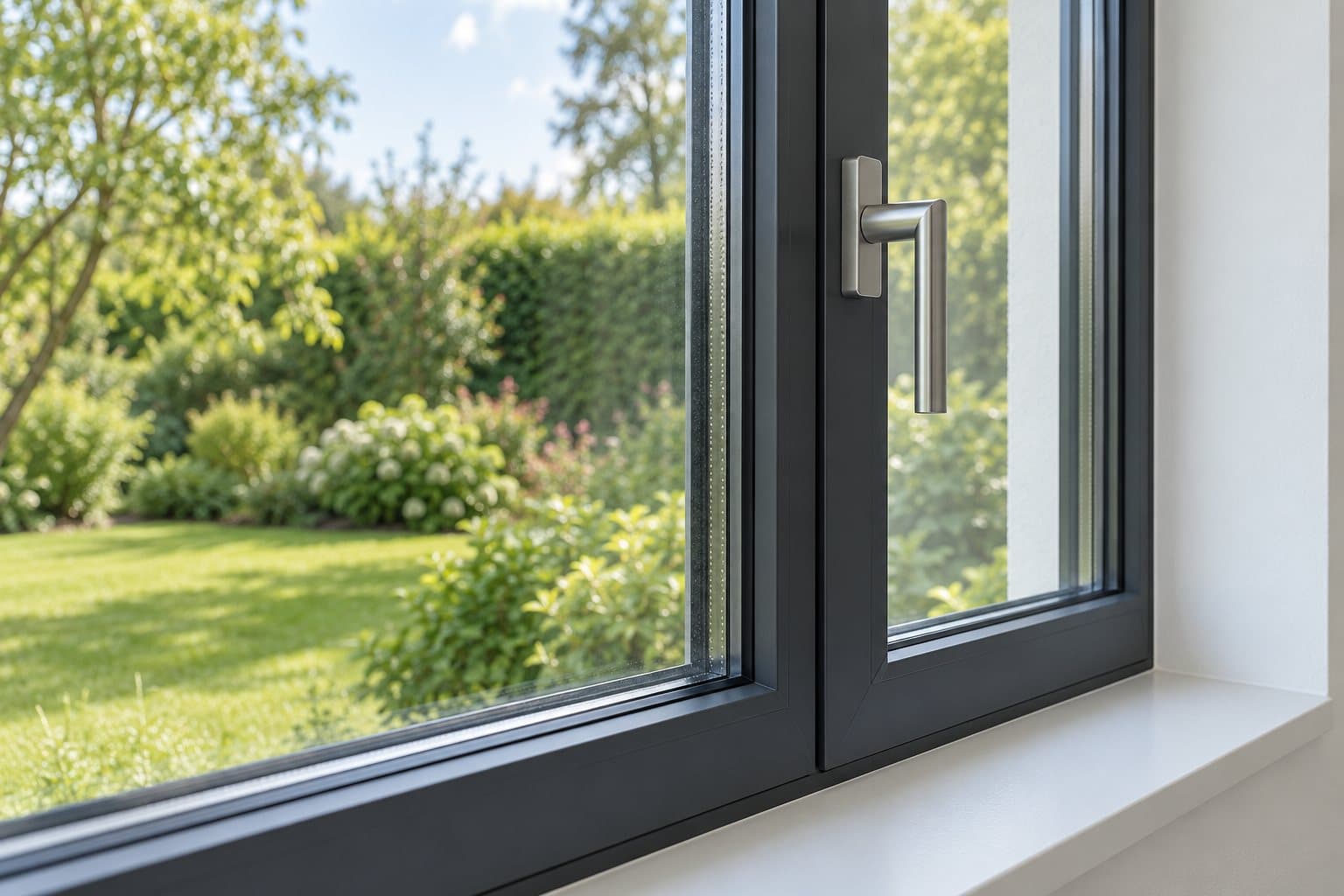
In a thermally broken window the aluminium profile is split into two parts, an outer and an inner shell. Between them sit strips (thermal barriers) made of a material that conducts heat very poorly, usually glass-fibre-reinforced polyamide. The strips are slid into grooves in both aluminium halves and crimped in place. The result is again one rigid frame, but heat no longer has a direct path outside.
- The outer shell faces the cold, rain and sun.
- The polyamide strips stop heat flowing between the two shells.
- The inner shell stays close to room temperature.
The wider the break and the better the cavities are filled (some systems add insulating inserts or a centre gasket), the better the insulation. So “thermally broken” is not one single quality level: there are profile systems for lighter glazing and others for very energy-efficient houses.
Condensation: the most visible difference
The most common complaint about cold aluminium windows is not the heating bill but the water. Indoor air holds moisture from breathing, cooking, laundry and plants. When warm air touches a surface colder than its dew point, that moisture turns into droplets. At 20 °C and 50% relative humidity the dew point is about 9 °C. If the inside of the frame drops below that, which happens easily with cold profiles and frost outside, water runs down it.
The results are familiar: wet sills, stains and mould on the plaster around the window, swollen window boards and, on the coldest nights, ice on the frame. With a thermal break the inner face of the profile stays much warmer, so condensation either disappears or only shows up at very high humidity.
When a thermal break is a must
- Heated rooms: living rooms, bedrooms, kitchens, offices. Anything you heat in winter needs thermally broken profiles, otherwise the window becomes the weakest point of the wall.
- Winter gardens used all year round. Glass and profiles make up almost the whole envelope, so the difference in comfort and heating costs is huge. More on this: how to heat a winter garden.
- Large glass façades and sliding doors to the garden, especially facing north or on an open, windy site.
- Rooms with more moisture: kitchens, bathrooms, pool rooms or rooms full of plants.
- New and renovated houses: if you have insulated the walls, there is no point in leaving the windows cold.
When cold aluminium is perfectly fine
Profiles without a thermal break (cold profiles) are not a bad product; they simply do a different job. They are slimmer, lighter and more affordable, and a sensible choice when the temperature on both sides of the glass is about the same or the space is not heated:
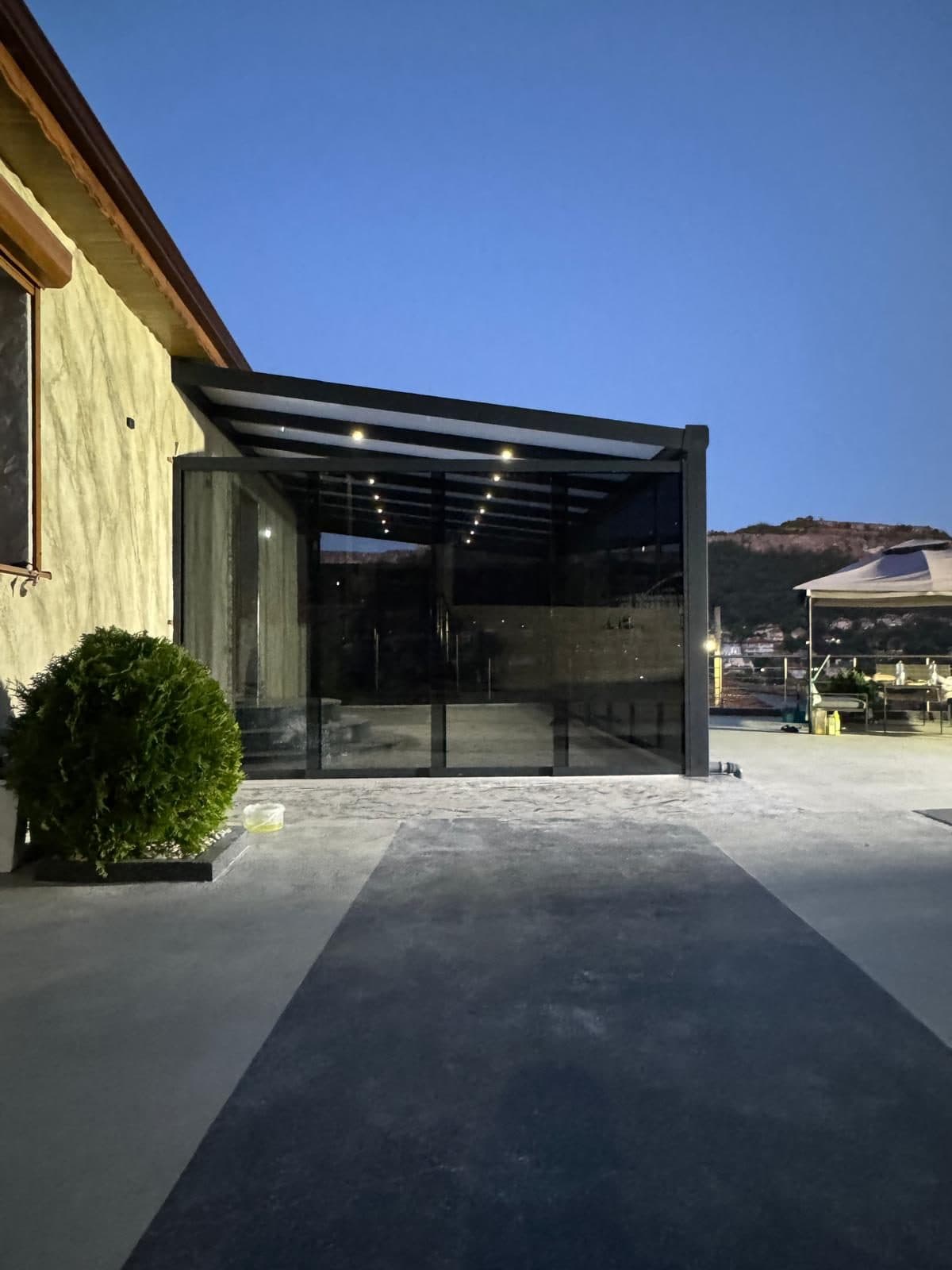
- A summer garden or glazed terrace that keeps out wind, rain and dust but is not heated in winter.
- Balcony glazing in front of an unheated space: storage, drying laundry or a sitting area for spring and autumn.
- Interior partitions and doors between two heated rooms, such as office walls or shopfronts inside a building.
- Open structures like carports, gazebos and pergolas, where insulation does not matter.
Be honest with yourself about how you will use the space. Many people order a “summer” garden and after the first winter want to add a stove or an air conditioner. Then the cold profiles start to sweat and the heating bill is high. If there is a real chance the room will be heated, choosing a thermal break from the start is cheaper than replacing the windows a few years later.
Thermally broken aluminium or uPVC windows?
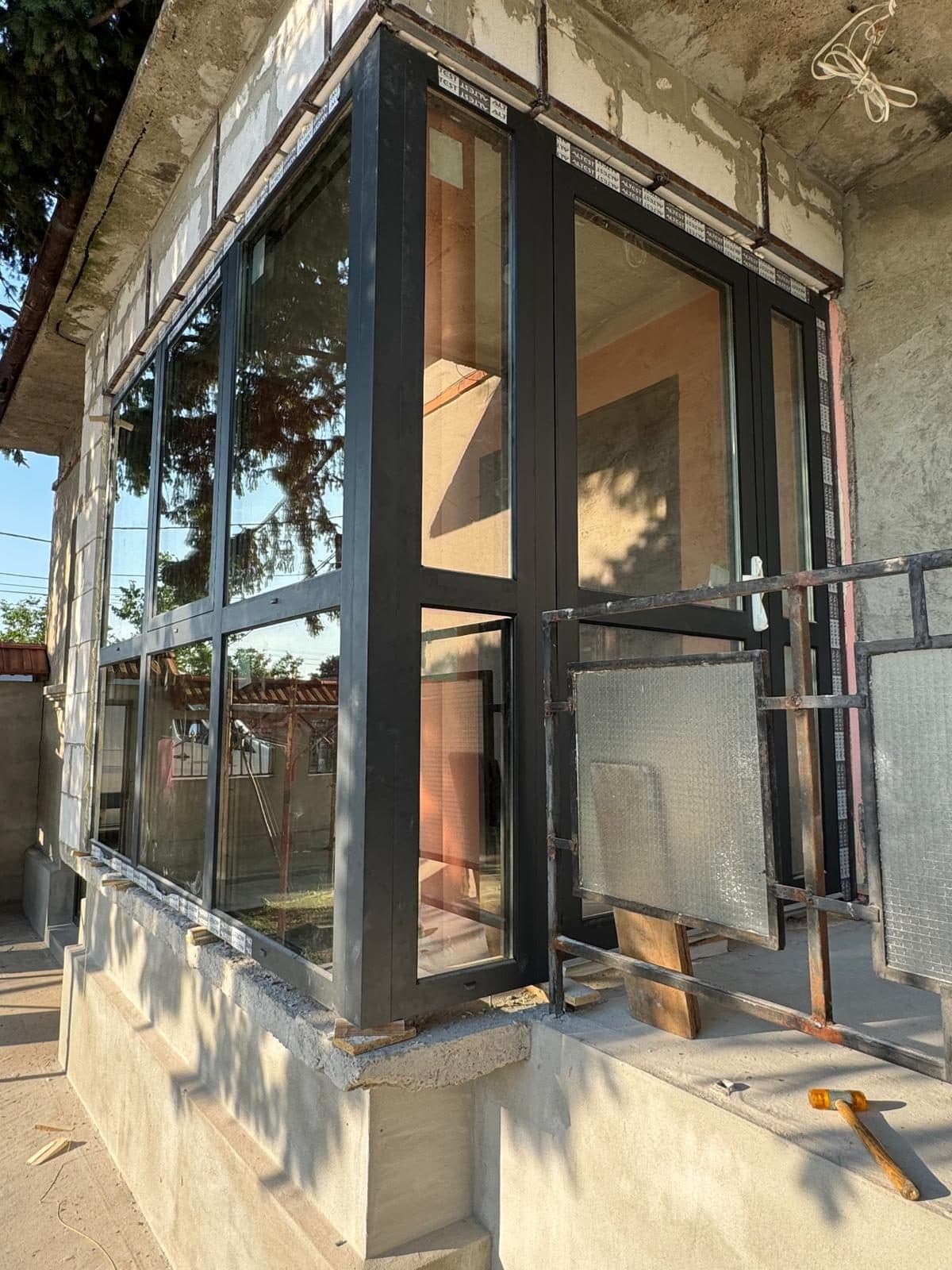
If you mainly want good insulation at a fair price, uPVC windows are also an excellent choice, because plastic itself conducts heat poorly. Thermally broken aluminium makes sense when you want slimmer frames and more glass, large sizes, sliding systems, dark colours on a south-facing wall (where uPVC heats up and can warp) or a matching look with aluminium doors and the façade. For a detailed comparison read uPVC or aluminium windows.
What to check in the quote
“Thermally broken” is only the start. To compare quotes fairly, ask about the following:
- The Uw value of the whole window (frame and glass together), not just the profile or the glass alone. The lower the value, the less heat you lose.
- The glazing unit: double or triple, with a low-e coating and gas fill? Glass is most of the area, so it often matters more than the profile.
- The spacer bar between the panes: a so-called warm edge reduces condensation along the edge of the glass.
- The gaskets: how many sealing levels and what material.
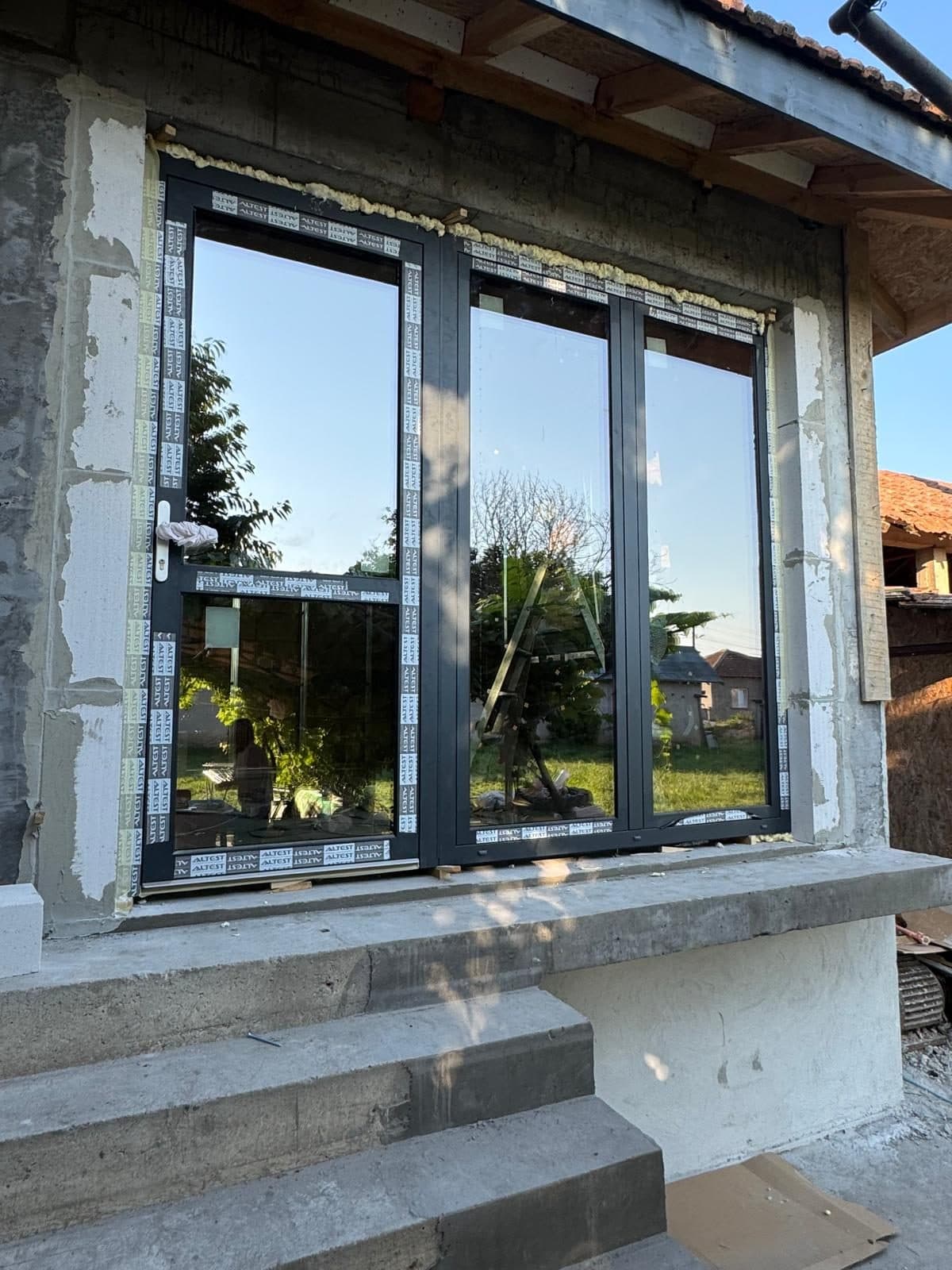
- The installation: how the gap between frame and wall will be sealed. A poorly sealed joint is a thermal bridge in itself, however good the profile.
- Colour and finish: powder coating or anodising. Because the two halves are separate, many systems allow a different colour inside and outside.
The most common mistakes
- Comparing quotes only by price per square metre without knowing which profile and glass are included.
- A thermally broken frame with weak glazing: the frame is warm, but heat leaks through the glass.
- Good windows fitted with nothing but foam, with no protection of the joint from moisture and sunlight.
- Cold profiles for a room that later gets heated.
- Overlooking the threshold of sliding doors: in some systems it is a cold zone too.
Are thermally broken aluminium windows worth it?
Thermally broken windows cost more than cold aluminium. The price depends on the profile system, the width of the thermal break, the glazing, the sizes, the opening type and the colour. In return you get a dry, warm frame, lower heating costs, a quieter room and a space you can use all year.
For a heated home or a winter garden you want to sit in in January, the answer is almost always “yes”. For a summer garden, an unheated glazed balcony or an interior partition it is usually “no”, and the money saved is better spent on better glass or on ZIP screens against the summer sun. If you are not sure, ask for a free quote and tell us how you will use the space. That is the key question.
GS Aluminium makes and installs uPVC and aluminium windows and winter and summer gardens in Ruse, North-East Bulgaria and across the country. After more than 15 years of work in Germany and the Netherlands we know how much depends on the right profile for each room. If you are thinking about a winter garden, you can sketch it in our 3D configurator. When you are ready, book a free site visit: we will look at the space, talk through how you will use it and suggest a solution that is worth the money.
Frequently asked questions about thermally broken windows
What does thermal break mean in aluminium windows?
It means the profile is split into an outer and an inner aluminium part, joined by polyamide strips. Polyamide conducts heat very poorly, so the cold outside does not reach the inner face of the frame.
Do thermally broken aluminium windows get condensation?
With normal indoor humidity and good installation the frame usually stays dry. In very humid air droplets can form along the edge of the glass on any window, so ventilation still matters.
Is a thermal break worth it for a summer garden?
If the summer garden will not be heated, usually not. Cold profiles are more affordable and keep out wind and rain well. If there is a chance you will heat it later, it is wiser to choose a thermal break from the start.
Which is warmer: uPVC or thermally broken aluminium?
Good systems of both types can reach similar values. uPVC is often cheaper for the same insulation, while thermally broken aluminium allows slimmer frames, larger panes and dark colours without the risk of warping.
How can I tell if my old aluminium windows have a thermal break?
Look at the profile in section, for example on the side of an open sash. If there is a dark plastic strip between the outer and inner aluminium, it is thermally broken. If it is solid metal, it is cold.
What affects the price of thermally broken aluminium windows?
The profile system and width of the thermal break, the glazing, the sizes and number of sashes, the opening type, the colour and the hardware. The complexity of the installation also plays a part.