Sectional or roller garage door – which one should you choose?
Both open upwards and need no space in front of the garage, but they work differently. An honest comparison and what to measure before you ask for a quote.
Published: November 4, 20268 min read
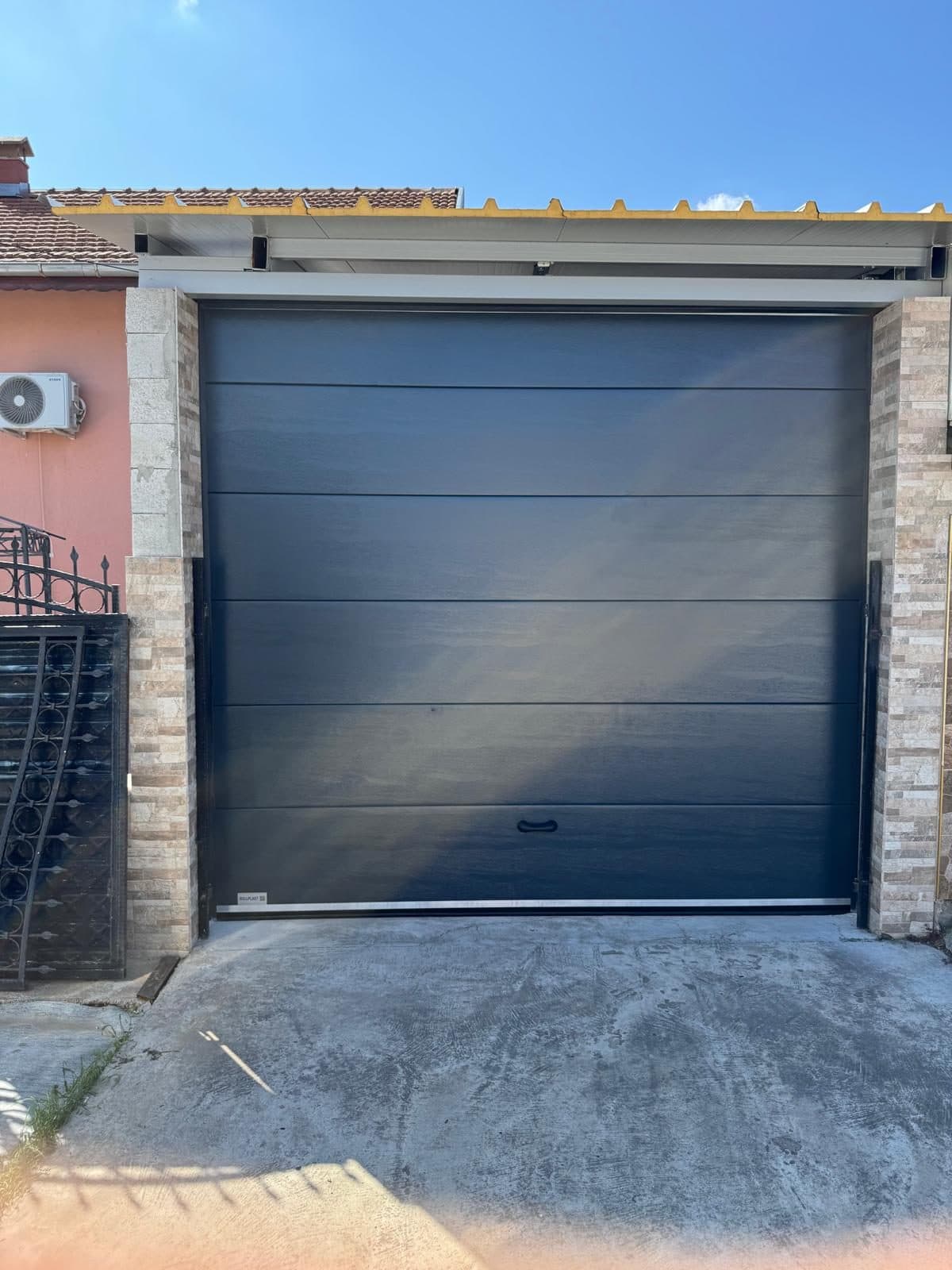
A garage door opens and closes several times a day for years. It takes up a big part of the façade, protects the car and the tools and, when the garage is attached to the house, affects the warmth inside too. So choosing between a sectional and a roller garage door is not only about price. Below we compare the two honestly, with pros, cons and the measurements worth knowing before you ask for a quote.
How a sectional garage door works
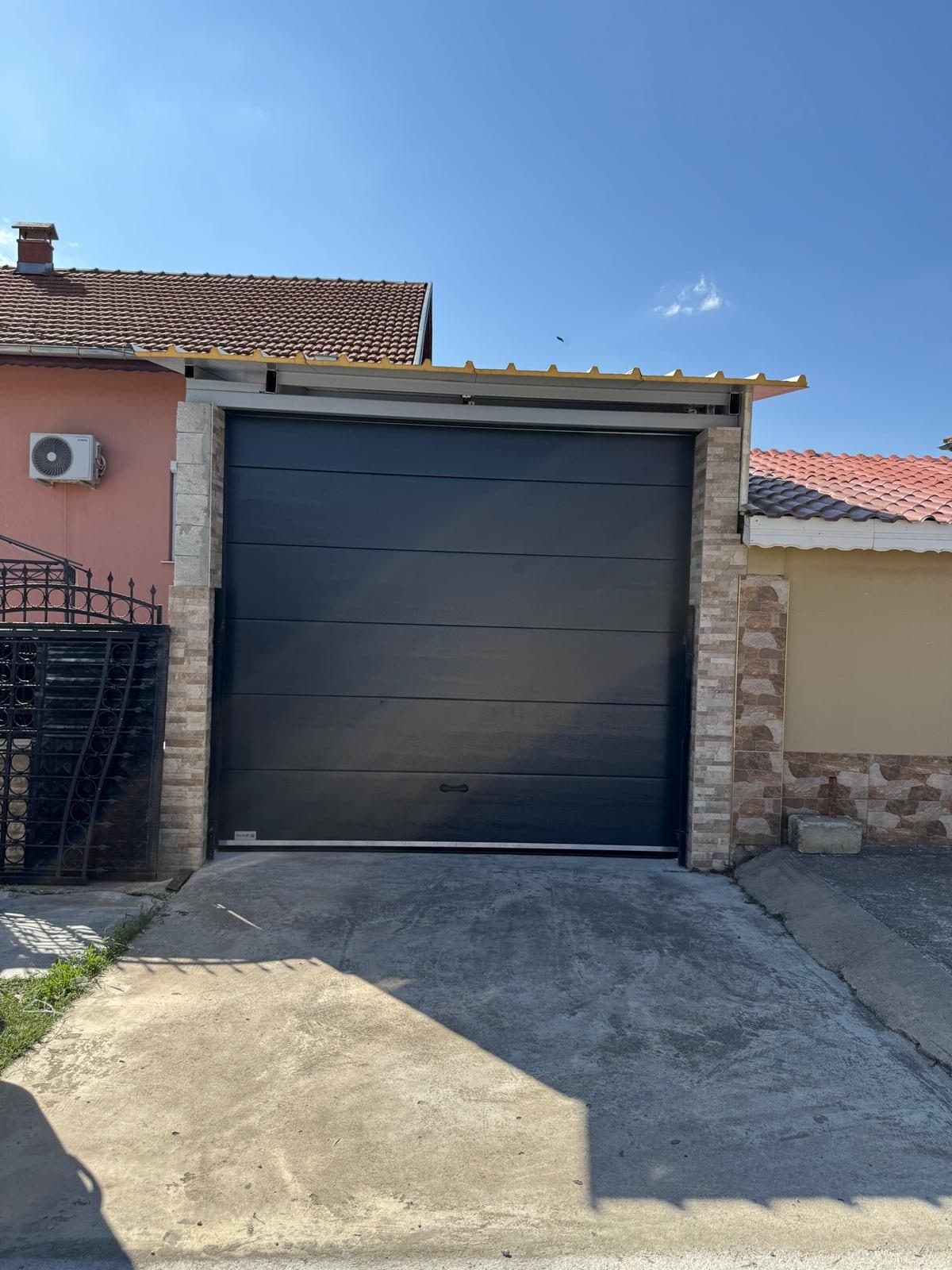
A sectional door is made of several horizontal panels (sections) joined by hinges. When it opens, they slide up side tracks and end up lying horizontally under the garage ceiling. The panels are usually sandwich panels: two steel skins with polyurethane foam between them. The weight is balanced by springs, so the door is easy to lift even by hand.
- Good thermal insulation thanks to thick insulated panels and seals all round.
- No space needed in front of the garage: you can park right up to the door.
- Quiet, smooth operation, especially with a motor.
- A wicket door is possible for walking in.
- Many designs: smooth panels, ribs, woodgrain or the colour of your windows.
- Needs free space above the opening and under the ceiling for the tracks and the motor.
How a roller garage door works
A roller door is made of narrow slats, usually foam-filled aluminium, which wind onto a shaft in a box above the opening. The box can sit inside the garage or outside on the façade. It works like a roller shutter on a window, only larger and sturdier.
- Takes almost no space inside: the ceiling stays free for lights, shelves or beams.
- Suits low garages, arched openings and ceilings with beams or pipes.
- Usually more affordable for smaller openings.
- Weaker insulation than a sectional door: the slats are thin and there are more joints.
- Slats scratch more easily when rolling up if there is sand or dust on them.
- A wicket door is practically impossible.
- On very wide openings and in strong wind the slats are more vulnerable.
The comparison in short
- Insulation and sealing: the sectional door is better.
- Ceiling space: the sectional door needs it, the roller door hardly at all.
- Headroom above the opening: for tracks and springs on a sectional door; for the roll box on a roller door, which can also be fitted outside.
- Wicket door: possible with a sectional door, not with a roller door.
- Noise and smoothness: the sectional door is usually quieter.
- Security: both can be secure if the motor blocks the door from being forced up; details depend on the model.
- Unheated, detached garage: a roller door is a perfectly sensible choice here.
Sectional garage doors with a wicket door: when is it worth it?
A wicket (pass) door is a small door built into the sectional door itself. It lets you get the bike, garden tools or the bin without opening the whole door, which also keeps the heat in the garage in winter.
There are downsides too. A wicket door usually has a threshold you step over, slightly reduces the clear opening and changes how the door looks from outside. If the garage has room at the side, a separate side door is often more convenient. Systems with an almost flat threshold also exist; whether they suit your opening is decided at the site visit.
Automatic garage door: what to plan for
Both types can have a motor and a remote control. Once you have stayed dry in the car on a rainy evening, you will not want to go back. Plan these things in good time:
- Power: a socket on the ceiling near the motor (sectional) or near the box (roller). Easiest to arrange before plastering.
- Photocells and obstacle detection: the door must stop and reverse if a person, child, animal or car is underneath.
- Emergency release in a power cut: from inside with a handle and, if the garage has no other entrance, from outside too.
- Controls: number of remotes, a keypad or a phone app. Such solutions exist; what is possible in your case we clarify on site.
- Lighting: many motors have a built-in lamp that stays on for a while after opening.
What to measure before you ask for a quote
- Width and height of the opening: the clear opening, from the finished floor level.
- Headroom above the opening: up to the ceiling or the lowest beam. Especially important for sectional doors.
- Side room to the left and right of the opening: for tracks or guides.
- Garage depth: a sectional door needs a little more than its height under the ceiling, plus the motor.
- Obstacles under the ceiling: beams, pipes, lights, a boiler.
- The floor: is it finished, level, and does it slope towards the street?
If you are not sure how to measure, don’t worry. At the free site visit we take all the measurements ourselves and tell you which type fits your garage.
What owners say: the most common regrets
Read forums about sectional and roller garage doors and the same experiences keep coming up. The most common disappointments, summed up:
- They chose a roller door for a heated or attached garage, and it is cold in there in winter.
- They did not plan for power, and the cable now runs exposed along the wall.
- They ordered the door before the floor was finished, and there is a gap at the bottom.
- They underestimated maintenance: tracks, rollers and hinges need cleaning and lubricating now and then.
- They picked a colour that does not match the front door and windows. See also how to choose a front door for a house.
Which garage door should you choose?
- A sectional door if the garage is attached to the house or heated, if you want quiet operation and a wicket door, and there is room under the ceiling.
- A roller door if the ceiling is low or in use, the opening is arched, the garage is a detached unheated building or you do not want to give up the ceiling space.
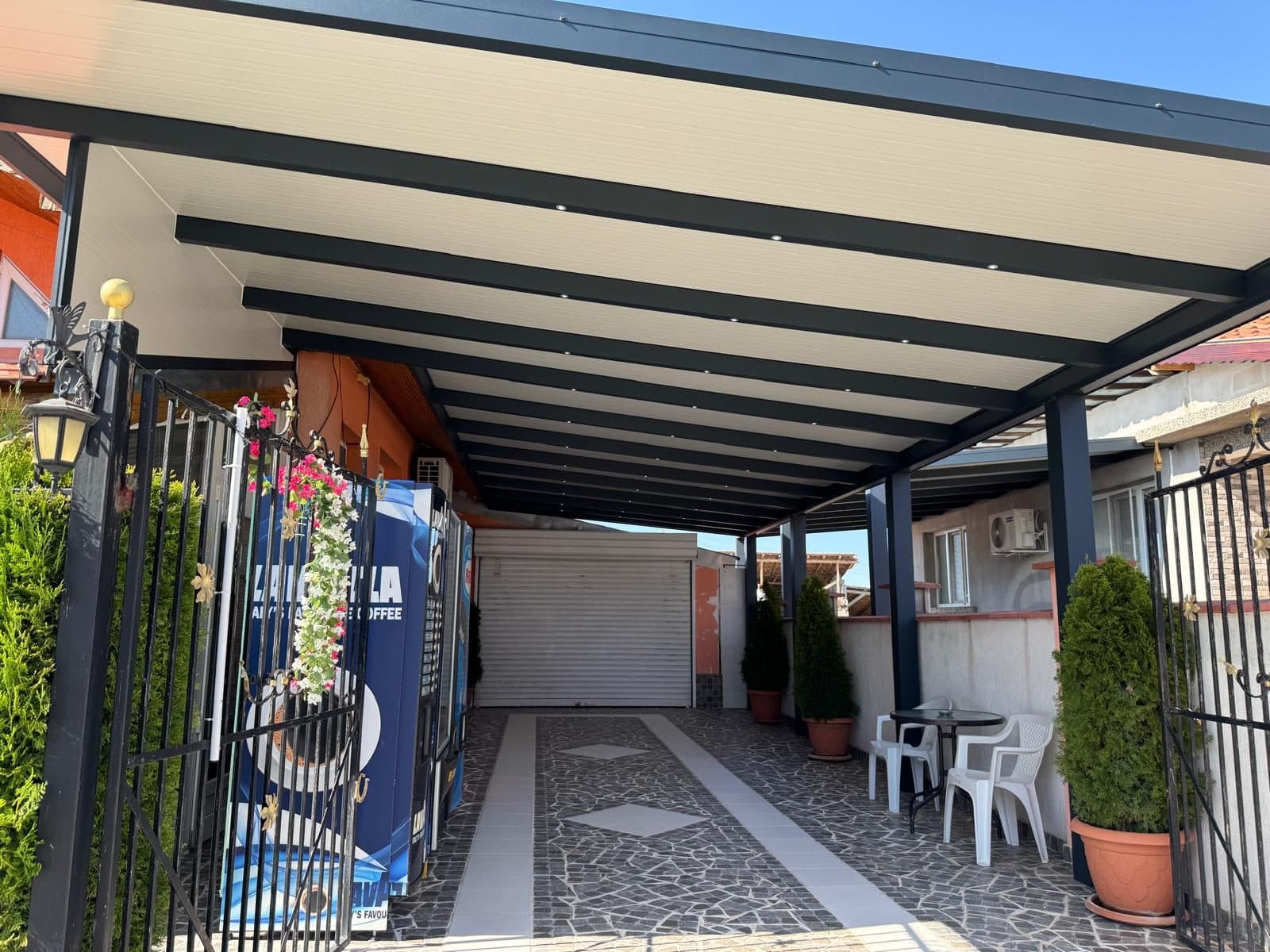
- No door at all: if the car stands under a carport rather than in a garage, ask yourself whether you need a door. Read what size carport you need.
What the price of a garage door depends on
The price depends on the size of the opening, the type of door, the thickness and type of panels or slats, the design and colour, a wicket door or windows, the motor and accessories, and how complex the installation is, for example whether the opening needs preparing. That is why a price per square metre without a site visit is rarely accurate.
GS Aluminium installs sectional garage doors made to fit the opening, in a colour that matches the front door and the windows. We work in Ruse and all over Bulgaria, and more than 15 years in Germany and the Netherlands have taught us that a well-measured opening is half of a good door. Book a free site visit and quote: we will measure the garage and tell you honestly which type of door suits it.
Frequently asked questions about garage doors
Which is better: a sectional or a roller garage door?
Neither is better for everyone. A sectional door insulates and seals better and can have a wicket door, while a roller door takes almost no ceiling space. The choice depends on the garage, heating and the space available.
How much headroom does a sectional garage door need?
It depends on the system and its fittings. There are versions for standard and for reduced headroom, so it is important to measure from the top of the opening to the ceiling or beam.
Can a sectional garage door with a wicket door be automatic?
Yes, a wicket door can be combined with a motor. A safety contact stops the main door from moving while the small door is open.
What happens to an automatic garage door in a power cut?
The motor has an emergency release, so the door can be opened by hand. If the garage has no other entrance, an external emergency release can be fitted, and some motors can be combined with a backup battery.
How warm is a sectional garage door?
Panels with polyurethane foam and seals all round insulate much better than roller slats or an old metal door. For a heated or attached garage it is the better choice.
How do you maintain a garage door?
A few times a year clean the tracks and seals, lubricate the hinges and rollers and check that the door stops at an obstacle. Leave the springs and motor settings to a specialist.